Long-Term Stays and Remote Work in Mauritius: Apartments, Visa, and Best Areas
Can you work remotely from Mauritius long-term?
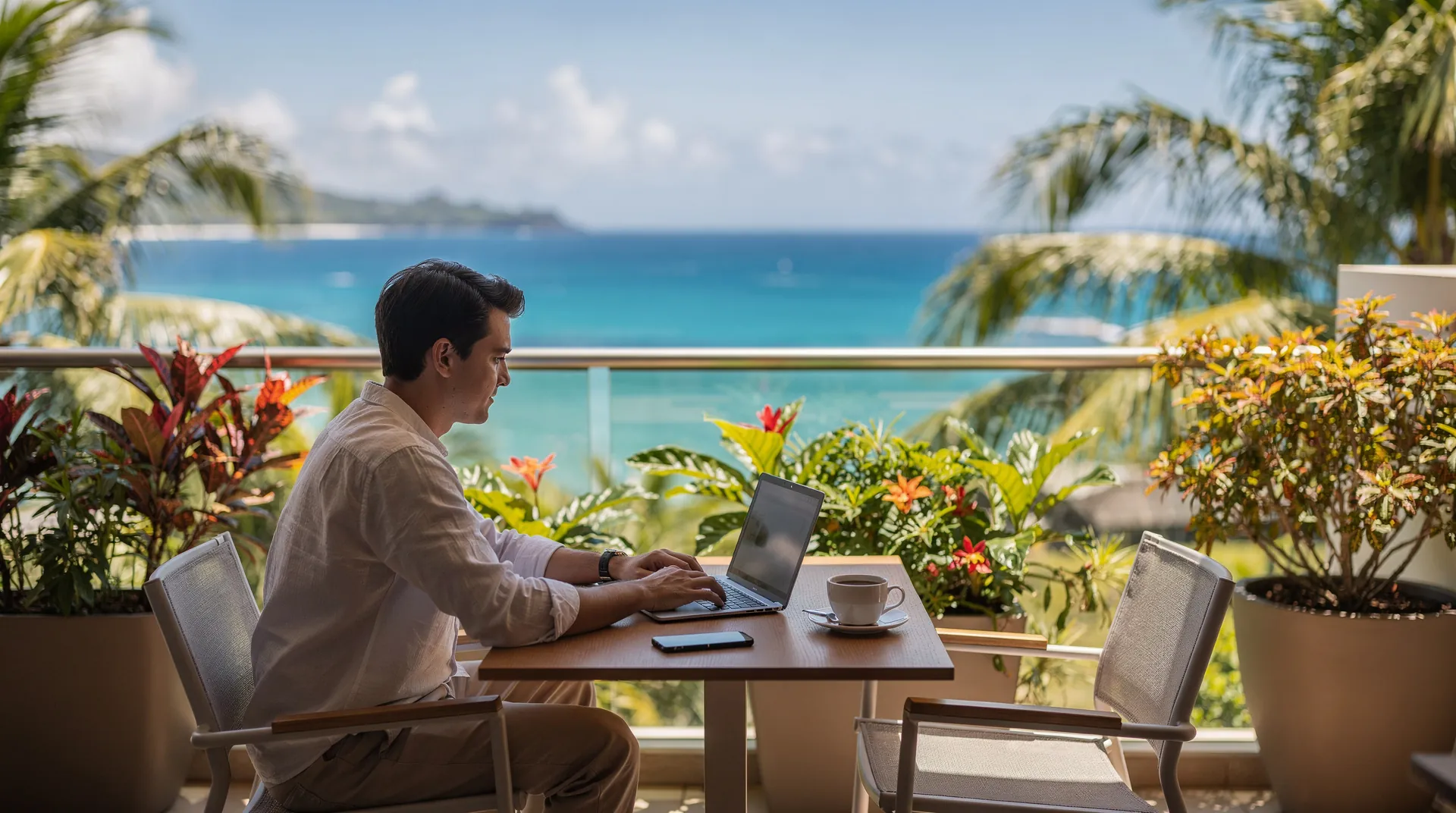
Yes. Mauritius offers a renewable 12-month Premium Visa for foreign remote workers. Fibre wifi is available in urban areas. Housing costs stay reasonable (600 to 1,500 EUR/month for an apartment). Grand Baie and Tamarin are digital nomads' favourite areas.
Mauritius, a top-tier remote work destination
Mauritius has embraced digital nomadism in earnest. Since 2021, the country has offered a specific visa for foreign remote workers, the Premium Visa, allowing holders to stay for up to a year (renewable) while working legally from a distance for an employer or clients based outside Mauritius. The tropical climate, political stability, English and French as everyday languages, a favourable time difference with Europe, and a cost of living moderate by European standards have made the country an increasingly popular destination for French-speaking remote workers.
It’s not a perfect destination: internet can be unstable in some rural areas, the cost of living has risen in recent years, and geographic isolation can weigh on longer stays. But for a period of 3 to 12 months, Mauritius offers a remarkable quality of life that few tropical destinations can match.
| At a glance | |
|---|---|
| Where | North (Grand Baie), west (Tamarin, Flic-en-Flac), or Ebène for corporate profiles |
| Housing cost | around 500 to 1,500 EUR/month depending on the area and type of apartment |
| Key process | Premium Visa, applied for online before or after arrival |
| Time needed | prepare your file 2 to 3 weeks before departure, processing takes 3 to 7 working days |
| Best time to settle in | May to December, avoiding the January-February cyclone peak |
Mauritius’s Premium Visa for remote workers
The Mauritian Premium Visa is the essential pass for a remote-work stay of more than 60 days. Here are the key points to know:
The initial duration is one year, renewable. It’s granted to nationals of most countries, including French, Swiss, Belgian, and Canadian citizens. Requirements include: proof of income from a source outside Mauritius (remote employment contract, freelance activity, pension), and proof of medical coverage for the stay. Proof of accommodation (a rental agreement) is generally requested.
Applications are made online via the Mauritian government’s e-services portal, either before arrival on the island or once there. Processing typically takes 3 to 7 working days. Administrative fees apply. It’s advisable to prepare your file carefully (bank statements, employment contract or proof of freelance income, health insurance policy).
Premium Visa holders are not permitted to work for local Mauritian companies, but they can carry out remote work for clients or employers based abroad.
Internet and connectivity in Mauritius
Internet quality is a legitimate concern for any remote worker. The good news: fibre optic is deployed in urban and semi-urban areas, with speeds that can reach 100 to 300 Mbps in well-connected accommodation.
The two main providers are My.t (formerly Mauritius Telecom) and Emtel. Fibre is available in most residential neighbourhoods of the main towns (Port Louis, Quatre Bornes, Curepipe, Grand Baie, Flic-en-Flac, Tamarin). In rural areas, wifi may rely on a less stable ADSL or 4G connection.
When searching for a long-stay apartment, systematically check for fibre availability, the actual speed (not the advertised theoretical speed), and whether wifi is included in the rent or needs to be subscribed to separately. A residential fibre plan costs between 30 and 60 EUR per month depending on the speed.
Local SIM cards with data are inexpensive: a 30GB monthly 4G data plan costs between 10 and 20 EUR. It’s a useful backup for days when your accommodation’s fibre is unstable. If your phone is compatible, you can also activate an eSIM for Mauritius before you arrive, handy for having a connection right off the plane.
The best areas for remote work in Mauritius
Grand Baie: the most practical and international
Grand Baie is the top digital nomad destination in Mauritius. It’s the touristic hub of the north of the island, with developed infrastructure: numerous restaurants, supermarkets, coworking spaces, good connectivity, and a fairly active community of expats and long-stayers.
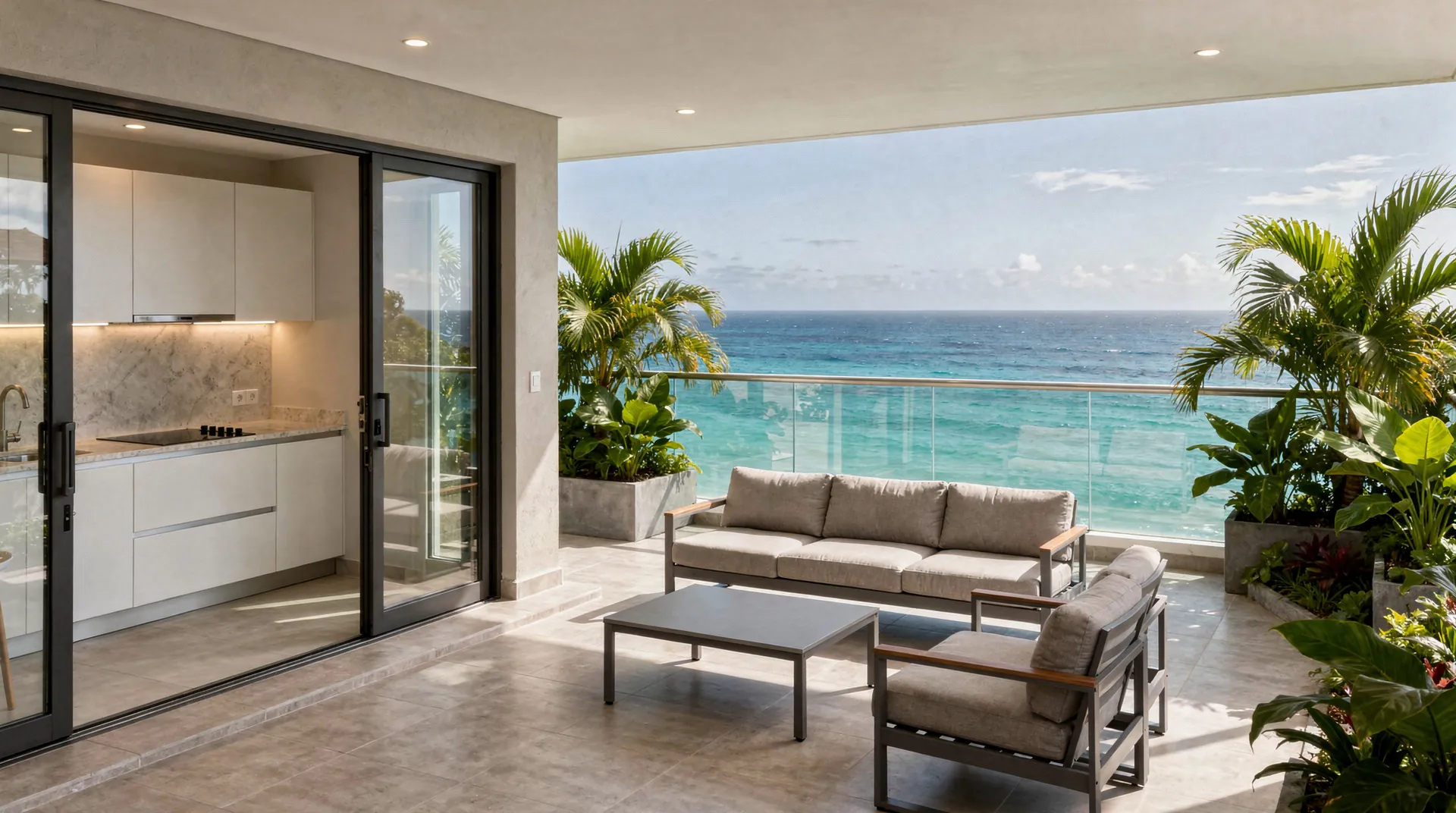
Furnished apartments are plentiful in the area, available by the week, month, or year. A furnished one-bedroom apartment with wifi in Grand Baie rents for between 600 and 1,000 EUR per month. For a two-bedroom, expect 900 to 1,500 EUR. Residences with a pool are common in this price range, which remains very good value compared to European capitals.
The downside of Grand Baie is sometimes heavy traffic, noise from the town centre, and an atmosphere that can feel more touristy than island-like. For those seeking a postcard beach on their doorstep every day, other areas will suit better.
Tamarin: nature and authenticity
Over the years, Tamarin has become one of the favourite bases for remote workers who want to combine productivity, surfing, and authentic local life. The village is fairly well equipped (shops, restaurants), fibre connection is available, and the vibe is more relaxed than Grand Baie.
Furnished apartments and villas are available for monthly rental. Expect between 500 and 900 EUR per month for a one-bedroom apartment with a pool. Some landlords offer discounted rates for stays of 3 months or more.
The main downside is relative isolation: shops are less varied than in Grand Baie, and getting to Port Louis or other parts of the island requires a car. But for many remote workers, that relative isolation is exactly what they’re looking for.
Flic-en-Flac: the balanced west-coast option
Flic-en-Flac is often cited by expats as a good compromise: beach within walking distance, a lively village, decent infrastructure, good connectivity, and prices slightly lower than Grand Baie. One-bedroom apartments rent for between 500 and 850 EUR per month.
Fibre connection is well deployed here. Restaurants and supermarkets cover day-to-day needs. The beach is long and beautiful. And unlike Tamarin, Flic-en-Flac sits on a bus route to Port Louis, meaning you can do without a car for getting around town.
Ebène: the tech hub for corporate profiles
For remote workers who need a professional address, contacts in the business sector, or frequent access to premium coworking offices, Ebène Cybercity is the logical choice. This modern business district on the outskirts of Quatre Bornes is home to the offices of the island’s major companies and banks, several well-equipped coworking centres, and a very high-quality internet network.
Ebène is a district with no beachside charm, in the centre of the island. But for a remote worker whose office amounts to a computer screen and who spends weekends at the beach, it’s a functional option, and cheaper than coastal areas.
Quick comparison of areas for remote work
| Area | Vibe | 1-bedroom rent/month | Car essential? |
|---|---|---|---|
| Grand Baie | Lively, international, restaurants and nightlife | 600 to 1,000 EUR | No, but useful |
| Tamarin | Nature, surf, local life | 500 to 900 EUR | Yes |
| Flic-en-Flac | Balance of beach/shops | 500 to 850 EUR | No, bus to Port Louis |
| Ebène | Corporate, premium coworking | 400 to 800 EUR | Yes, central district |
Opening a bank account and managing your finances
For a stay of several months, opening a local bank account makes day-to-day life much easier: paying rent, electricity and fibre bills, fee-free withdrawals. The main banks (MCB, SBM, Absa) offer accounts for non-residents holding a Premium Visa, with requirements fairly similar to those for the visa itself (passport, proof of address, proof of income). Opening an account generally takes a few days once you’re on site and requires an in-branch appointment.
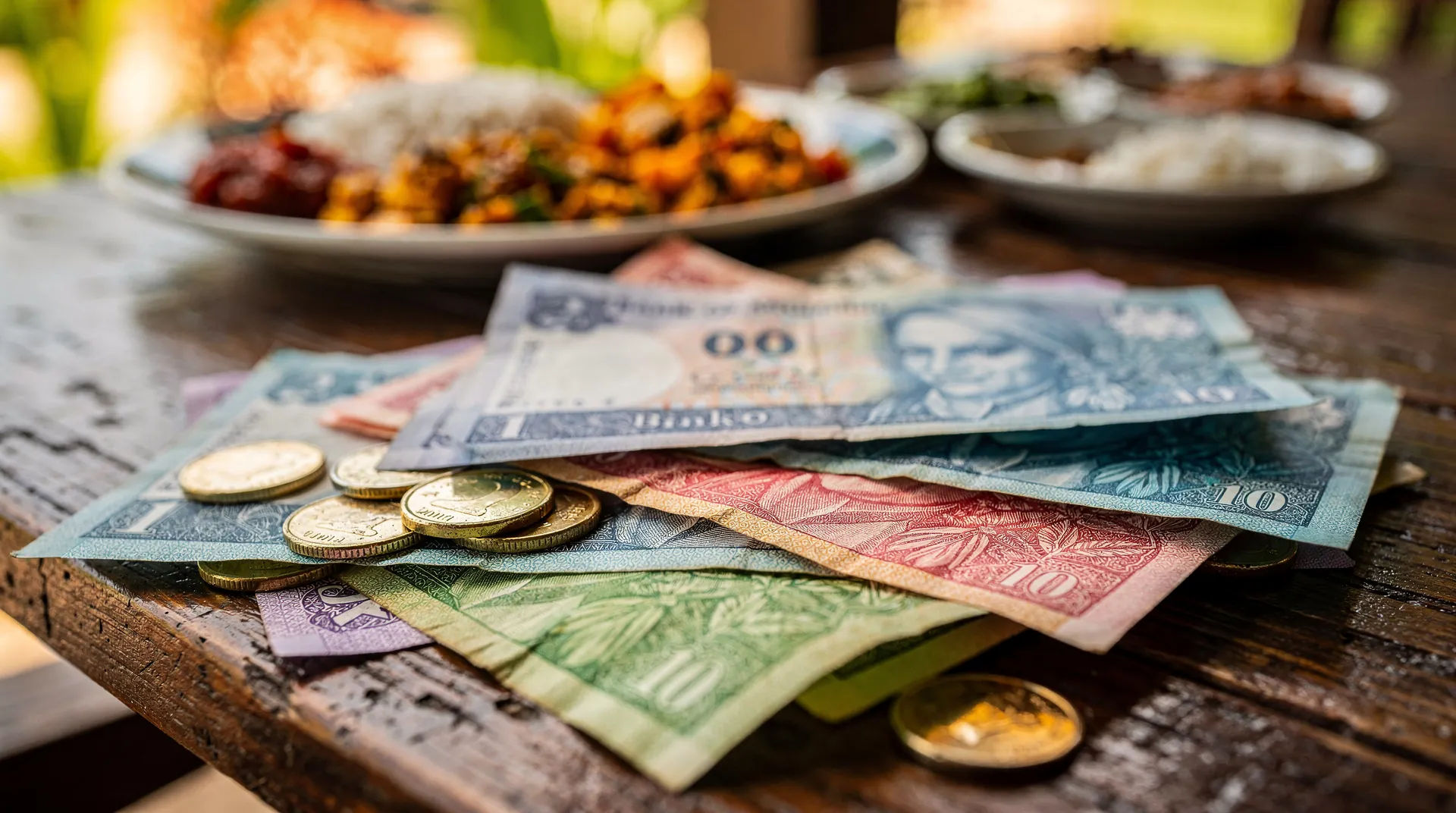
Failing that, an international bank card with no foreign fees (neobank-type cards) is enough for everyday spending, but some landlords and providers prefer a local transfer. Always keep some cash on hand: some local shops and markets don’t accept cards.
Taxation for a remote worker in Mauritius
The Mauritian tax regime is a strong selling point for many digital nomads, but it doesn’t excuse you from doing your homework properly. In brief, and without replacing professional advice: your tax status depends on the length of your stay, your country of tax residence, and the nature of your income (salaried, freelance, company). Tax treaties between France and Mauritius, as well as those with Switzerland or Belgium, govern the question of double taxation.
Before leaving for a long stay, it’s strongly advisable to consult a tax specialist or accountant experienced in expatriation, rather than relying on information picked up from forums. A misjudgement about tax residency can prove costly after the fact. This is worth addressing early on, alongside your formalities and visa paperwork.
Coworking in Mauritius
The coworking scene in Mauritius has grown rapidly over the past five years. The main options:
Coworking spaces in Grand Baie offer desks by the day (15 to 25 EUR), by the week (60 to 100 EUR), or by the month (150 to 250 EUR). Standard equipment includes high-speed fibre, a printer, coffee, and sometimes meeting rooms.
In Ebène, coworking offerings are more formal and better equipped for corporate remote workers: private office space, company registration services, and a staffed reception.
Some cafés in Grand Baie and Tamarin have developed a “café-office” culture and happily welcome remote workers with reliable wifi, a good connection, and reasonable orders. It’s an informal but often pleasant option for independent professionals.
Cost of living for a long stay in Mauritius
The cost of living in Mauritius is lower than in France or Switzerland, but higher than some other popular tropical destinations (Bali, Thailand). Here’s a monthly estimate for one person on a long stay:
Housing (one-bedroom apartment, furnished, with wifi): 600 to 1,000 EUR. Food (groceries plus eating out a few times a week): 400 to 600 EUR. Transport (rental car or buying a used vehicle): 300 to 500 EUR per month to rent, 3,000 to 8,000 EUR to buy depending on the vehicle’s condition. Leisure, outings, water activities: 200 to 400 EUR. International health insurance: 80 to 150 EUR. Approximate monthly total for a comfortable lifestyle: 1,600 to 2,600 EUR.
This budget is well below equivalent costs in Paris, Geneva, or Brussels, while offering a noticeably higher quality of life in terms of sunshine, access to the sea, and overall setting.
Daily life and local integration
Mauritius is a welcoming, cosmopolitan country. The Franco-Mauritian community makes integration easier for French speakers. Digital nomad groups exist on social media (particularly Facebook) and regularly organise meet-ups. To unwind at the weekend without organising anything, a catamaran cruise to the northern islands is a good way to meet other travellers and switch off from the screen.
Day-to-day, the working language is mainly Mauritian Creole between Mauritians, but French and English are widely used in shops, administration, and professional settings. No language barrier for a French or Swiss person.
Access to healthcare is good at private clinics (Apollo Bramwell in Moka, Wellkin in Moka, Clinique Ferrière in Curepipe). International health insurance covering treatment on the island is strongly recommended, particularly for hospitalisation, which can be costly in the private sector.
Points to watch for a long stay
Mauritius is small: after 3 to 4 months, a sense of geographic isolation can set in. The expat community is active and can help, but it’s worth anticipating this feeling and planning getaways to Réunion (40 minutes by plane) or Madagascar (2 hours) for a change of scenery.
The austral summer (December to March) is hot and humid, with a non-negligible cyclone risk. Entire days without internet during an approaching cyclone are possible. Plan for a 4G backup.
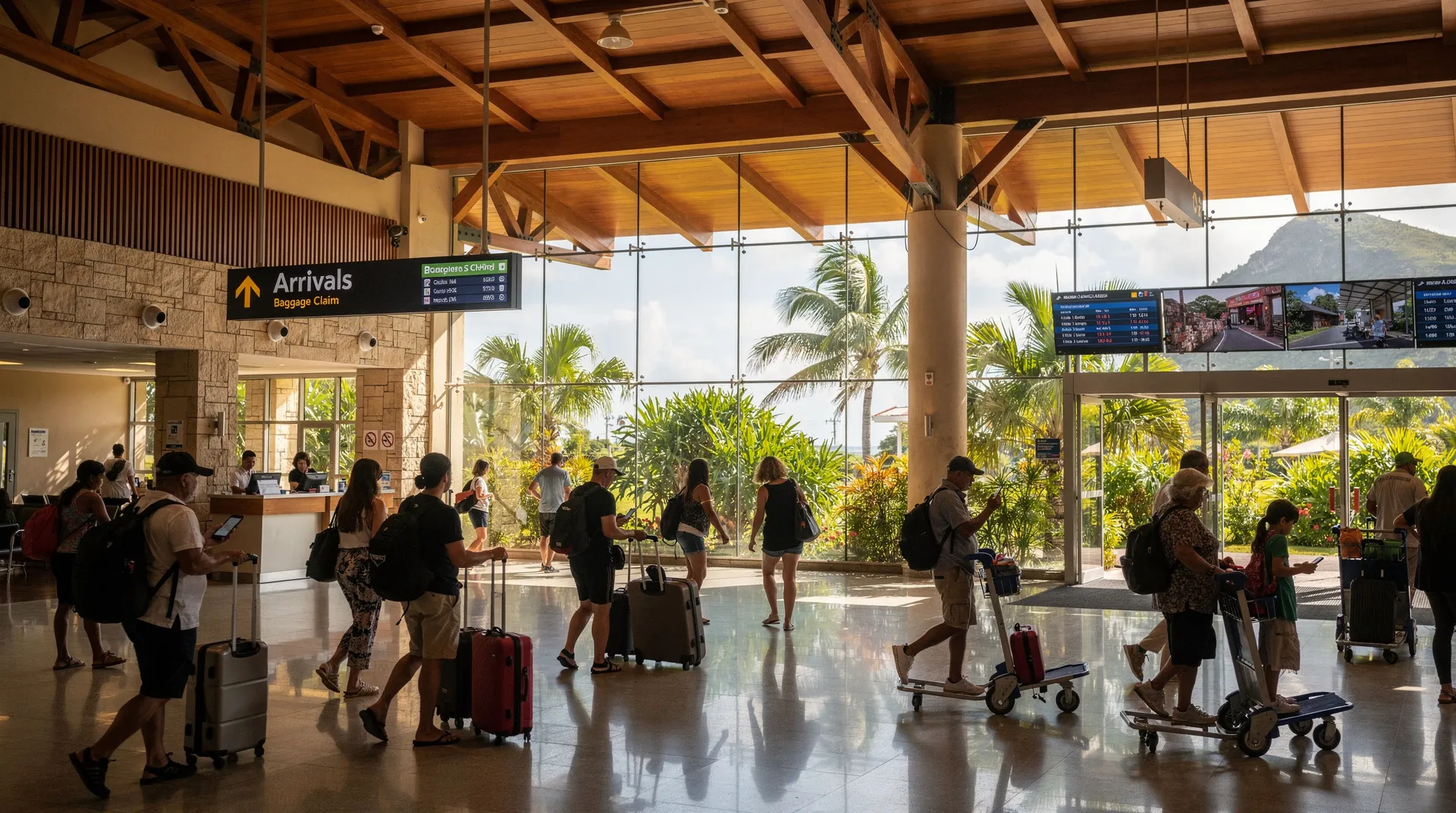
On arrival, after the flight, a private airport transfer spares you from driving on the left in your first hour with your luggage.
Driving on the left takes a few days to adjust to. A car is nearly essential for a long stay, unless you’re living right in the heart of Grand Baie.
Verdict: is Mauritius worth it for remote work?
For a French-speaking remote worker who wants to live in a quality tropical setting with a time zone compatible with Europe (UTC+4, i.e. 2 to 3 hours ahead of Paris depending on the season), daily access to the sea, a social life in French, and reassuring political stability, Mauritius is one of the best destinations in the world. Setup costs are reasonable, the transition is smooth (no major culture shock), and the quality of life is undeniable. Before leaving, also check the time difference with the people you work with, and arrange travel or health insurance suited to a long stay.