Blue Bay
Blue Bay, a gem in southeast Mauritius: protected marine park, exceptional snorkeling, turquoise waters and authentic local atmosphere. 2026 Guide.
- Area
- Southeast of the island
- Vibe
- Quiet, local
- Beaches
- Protected marine park, crystal-clear waters
- Access
- 20 min from the airport
Blue Bay: snorkeling paradise, plain and simple
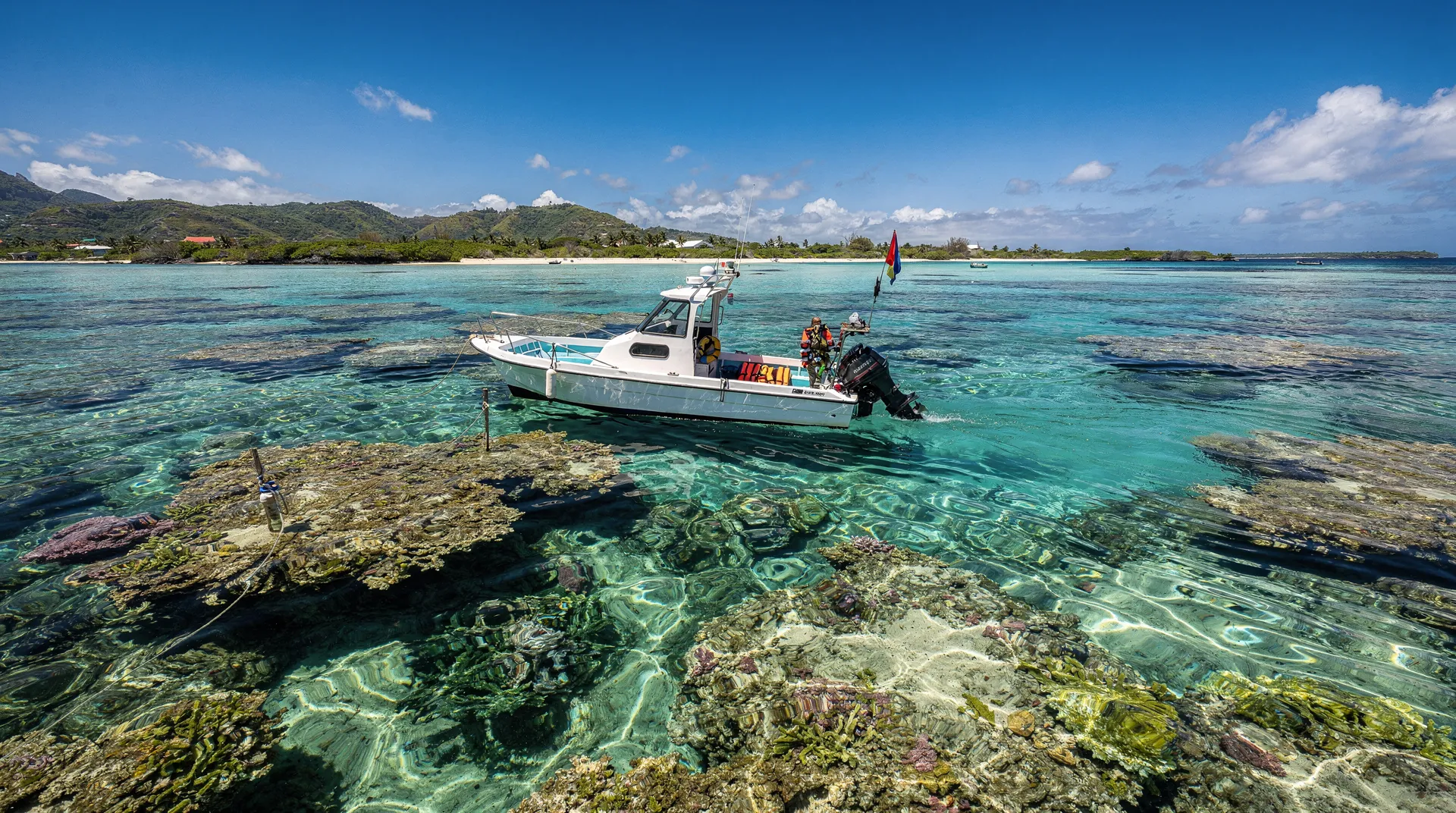
Blue Bay is unquestionably one of the most beautiful lagoons in Mauritius and one of the best snorkeling destinations in the entire Indian Ocean. This small bay in the southeast, protected by an official marine park, shelters coral reefs of such richness and diversity that they draw admiration from marine biologists and divers around the world. The water here is crystal clear, in shades of blue and turquoise that fully justify the name.
Close to the international airport (just 20 minutes away), Blue Bay is often travelers’ first contact with Mauritius. But it deserves far more than a quick stop on the way through: it’s a destination in its own right, with an authentic local atmosphere, delicious seafront restaurants and a public beach that ranks among the island’s finest. Unlike the big tourist resorts in the north, Blue Bay has kept a distinctly local, Mauritian character that makes it especially endearing.
To plan your visit, our full guide to the beaches of Mauritius will help you understand what sets the Blue Bay lagoon apart from the island’s other coastal spots. And to combine Blue Bay with other southeast destinations, our Mauritius budget guide will give you a sense of costs depending on your travel style.
At a glance
| Where | Southeast Mauritius, 10 minutes from Mahébourg |
| Price | Public beach and free snorkeling; glass-bottom boat trip or guided marine park outing around €25-40 per person, Ile aux Aigrettes around €25-30 |
| Time needed | Half a day for an excursion, 2 to 3 days for a full stay covering the southeast |
| Getting there | Car or taxi from the airport, around 20 minutes, 600 to 700 rupees by taxi |
| Best time | April to November for maximum lagoon visibility |
The Blue Bay Marine Park: a protected treasure
The Blue Bay Marine Park was officially established to preserve one of the most precious coral ecosystems in the Indian Ocean. The park covers several hundred hectares of lagoon and reef, home to more than 50 species of coral, 72 identified species of tropical fish, and regular populations of green and hawksbill sea turtles. This exceptional concentration of marine biodiversity in a relatively small area makes it a site of international scientific and ecotourism significance.
Park regulations prohibit certain activities that could damage the reefs: anchoring on coral, fishing in protected zones, and motorized activities in sensitive areas. These strictly enforced rules have kept the reefs remarkably healthy compared with other sites on the island, where unregulated tourist pressure has sometimes led to coral degradation. Follow these rules to the letter — your enjoyment today safeguards the experience of tomorrow’s visitors.
What to do in Blue Bay
Snorkeling: Blue Bay’s signature experience
Snorkeling at Blue Bay is the destination’s headline activity. From the beach, just a few minutes’ swim brings you to the first coral reefs, which start less than 50 metres from shore. The corals are alive, colorful and teeming with tropical fish of every shape and size: orange-and-white clownfish darting among their anemones, dense schools of blue surgeonfish, multicolored parrotfish grazing on the coral, groupers lurking in cavities, and territorial damselfish defending their patch with real determination.
To reach the deeper, richer areas of the marine park by glass-bottom boat with a guide, you can book a Blue Bay snorkeling outing with equipment included.
Green and hawksbill turtles regularly frequent the marine park’s waters, grazing on seagrass beds between the coral heads. Watching a sea turtle glide by just a few metres away is one of the most memorable experiences of a stay in Blue Bay — a silent encounter with a prehistoric creature that seems utterly indifferent to your presence.
Several operators run glass-bottom or clear-hulled boat trips to reach the deeper areas of the park. These boats let you observe marine life from inside the vessel without even getting wet — ideal for young children, non-swimmers, or simply anyone who wants a first taste of the underwater world before diving in. You can book a glass-bottom boat excursion at Blue Bay, with swimming time and snorkeling on the reef. For the best advice on gear and technique, our guide to snorkeling and diving in Mauritius covers everything you need to know.
Boat trips and islets in the southeast
Catamaran excursions from Blue Bay take visitors to the surrounding islands and islets, some of the most beautiful in Mauritius. Ile aux Aigrettes, a nature reserve managed by the Mauritian Wildlife Foundation, is an exceptional destination — home to giant Aldabra tortoises, Mauritius parakeets and other endemic species within a stretch of coastal forest restored to resemble what the island looked like before humans arrived. Ile aux Deux Cocos, a stunningly beautiful private islet, can be visited for a luxury picnic in a pristine setting.
Scuba diving
Diving is possible in Blue Bay, though the area is better known for surface snorkeling. Dive sites around the marine park offer a range of depths suited to all levels. Local dive centers and hotel operators run guided trips to the richest parts of the park — some divers describe Blue Bay’s reefs as among the best-preserved they’ve ever seen in the Indian Ocean.
Sea kayaking and paddleboarding
Sea kayaking lets you explore the lagoon independently and quietly, without disturbing marine life. Kayak rental is available on the main beach. The lagoon’s calm surface, sheltered from the swell by the coral barrier, makes it ideal even for beginners. Stand-up paddleboarding is also available and offers a unique perspective on the corals visible from the surface.
Discovering Ile aux Aigrettes
Ile aux Aigrettes deserves special attention among all the excursions possible from Blue Bay. This small 27-hectare coral island has been transformed since 1987 into a nature reserve by the Mauritian Wildlife Foundation as part of an ambitious ecological restoration project. All invasive species (rats, cats, invasive plants) have been eradicated, and endemic species that had disappeared from the mainland have been reintroduced: giant Seychelles tortoises, endemic gecko lizards, and nesting birds. The guided tour (compulsory) is a fascinating introduction to Mauritius’s natural history and the challenges of island conservation.
Local food and street food
Blue Bay is an excellent place to sample popular Mauritian cuisine at local prices. Seafront restaurants and snack bars serve unmissable specialties: crispy gâteaux piments, soft dholl puri, fried fish served with rice and sautéed vegetables, and octopus or prawn curry. On weekends, street vendors sell fresh fruit, freshly pressed juices and grilled skewers. To dig deeper into Mauritian cuisine, our full guide will take you well beyond standardized tourist fare.
Blue Bay beach
Blue Bay beach is a well-maintained public beach, considered by many travelers and ranking lists to be one of the finest public beaches on the island. The sand is white and fine, and the water is extraordinarily clear and colored — a deep turquoise that shifts to royal blue in the deeper zones. The bay is well protected by its coral barrier, keeping the water calm even on windy days.
The beach has basic facilities — showers, toilets — and benefits from active lifeguard supervision during peak periods. Restaurants and snack bars line the seafront, offering affordable meals at prices well below those of the big tourist resorts.
On weekdays, the beach is surprisingly quiet despite its reputation. On weekends, it fills with Mauritian families enjoying the sea, creating a warm, authentic atmosphere that private resort beaches simply can’t match. This mix of tourists and locals is one of Blue Bay’s essential charms.
Where to stay in Blue Bay
Blue Bay doesn’t have a large number of hotels, but the options available are generally of good quality. Our general guide to where to stay in Mauritius covers the best options in the southeast.
Hotels and resorts
A few hotels sit directly on or near the bay. These properties offer easy beach access and a range of water activities. They’re generally mid-range to upscale, with prices more affordable than the big resorts in the north or east. Our selection of hotels in Mauritius includes the best addresses in the Blue Bay area.
Authentic local guesthouses
Blue Bay and the surrounding villages have several guesthouses run by Mauritian families. These simple, authentic lodgings are very popular with travelers who want to immerse themselves in local life. The owners are usually a great source of advice for exploring the area — they know the best snorkeling spots depending on conditions, the restaurants tourists rarely find on their own, and non-commercial local activities.
Mahébourg as a base
Mahébourg, just 10 kilometres north of Blue Bay, offers a wider range of accommodation at very competitive prices. Staying in Mahébourg lets you combine proximity to Blue Bay with access to the authentic local life of this historic town, its famous Monday market and its local-priced seafood restaurants. It’s the favorite formula for budget-conscious travelers who want the best of both destinations. Our guide to budget accommodation in Mauritius will give you the best options for this combination.
Getting to Blue Bay and getting around
Blue Bay is about 20 minutes by car from Sir Seewoosagur Ramgoolam International Airport — one of the destinations closest to the airport on the island. This proximity makes it an ideal choice for a first or last night in Mauritius. A taxi from the airport costs around 600 to 700 Mauritian rupees. For details on organizing your airport transfer, see our dedicated guide.
Public buses run this route regularly from the Mahébourg terminal. Car rental in Mauritius remains the best option for exploring the southeast freely and reaching Souillac and Bel Ombre to the west, or Belle Mare to the north along the east coast.
Best time to visit
Blue Bay enjoys a favorable microclimate for most of the year thanks to its sheltered position at the back of the bay. The dry season, from April to November, offers the best conditions for snorkeling: clear water, little wind, and maximum visibility often exceeding 20 metres. It’s also when the sea is calmest and the lagoon’s colors are most intense.
The southern summer (December to March) is hotter and more humid. Showers can temporarily reduce visibility in the water, but plenty of fine weather remains, and the sea stays pleasantly warm (28-30°C). This season coincides with French school holidays, and the public beach sees its highest attendance. Our Mauritius weather guide gives you detailed monthly forecasts.
| Period | Weather | Snorkeling visibility | Crowds |
|---|---|---|---|
| April to June | Dry, mild, calm sea | Excellent | Moderate |
| July to September | Dry, sometimes strong wind | Good to excellent | Moderate to high |
| October to November | Dry, warming up | Excellent | Moderate |
| December to March | Hot, humid, possible showers | Variable | High (school holidays) |
How much a visit to Blue Bay costs
Blue Bay remains one of the most affordable destinations on the Mauritian coast. The beach and free snorkeling from the shore are entirely free — only the gear (mask, snorkel, fins) needs to be rented or brought along. A guided glass-bottom boat outing in the marine park typically costs between €25 and €40 per person, while a guided tour of Ile aux Aigrettes with the Mauritian Wildlife Foundation costs around €25-30 per adult. Meals at beachside restaurants and snack bars are very reasonable, from €5 to €12 per person. For an overall trip budget, our Mauritius budget guide breaks down costs by travel style.
Excursions from Blue Bay
Blue Bay is a strategic base for exploring the whole southeast and south of Mauritius. Ten minutes to the north, Mahébourg invites you into Mauritian history with its colonial museum and lively Monday market. Thirty minutes to the west along the south coast, the spectacular cliffs of Souillac and the Rochester Falls waterfalls offer a striking contrast to the gentleness of the lagoon.
For a full day in the south of the island, a Mahébourg – Blue Bay – Gris-Gris – Rochester Falls – return loop is doable by car and offers a full palette of southern Mauritian scenery. Our family itinerary for Mauritius includes Blue Bay in a circuit suited to children. For a longer exploration, our 10-day itinerary pairs Blue Bay with other east coast and south coast destinations.
Practical tips
For snorkeling, bring your own gear if possible (mask, snorkel, fins) to guarantee a perfect fit. If you rent equipment locally, choose reputable rental shops that maintain their gear well. Well-fitted equipment makes a huge difference to the experience.
Follow the marine park rules to the letter: don’t touch the corals (even ones that look dead), don’t collect any shells or organisms, and don’t feed the fish even with “natural” food. These behaviors, even when well-intentioned, can seriously disturb the reef’s fragile ecosystems.
The best time for snorkeling is in the morning between 8am and 11am, when the light is at its best, the sea is calmest and crowds are thinnest. To stay connected, our guide to internet and eSIM in Mauritius explains how to get a local data plan at a competitive price.
Blue Bay and responsible ecotourism
Blue Bay is one of the destinations in Mauritius where responsible ecotourism is most developed — and most needed. The fragility of the marine park’s coral reefs demands a conscious, respectful approach to visiting. A few basic principles let you enjoy the site without degrading its beauty.
During snorkeling sessions, keep a horizontal position in the water to avoid kicking the corals with your fins. Don’t kneel on the bottom in reef areas — even seemingly “dead” corals can host living organisms in the process of recovering. Never touch sea turtles, even if they approach you: these animals are wary of human contact, and repeated stress can cause them to abandon their usual feeding grounds.
Snorkeling and diving operators certified in ecotourism follow strict protocols and inform their clients of park regulations. Always prefer these operators over unsupervised outings to maximize your experience while minimizing your impact.
The Mauritian Wildlife Foundation and conservation in Blue Bay
The Mauritian Wildlife Foundation (MWF) is the most active nature conservation organization in Mauritius. Founded in the 1980s, it manages the Ile aux Aigrettes reserve visible from Blue Bay, among other projects. The MWF works on reintroducing endemic species that had disappeared from the mainland, restoring coastal forests, and preserving coral reefs.
Guided tours of Ile aux Aigrettes are offered by the MWF with passionate naturalist guides. These visits are not only an outstanding nature experience but also a concrete way to financially support conservation projects — entrance fees go directly toward reintroduction programs. Book ahead, as places are limited and tours are in high demand during peak season.
Local food in Blue Bay: the best spots
To eat well and eat local in Blue Bay, a few must-know addresses stand out. Restaurants lining the public beach serve popular Mauritian cuisine at local prices — wood-grilled fish, prawn curry made to order, and the essential dholl puri served with homemade chutney. These family-run establishments, some in business for generations, often serve the best food in the area for a minimal budget.
On weekends, street vendors set up along the beach with street-food specialties: gâteaux piments (spicy lentil fritters, an absolute must), fried samosas, grilled corn, and freshly squeezed fruit juice made to order. These beachside food experiences are an integral part of the Blue Bay experience and shouldn’t be missed. To discover the full richness of Mauritian cuisine, our guide will take you from Blue Bay’s popular food stalls to the island’s fine-dining restaurants.
Blue Bay with kids: the ideal family activity
Blue Bay is one of the best destinations on the island for families with children, especially those who want to introduce their kids to the underwater world safely and gradually. The lagoon’s calm, shallow waters let children who can’t yet swim well discover the fish from the surface with a simple mask. Young children (from age 4) can board the glass-bottom boats to watch the corals and fish without getting wet.
For older children (8 and up), their first snorkeling experiences in the shallow areas of the marine park are often among the most memorable moments of their trip to Mauritius. Seeing a sea turtle in its natural habitat, just a few metres away, is an experience that can spark a lasting passion for the ocean and its preservation. Our guide to family-friendly stays in Mauritius identifies the accommodations best suited to families with children in the Blue Bay and Mahébourg area.
Accessibility at Blue Bay
Blue Bay is one of the most accessible marine destinations in Mauritius for people with reduced mobility. The public beach is relatively flat and accessible from the car park. The glass-bottom boats let people who can’t swim or move easily in the water enjoy a quality view of marine life.
For wheelchair users, part of the seafront promenade is passable. Ask local operators about the assistance services available — several are used to welcoming visitors with specific needs and have adapted their equipment accordingly.
Blue Bay: how much time to allow
The ideal length of stay at Blue Bay is a question travelers often ask. For a transit visit (first or last day in Mauritius, thanks to the airport’s proximity), half a day is enough to see the beach and do a basic snorkeling outing. For a full experience that includes Ile aux Aigrettes, a full day is needed.
For a dedicated stay centered on Blue Bay, 2 to 3 days allow you to combine snorkeling in the marine park, a visit to Ile aux Aigrettes, an excursion to Mahébourg for the market and museum, and perhaps a day in Souillac to see the Gris-Gris cliffs. This formula offers a very complete experience of southeast Mauritius on a reasonable budget. Our 7-day Mauritius itinerary offers an efficient plan that includes Blue Bay in a balanced circuit.
Frequently asked questions about Blue Bay
Is Blue Bay really the best snorkeling destination in Mauritius? That’s generally the view of experts and divers who’ve explored every coast of the island. The protected marine park keeps the reefs in better condition than most other sites. For sea turtles and coral diversity, Blue Bay is hard to beat.
Can you snorkel at Blue Bay without a guide? Yes. Snorkeling from the beach is entirely free and unsupervised. The areas richest in coral and fish are easy to spot by eye from the surface. Guided boat excursions, however, let you reach the deeper parts of the park.
Is Blue Bay suitable for children? Perfectly. The waters are calm, shallow, and the bay is sheltered. Glass-bottom boats let very young children observe the underwater world without getting wet. The beach is safe and well supervised.
Are there good restaurants in Blue Bay? Yes, several seafront restaurants serve excellent local food at very reasonable prices. Go for the fresh-fish daily specials rather than standardized tourist menus.
Should you book the Ile aux Aigrettes tour in advance? Yes, strongly recommended. Guided tours are managed by the Mauritian Wildlife Foundation with a limited number of spots each day, and slots fill up quickly in high season (December-March, July-August).
Is Blue Bay good for a single transit day? Very much so, thanks to its proximity to the airport (20 minutes). Half a day is enough to enjoy the beach and a snorkeling session before a flight or right after arrival.