Rental Car or Not in Mauritius: Comparing Costs and Freedom
Is it essential to rent a car in Mauritius?
It depends on your accommodation and what you want to do. If you're staying at an all-inclusive resort or in central Grand Baie, you can do without one. If you want to freely explore the island's interior, its coastlines and natural sites, a rental car is strongly recommended. Average cost: 25 to 40 EUR/day.
The question every traveler asks before leaving
Renting a car in Mauritius represents a significant investment: 25 to 40 EUR per day for an economy vehicle, or 175 to 280 EUR over a week, not counting fuel and possible parking fees. On a total travel budget, that’s a line item that adds up.
But Mauritius is a destination that truly reveals itself when you can move around freely. The most spectacular sites — the Black River Gorges, the seven colored earths of Chamarel, the wild southern tip, the villages of the interior — aren’t accessible any other way than by private car (or by taxi, which is considerably more expensive on a daily basis).
This guide helps you decide: car or no car? The answer depends on several factors.
| At a glance | |
|---|---|
| Rental cost | Around 25 to 50 EUR/day depending on insurance and season |
| Alternative cost (taxi/tour) | 70 to 100 EUR/day by private taxi, 35 to 60 EUR/person by minibus |
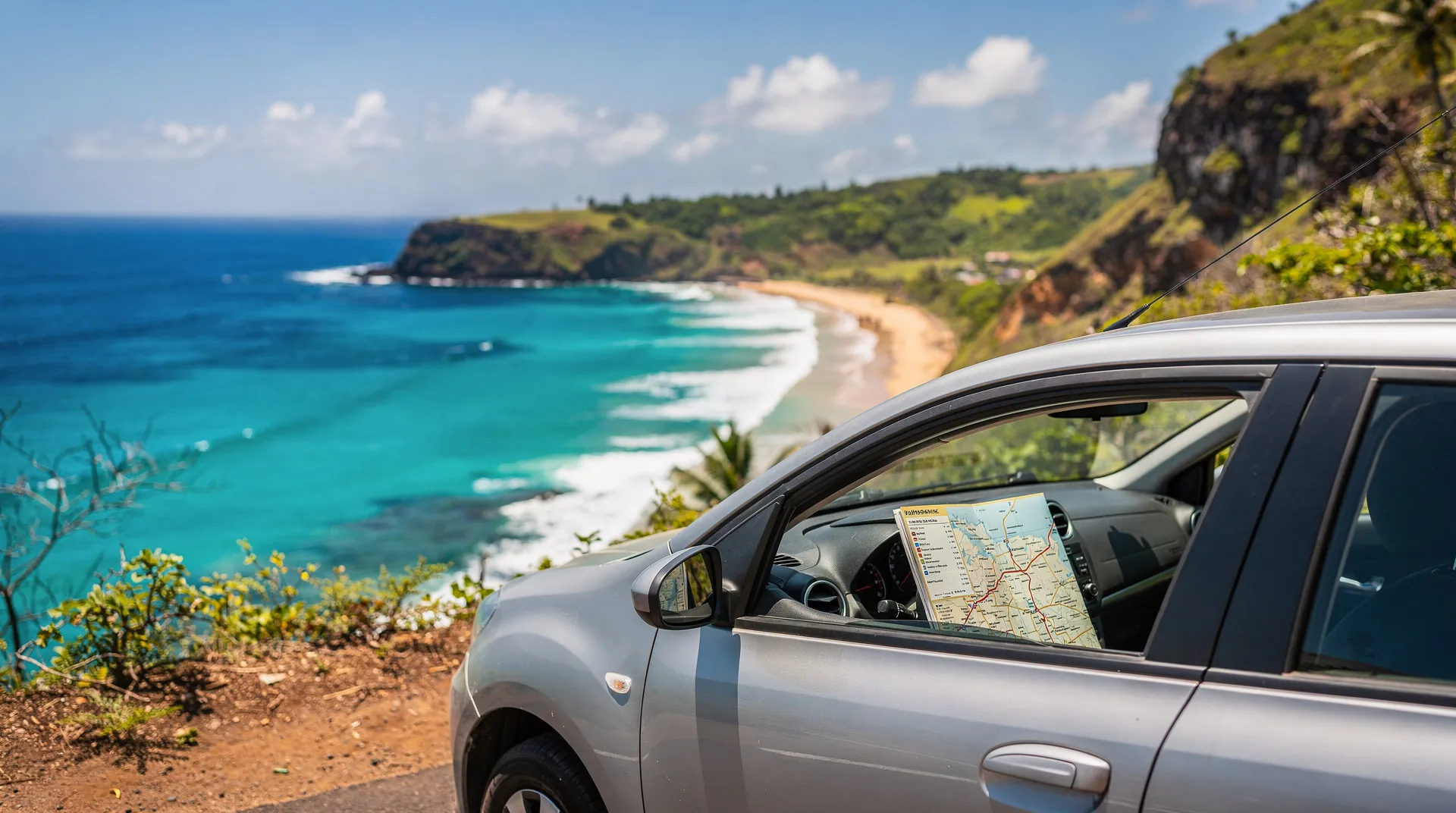
| Driving | On the left, valid European license, GPS or offline map recommended |
| Best time to book | In advance during high season (July-August, December) |
| Best area without a car | Grand Baie, self-sufficient on foot |
The real cost of a rental car in Mauritius
What a rental actually costs
Rates shown on comparison sites start at 20-25 EUR per day for a small city car, but this base rate is often increased by extras: collision insurance (5 to 15 EUR/day depending on the deductible), tire insurance, airport delivery fees, GPS if not included. Realistically budget 30 to 50 EUR per day for a well-insured rental with airport delivery.
Fuel costs around 1.30 to 1.50 EUR per liter (price capped by the government). Given the island’s short distances, fuel consumption over a full week of road-tripping — including daily back-and-forth trips — rarely exceeds 50 to 70 EUR.
Total for a week with a car: 250 to 400 EUR depending on options and mileage. To compare rental companies and insurance in detail, see our complete car rental guide.
What the alternatives cost
A taxi for a day trip (from your accommodation to Chamarel, for example, round trip with waiting time): 70 to 100 EUR. Over 3 to 4 excursions in a week, taxis add up to 210 to 400 EUR — roughly the same budget as a car rental.
An organized minibus tour (to visit Chamarel and the gorges, for example): 35 to 60 EUR per person, or 70 to 120 EUR for two. Cheaper than a private taxi, but less flexible on timing and stops. For those not renting a car, organized excursions departing from your accommodation cover the must-see sites: see the minibus excursions from Mauritius.
For a personalized exploration without driving, a private driver-guide for the day offers the flexibility of a custom itinerary without the stress of driving.
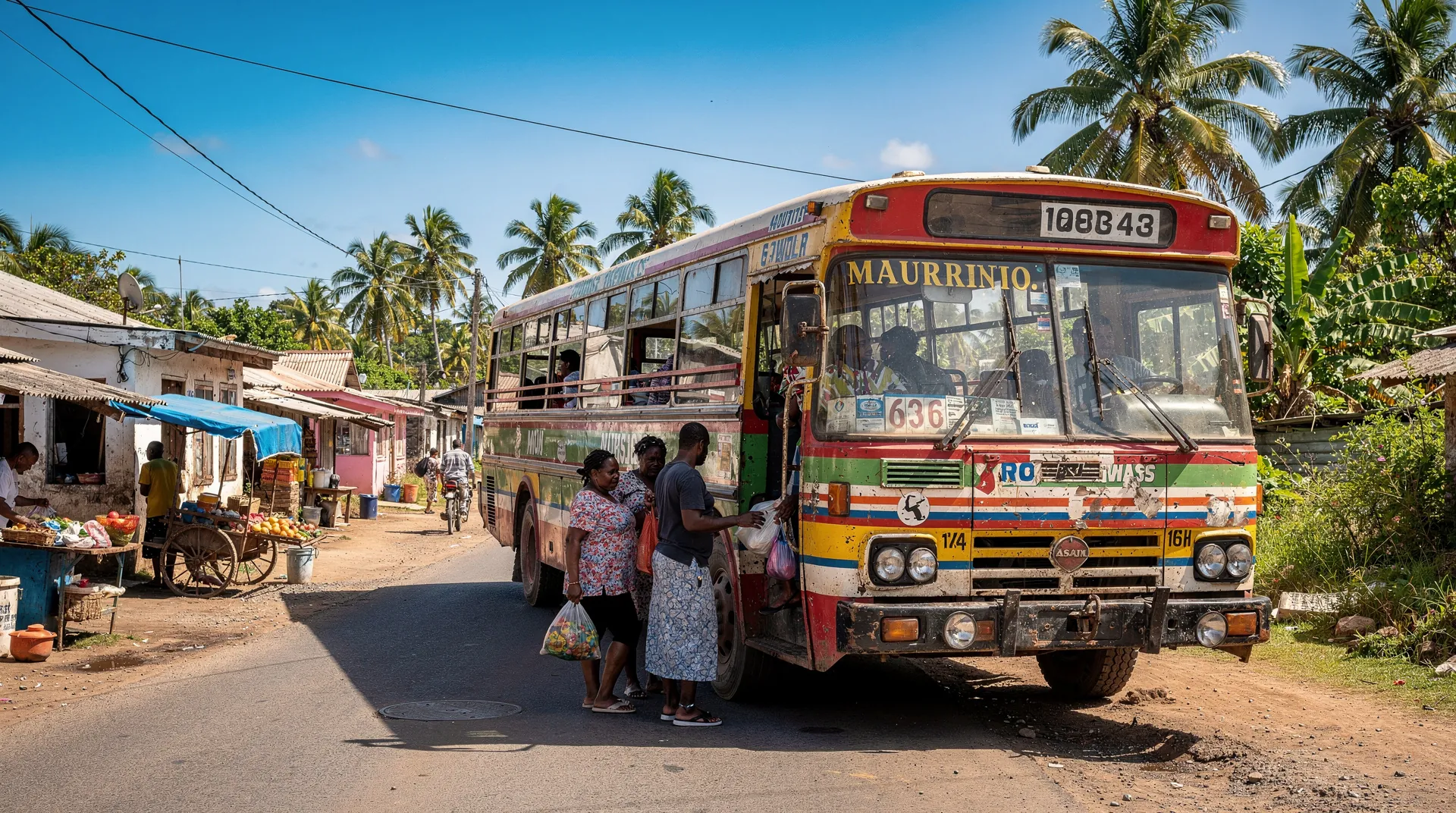
The local bus: less than 1 EUR per ride, but limited to urban areas and main roads. Not practical for reaching remote natural sites.
The arithmetic conclusion is that a rental car is generally more cost-effective than taxis once you plan more than 2 to 3 day trips outside your accommodation area. It’s also considerably cheaper than taxis for long-distance transfers (airport-Grand Baie: 30 to 50 EUR by taxi, paid off in 1 to 2 days of rental).
Advantages of a rental car
Total freedom
This is the number one argument. With a car, you leave when you want, stop where you want, and stay as long as you want at any given site. If you fall in love with a view and want to stay there two more hours, you can. If you spot a local snack stand on the side of a country road and want to stop for lunch, nothing’s stopping you.
This freedom is especially valuable on an island as compact as Mauritius, where you can easily combine several sites in a single day if you have your own car.
Access to must-see sites
Without a car, several of the most beautiful and significant sites in Mauritius are inaccessible or very difficult to reach:
The Black River Gorges and the national park are crossed by a winding, lush road. No bus goes there. The Chamarel waterfall and the colored earths of Chamarel are off the bus routes. The wild southern tip (Gris-Gris, Le Batelage, the Souillac coast) isn’t served by public transport. The inland villages (Henrietta, Camp de Masque, the Flacq region) are impossible to explore without a vehicle. Driving around the island in a day, an experience many travelers attempt, obviously requires a vehicle.
The comfort of transfers
Mauritius’s airport is located in the southeast of the island, quite far from the main tourist areas. A taxi from the airport to Grand Baie costs around 40 to 55 EUR. A taxi ride to Flic-en-Flac costs 25 to 35 EUR. With a rental car picked up at the airport, these transfers are included in your daily rate. If you prefer not to drive on arrival, all the airport transfer options are detailed in a dedicated guide.
Disadvantages of a rental car
Driving on the left
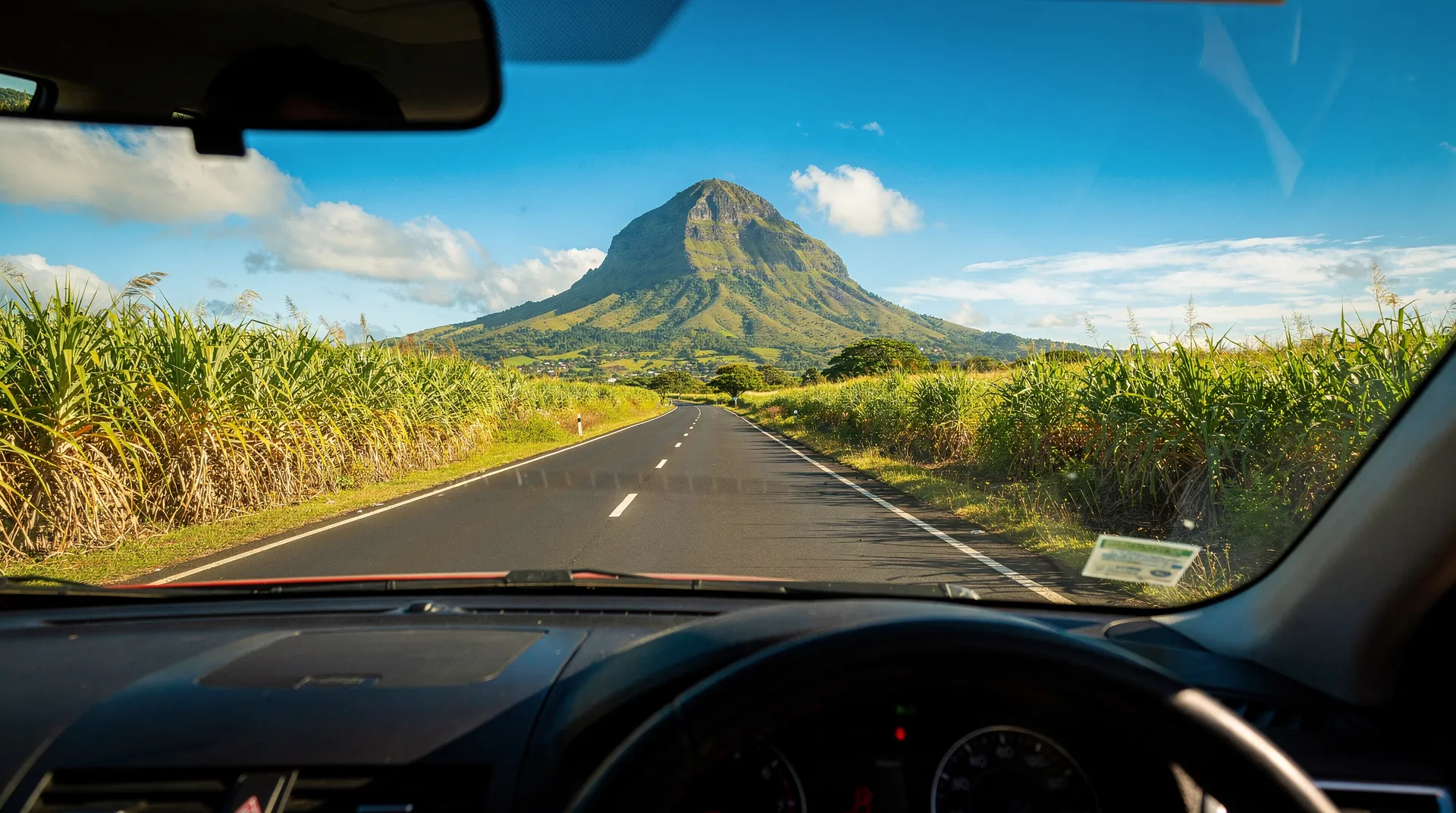
Mauritius follows British road rules: you drive on the left, with the steering wheel on the right. For a French, Swiss or Belgian driver used to driving on the right, the first few kilometers can be stressful. Most drivers adapt quickly, but roundabouts and narrow mountain roads deserve extra attention.
Mauritian roads in urban areas can get congested during rush hour, especially around Port Louis in the morning and evening. But outside these times, traffic generally flows smoothly.
The cost for short stays
If you only plan 2 to 3 days of rental during a 7-day trip spent mostly at a resort, alternatives (taxi or organized tours) can be more practical and end up comparable in cost. A rental car really pays off over a full week or several consecutive days of exploring.
Parking in cities
In Port Louis and town centers, parking can be a headache. But at tourist areas (beaches, natural sites), parking is generally free and available.
When to skip the car
The choice of coast greatly influences this need: to find out which area best suits your stay, read the comparison between the east and west coasts.
The isolated all-inclusive resort
If you’re staying a week at a 5-star all-inclusive resort and your itinerary is limited to the beach, the pool, the spa and the hotel restaurants, you objectively don’t need a car. The large resorts of Le Morne, Belle Mare or Trou aux Biches offer their own minibus excursions and shuttles to nearby sites. To choose your property, see our selection of the best all-inclusive resorts.
A stay centered on Grand Baie
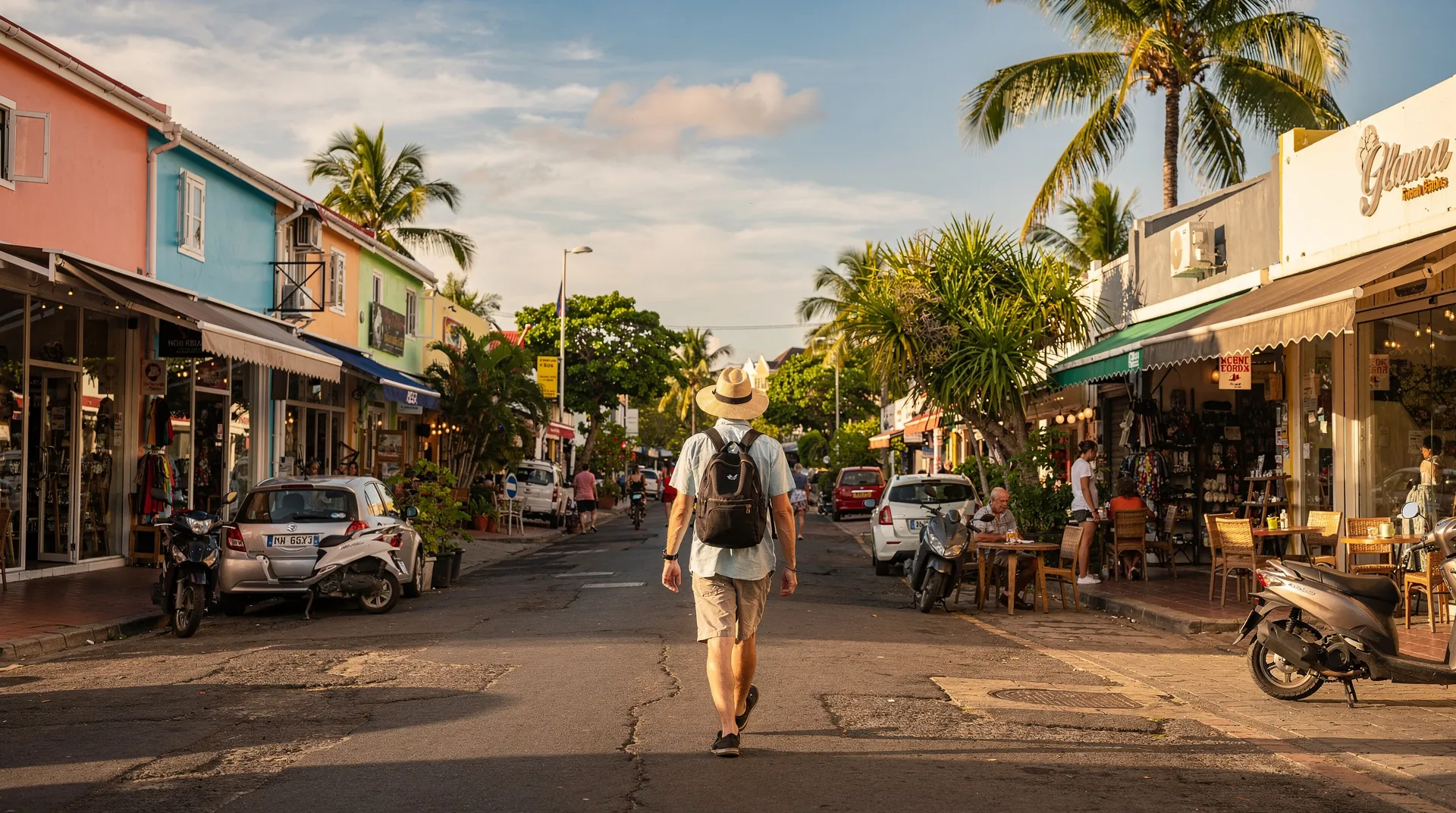
Grand Baie is the only area of the island that’s truly self-sufficient without a car. The beach, restaurants, supermarkets, shops, excursion agencies, local snack stands and bars are all within walking distance. For a stay that doesn’t venture beyond Grand Baie and its immediate surroundings (Pereybere, Mont-Choisy by bike), a car is a superfluous luxury.
The solo traveler or minimalist couple
A solo traveler or a couple willing to rely on public transport and taxis can get by just fine without a car, especially by combining buses for frequent trips and taxis for occasional excursions. This style of travel is more demanding but not impossible, and can even be enriching, forcing you to use local transport and mingle with Mauritians day to day.
Alternatives to a car
The day taxi
Negotiating a taxi for the day with a trusted driver (recommended by your guest house or through an agency) is an appealing option for occasional excursions. A driver who knows the island well can show you off-the-beaten-path spots and adapt the itinerary to your wishes. Budget 70 to 100 EUR for a day with a driver.
Scooter or electric bike
In coastal tourist areas, scooter rentals are available. It’s an economical option (15 to 25 EUR per day) and enjoyable for exploring the coastline, but not well suited to mountain roads or families with children. The rules, risks and rental companies are covered in our article on renting a scooter. Electric bikes work well in flat areas like Flic-en-Flac or Grand Baie for short local trips.
Organized tours
Agencies offer minibus circuits, often themed: north tour, Chamarel tour, east tour. For specific sites, this is an efficient option. The downside is a lack of flexibility: fixed schedules, standardized stops, and sharing the bus with other tourists.
Comparison table: rental car vs. alternatives
| Criteria | Rental car | Day taxi | Organized tours | Local bus |
|---|---|---|---|---|
| Cost over 7 days | 250 to 400 EUR | 490 to 700 EUR (7 days) | 70 to 120 EUR / excursion (2 people) | Less than 1 EUR/trip |
| Schedule freedom | Total | Good (negotiable) | Low (fixed schedules) | Low |
| Access to remote sites (Chamarel, gorges, wild south) | Yes | Yes | Depends on circuit | No |
| Driving stress | Yes (left-hand driving) | None | None | None |
| Suited to isolated all-inclusive resort | Optional | Yes | Yes | Rarely practical |
This table confirms the logic developed above: for a stay of more than 4-5 days with the intention of leaving your hotel, a car remains the most cost-effective and flexible solution. For a short, tightly scheduled stay, organized tours or occasional taxis are largely sufficient.
The special case of peer-to-peer rentals and small local agencies
Alongside the large international chains present at the airport (generally more expensive but with reliable after-sales service), many small Mauritian local agencies offer more attractive rates, sometimes 20 to 30% cheaper. The trade-off: an older fleet of vehicles, sometimes less comprehensive insurance, and less responsive customer service in case of breakdown. If you choose a small agency, always check the vehicle’s condition before departure (dated photos), the existence of 24/7 roadside assistance, and the exact deductible terms in case of an accident. Recent online reviews are the best indicator of reliability for these smaller operators.
Combining a car with public transport
A hybrid strategy, often overlooked, is to rent a car for only part of the trip — typically 3 to 4 days to cover excursions to remote sites (Chamarel, the wild south, Grand Bassin) — and get around on foot, by bus or by taxi the rest of the time, especially if your accommodation is close to amenities. This approach reduces the rental budget while preserving most of the freedom to explore. For this kind of mixed stay, our guide on buses in Mauritius explains the main routes and their schedules.
Verdict: with or without a car?
In the vast majority of cases, for a traveler who really wants to explore Mauritius beyond their accommodation area, a rental car is the best investment of the trip. It offers total freedom, gives access to beautiful sites off the standard tourist circuits, and its cost over a week is comparable to 2 or 3 days of taxis.
The only cases where doing without one is truly justified: the all-inclusive resort with no desire to leave, a stay heavily centered on Grand Baie, or the traveler who accepts relying on public transport and organized tours.
If you choose to rent a car: book in advance (reliable local agencies are often fully booked during high season), opt for comprehensive insurance with zero deductible for peace of mind, and download Google Maps offline before you arrive. To book a car online with a guaranteed discount and airport delivery, compare the available offers. Also check the best time to visit Mauritius, as the season affects both prices and vehicle availability.
For an alternative to driving, private guided tours of the north or south of the island offer an excellent compromise: private tour of northern Mauritius or private tour of southern Mauritius with a driver-guide included.