Chamarel
Chamarel in the western mountains: the Seven Coloured Earths, a spectacular waterfall, a rum distillery and tropical forests. Complete 2026 guide.
- Area
- Western highlands
- Vibe
- Nature, laid-back
- Beaches
- None (inland)
- Access
- 1h from the airport, 30 min from Flic en Flac
Chamarel: the natural wonders of the western highlands
| At a glance | |
|---|---|
| Where | Western highlands, at roughly 300 m elevation |
| Price | Seven Coloured Earths and waterfall are paid (combined ticket); the rum distillery is paid (tour + tasting); the village and scenic roads are free |
| Time needed | Half a day for the essentials, 1-2 days to combine with hiking and Bois Chéri |
| Getting there | A rental car is recommended (30 min from Flic en Flac); otherwise an organised excursion or a day taxi |
| Best time | May to November for the light on the coloured earths, December to April for the waterfall’s flow |
Chamarel is one of the most original and spectacular destinations in Mauritius. Perched in the western highlands at roughly 300 metres of elevation, this village, surrounded by lush tropical forest and terraced sugarcane fields, is home to several of the island’s most visited natural and cultural attractions. The road up to Chamarel from the coast is a spectacle in itself: the hairpin bends gradually reveal increasingly stunning panoramas over the Flic en Flac lagoon and the west coast.
The Seven Coloured Earths, the Chamarel waterfall, and the Rhumerie de Chamarel rum distillery are the three flagship attractions of an excursion that fits naturally into any west coast itinerary. But Chamarel is also an authentic village with a preserved local life, breathtaking views over the coast, and an exuberant nature that contrasts beautifully with the seaside scenery below. Here you breathe fresh highland air and hear birds singing in the fruit trees — a striking difference from the atmosphere of the big beach resorts.
To fit Chamarel into your trip planning, our 7 days in Mauritius guide offers a route combining Chamarel with Le Morne and Flic en Flac in a single optimised day. Our Mauritius road trip guide also includes Chamarel in a full west coast circuit.
The Seven Coloured Earths: Mauritius’s unique geological phenomenon
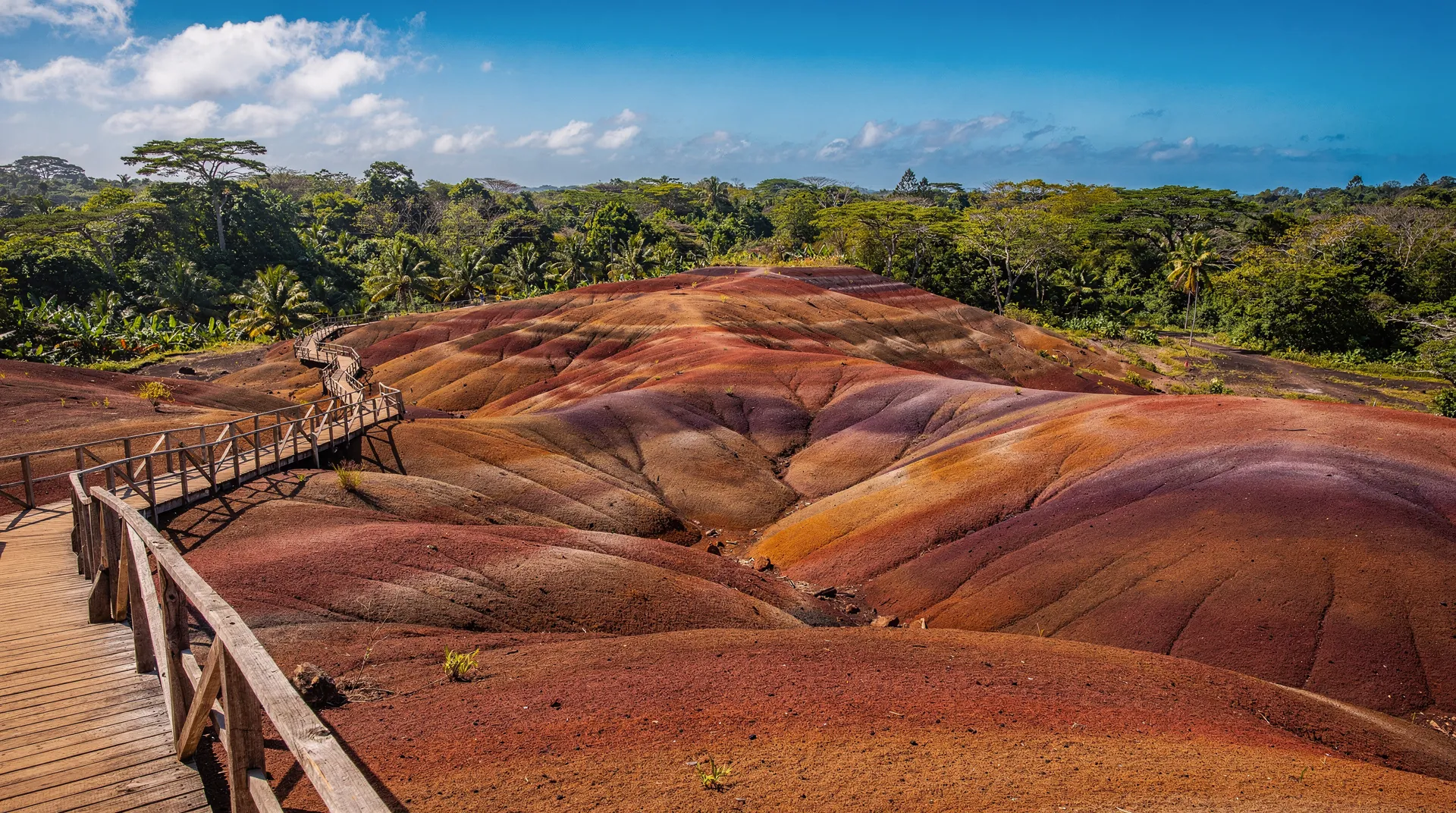
The Seven Coloured Earths are the most singular geological phenomenon in Mauritius and one of the most photographed natural sites in the entire Indian Ocean. These multicoloured volcanic sand dunes owe their extraordinary hues to the decomposition of basaltic volcanic rock which, depending on the temperature at which it solidified during prehistoric eruptions and its degree of oxidation over millennia, took on radically different colours.
To visit Chamarel and its Seven Coloured Earths without worrying about logistics, you can book a Chamarel excursion with the waterfall and the coloured earths straight from your accommodation.
Seven main shades stand out across this landscape of rolling dunes: deep red, chocolate brown, lavender purple, moss green, blue-grey, lilac mauve, and ochre yellow. These colours aren’t uniform horizontal layers — they blend in waves and swirls following the ground movements that have shaped the terrain since its formation. The optical effect is heightened by sunlight, which radically alters how the colours are perceived depending on the time of day and sky conditions. The best viewing conditions are in the morning (between 8am and 10am) and late afternoon (after 3pm), when the low light sharpens the contrasts and brings out every shade.
A fact as fascinating as it is mysterious: if you mix sand of different colours in a jar, it naturally separates back into layers once settled. This phenomenon, linked to the differing density of the particles depending on their mineral composition, is used by local artisans who craft coloured-sand pictures inside glass bottles — souvenirs that are both beautiful and scientifically astonishing.
The site is managed as a tourist attraction, with a paid entrance and facilities (viewing walkway, information panels, souvenir shops). The view remains striking, even though heavy tourist traffic has changed the experience somewhat. To avoid the coach groups that arrive mid-morning, come right at opening time (usually 8:30am). Our dedicated guide to the Chamarel Seven Coloured Earths has all the practical details on entry, opening hours and the best viewpoints.
The Chamarel waterfall: the island’s tallest falls
The Chamarel waterfall is the tallest waterfall in Mauritius, dropping nearly 100 metres. The Saint-Denis river plunges into a dramatically beautiful green gorge, surrounded by lush tropical vegetation that contrasts with the black basalt rock of the cliff face. The sight is striking in both power and natural beauty, especially impressive during a storm.
The view from the purpose-built viewpoint is remarkable, especially during the rainy season (December to April) when the river’s flow peaks and the falls roar with a force you can physically feel. In the dry season the falls carry less water but remain spectacular, with rainbows forming in the spray at the base when the light is right. Access to the foot of the waterfall is sometimes possible via a trail that descends into the gorge, depending on conditions — check with the site managers before setting off on this occasionally slippery path.
The Chamarel rum distillery: liquid gold from the highlands
The Rhumerie de Chamarel is one of the most respected craft distilleries in Mauritius and a must-stop for any lover of quality spirits. Unlike industrial rum made from molasses — a byproduct of sugar production — Chamarel rum is an agricultural rum made directly from freshly pressed sugarcane juice. This more costly method, which preserves all the cane’s aromas, produces rums of remarkable complexity and finesse.
The guided distillery tour (available in French and English, roughly 45 minutes) clearly explains the various stages of production: growing the cane on the surrounding terraced fields, cutting and pressing the juice, natural fermentation, distillation in copper columns, and ageing in French and American oak barrels. The distillery buildings sit within a beautifully preserved 19th-century plantation setting, with views over the terraced cane fields sloping down toward the coast.
The tasting that closes the tour is a chance to sample the different expressions of Chamarel rum: a lively, fruity white agricultural rum, aged rums of 1, 3 and 6 years with notes of vanilla and wood, flavoured rums with tropical fruits (pineapple, lychee, passion fruit) and delicate liqueurs. The shop’s bottles are often cheaper than at the airport — buy here rather than at duty-free to support local production and get a better deal. Our Mauritian food guide also covers the best spots to discover the island’s rums and food craftsmanship.
Hiking and exploring nature
Chamarel is an excellent base for nature lovers and hikers in Mauritius. The Black River Gorges National Park, right nearby, offers marked trails through the island’s last remaining endemic forests — forests that shelter plant and animal species found nowhere else on Earth. Here you can spot Javan deer introduced by the Dutch in the 17th century, macaque monkeys brought from Malaysia, and endemic birds such as the Mauritius fody, the Mauritius kestrel and the echo parakeet.
The hike to Piton de la Rivière Noire (828 metres, the highest point in Mauritius) starts from the national park and takes roughly 3 to 4 hours round trip depending on pace. The climb crosses different ecosystems, from cane fields to endemic forest, before emerging onto windswept ridges. The view from the summit, on a clear day, takes in the entire west coast, the Le Morne lagoon and, on exceptionally clear days, the offshore islands.
Shorter walks are possible right around Chamarel. The scenic road overlooking the coast offers spectacular views of Flic en Flac, the turquoise lagoon and, on a clear day, all the way to Le Morne to the south. These views alone are worth the trip up to the highlands.
The village of Chamarel and its surroundings
Beyond the tourist attractions, Chamarel is an authentic village with a local life worth pausing to observe. Its inhabitants, mostly of Creole heritage, tend fruit gardens, keep goats along the roadside, and attend the colourful Catholic church at the centre of the village. Stalls selling fresh local fruit — mangoes, papayas, pineapples — sometimes line the main road, at local prices well below what you’ll pay at tourist markets.
Chamarel’s back country also hides other lesser-known treasures: coves and hidden springs in the valleys, wild views over the endemic forest, and farms where giant Seychelles tortoises are raised for visitors. These less commercialised attractions reward travellers who take the time to explore beyond the beaten path.
Where to stay in Chamarel
Chamarel has a small number of places to stay, all sharing an exceptional natural setting in the highlands, quite different from the seaside atmosphere of the coast. Our where to stay in Mauritius guide covers the options available inland.
Charming lodges and guesthouses
Several small hotels and charming guesthouses sit in the hills above Chamarel, offering rooms with views over the mountains or the coast. The absolute calm, the relative coolness that comes with altitude (around 5°C cooler than at sea level) and the lush vegetation make them very pleasant bases, especially in summer when coastal heat becomes oppressive. These places are ideal for travellers seeking immersion in nature, away from the tourist bustle.
Villas and guesthouses in the highlands
Renting a villa with a private pool is an option around Chamarel. These properties, often with panoramic coastal views, offer plenty of privacy and comfort — very appealing for families or groups wanting to explore the interior of the island independently.
Flic en Flac as a day base
Many visitors combine Chamarel with a day trip from their west coast hotel, particularly Flic en Flac or Le Morne. This lets you enjoy the beach in the morning and explore the highlands in the afternoon, or vice versa. Organised excursions from the big hotels usually include the Seven Coloured Earths, the waterfall and the rum distillery in a single full-day circuit.
Getting to Chamarel and getting around
Chamarel is not conveniently served by public transport for tourists. Renting a car in Mauritius is strongly recommended — it’s the only way to explore Chamarel at your own pace and stop at the scenic viewpoints along the way. From Flic en Flac, the road climbs into the hills for about 30 minutes. From Le Morne, allow 20 minutes. From Port Louis, access via the M2 motorway and then the inland road takes about 1 hour.
Organised excursions from hotels on both the east and west coasts offer minibus or van tours to Chamarel, including transport, guide and admission fees. This is a convenient option for those who aren’t renting a car, but it limits your freedom to explore. Taxis in Mauritius also offer full-day excursions to Chamarel from any hotel on the west coast.
Best time to visit
Chamarel is worth visiting year-round. For the Seven Coloured Earths, dry-season light (May to November) is optimal: clear skies let the colours show at their most saturated and contrasted. For the Chamarel waterfall, the rainy season (December to April) delivers the most spectacular, impressively powerful flow.
The relative coolness of the highlands (5 to 8°C cooler than at sea level) is especially welcome in summer (December to March) when coastal heat can become oppressive. This milder temperature also makes hiking more pleasant. For detailed weather forecasts, see our weather in Mauritius guide and our best time to visit Mauritius guide.
Excursions from Chamarel
Combining Chamarel with west coast destinations makes for exceptionally rich days out. The classic formula — Seven Coloured Earths and waterfall in the morning, lunch at the Rhumerie de Chamarel, afternoon on the beach at Flic en Flac or Le Morne — is one of the best days Mauritius has to offer.
To fit Chamarel into a full southern-island day that also includes Grand Bassin and other notable sites, a excursion to the south of the island via Chamarel is an excellent option for travellers without a car.
For a culinary discovery of the plateau’s flavours, the tea and rum route with tasting is the perfect complement to the coloured earths visit.
Heading south, La Gaulette and its views of Le Morne from the coast are 30 minutes away. The Bel Ombre nature reserve, with its forest hikes and safaris, is 40 minutes away. Our 7-day Mauritius itinerary includes Chamarel in an optimised west coast circuit, and our family itinerary offers kid-friendly activities in this region.
Practical tips
Combine your Chamarel visit with a day on the west coast for a complete experience. The restaurant at the Rhumerie de Chamarel is one of the best in the area, with a panoramic terrace over the plantation and quality Creole cuisine — reservations recommended in high season, especially for groups.
Wear closed, comfortable shoes for the Seven Coloured Earths and the trail toward the waterfall. The descent to the base of the falls can be slippery in wet weather. To stay connected during your highland excursions, our internet and eSIM in Mauritius guide points you to coverage areas and the best options.
Chamarel and the Bois Chéri forest: Mauritian tea
A few kilometres southeast of Chamarel, the Bois Chéri hills hold Mauritius’s best-known tea plantations. The Bois Chéri tea factory, founded in 1892, is one of the oldest on the island and produces teas well regarded across the region. Touring the plantation and factory is an ideal complement to a Chamarel visit.
Strolling through the rows of tea plants, their leaves glistening in the highland sun, is a uniquely sensory experience. The tea pickers sometimes work in the morning, giving visitors a direct view of this age-old craft. Tasting the different varieties of Mauritian tea in the adjoining tea room rounds off the visit on a note of comfort and flavour.
Combining Chamarel and Bois Chéri in the same day makes for an excellent itinerary, giving a complete picture of the quality agricultural produce of the Mauritian back country — agricultural rum in Chamarel, tea in Bois Chéri.
The Chamarel rum distillery in detail: a tasting guide
For spirits lovers, the tasting at the Rhumerie de Chamarel deserves time and attention. The distillery’s range of rums is varied, spanning different styles and ageing levels.
The agricultural white rum, distilled directly from freshly pressed cane juice, is lively, fruity and aromatic — perfect for local cocktails like a lime rum sour or the famous Mauritian “Turbo”. The aged rums, matured in oak barrels, develop notes of vanilla, caramel and wood depending on how long they’ve aged: the 3-year is elegant and approachable, the 6-year is complex and full-bodied.
The flavoured rums with tropical fruit are the most accessible for beginners: pineapple, lychee, passion fruit, soursop — macerations made by steeping fruit directly in white rum for several months. These artisanal preparations are unique to Mauritius and impossible to find elsewhere. The distillery shop also sells miniatures and gift packs that make excellent souvenirs. Our Mauritian food guide covers the full range of the island’s artisanal food production.
Geology and formation of the Seven Coloured Earths
To fully understand the Seven Coloured Earths, a little geology helps. Mauritius is of volcanic origin, formed by undersea eruptions roughly 7 to 8 million years ago. The island’s bedrock is basalt, a dark volcanic rock that gradually breaks down into laterite (reddish-brown clay) through chemical weathering.
At Chamarel, this decomposition process produced different minerals depending on local conditions of temperature, humidity and the chemical makeup of the original rock. Iron oxides create the red, orange and brown tones. Aluminium oxides give the white and grey shades. Clay minerals, depending on their hydration state, produce the green and blue tones. The combination of these processes, in varying proportions across the site, creates the colour palette that makes the Seven Coloured Earths so unique.
This geological context also explains why the different sands separate naturally — their differing compositions and densities make them immiscible over the long term, like oil and water. Our Chamarel and the Seven Coloured Earths guide covers these scientific aspects in an accessible, illustrated way.
Chamarel and its giant tortoises: a unique wildlife park
A short distance from the Seven Coloured Earths, several private wildlife parks in the Chamarel area are home to giant tortoises from the Seychelles and Aldabra. These fascinating animals, which can live more than 150 years and weigh up to 300 kilograms, are survivors of the island megafauna that once characterised the Indian Ocean’s tropical islands before humans arrived.
The Chamarel parks let visitors get close to, and even touch, the tortoises — an experience especially popular with children. Watching the animal graze slowly, feeling the warmth of its ancient shell under your fingers, and seeing it raise its wrinkled neck toward a camera lens creates memories that linger long after the trip.
These tortoises were introduced to Mauritius as part of conservation programmes aimed at restoring the island’s lost populations. Mauritius’s own endemic giant tortoise species (Cylindraspis) all died out in the 18th century due to intensive hunting by sailors and settlers, who saw them as an easy source of food. Seychelles giant tortoises now fill a similar ecological role in certain reintroduction areas.
Chamarel, a destination for quiet luxury
While Chamarel is mainly known as a day-trip destination from the coast, a handful of upscale places to stay in the highlands deserve a mention. These properties — charming lodges and characterful villas set on private grounds with panoramic views — offer a quiet luxury experience very different from the beach resorts on the coast.
Staying in Chamarel means watching sunsets over the coast from up high, seeing the morning mist over the valleys from your room, and enjoying a natural coolness the coastal resorts simply don’t have. For travellers looking for an alternative to beach hotels while staying in Mauritius, Chamarel’s accommodations are a memorable, original option. Our villas in Mauritius guide presents a selection of the best private rentals in the western highlands.
Budget for a day in Chamarel
A day trip to Chamarel involves several costs worth planning for. The combined entry to the Seven Coloured Earths and the waterfall is modest (a few hundred rupees per adult, discounted for children), a visit to the Rhumerie de Chamarel with tasting adds to that budget, and lunch on site — especially at the distillery’s restaurant — is the most variable cost depending on the standard you choose.
If you go through an organised excursion rather than renting a car, the price usually includes transport, guide and admission fees, which simplifies budgeting but costs more than visiting independently. Our Mauritius budget guide helps place this expense within your overall trip budget.
Chamarel with young children
With children, Chamarel works well as a family outing as long as you adapt the pace. The viewing path at the Seven Coloured Earths is flat and short, manageable with an all-terrain stroller, but the trail to the base of the waterfall is steeper and slippery in wet weather — with very young children, it’s best to stick to the purpose-built viewpoint.
The distillery tour skips the tasting for younger visitors but remains educational about the production process. The nearby giant tortoise park is often the highlight of the day for little ones. Our family itinerary and our family activities in Mauritius guide suggest other stops that pair well with Chamarel.
Frequently asked questions about Chamarel
Is the entry fee for the Seven Coloured Earths worth it? Yes, despite the touristy feel of the setup. The geological phenomenon is genuinely unique, and the view over the multicoloured dunes is striking. Come early in the morning to avoid the crowds and see the colours in the best light.
Can you visit Chamarel without a car? Technically yes, via organised excursions from hotels or a day taxi. But a rental car gives you much more freedom to stop at scenic viewpoints along the way and make spontaneous stops.
Do you need to book ahead for the Rhumerie de Chamarel? For the tour and tasting, not necessarily. For lunch at the distillery’s restaurant (very popular), booking online at least 24-48 hours ahead is recommended in high season.
Is Chamarel suitable for children? The Seven Coloured Earths and the waterfall are perfectly accessible for children. The distillery offers a family-friendly tour (children watch the process without tasting, of course). The nearby tortoise park is especially popular with little ones.
How much time should I set aside for a full visit to Chamarel? Allow half a day (3 to 4 hours) for the Seven Coloured Earths, the waterfall and the distillery. To combine it with a hike in the Black River Gorges National Park or a visit to the Bois Chéri tea plantation, plan for a full day.
Can you swim at the Chamarel waterfall? No, swimming at the base of the falls isn’t allowed for safety reasons: the flow is powerful, especially during the rainy season, and the rocks are slippery. Viewing is from the purpose-built lookout point.