Kitesurfing and Surfing in Mauritius: Spots, Schools and Practical Tips
Where can you kitesurf and surf in Mauritius?
Le Morne is the kitesurfing capital (May to November), while Tamarin is the temple of surfing for all levels. Expect to pay 80 to 120 euros for a half-day beginner lesson.
Kitesurfing and surfing in Mauritius: introduction
Mauritius ranks among the top destinations for board sports enthusiasts in the Indian Ocean. With lagoons protected by a coral reef, steady winds and generous swell, the island offers exceptional conditions for both kitesurfing and surfing. Whether you’re a beginner chasing your first taste of gliding across the water or a seasoned rider looking for a challenge, Mauritius has plenty to offer.
The island’s geography plays a central role: the coral reef that almost entirely surrounds Mauritius creates calm inner lagoons perfect for learning, while the passes through the reef generate powerful, consistent waves for experienced surfers. The trade winds, which dominate from April to November, guarantee memorable kitesurfing sessions on the west and southwest coasts of the island.
At a glance
| Where | Le Morne (kitesurfing), Tamarin (surfing) |
| Price | around 80 to 120 EUR for a half-day beginner lesson |
| Time needed | 2 hours for a taster lesson, several days to progress |
| Getting there | stay in Le Morne / Riviere Noire or Tamarin / Flic-en-Flac |
| Best time | kitesurfing: May to November; surfing: May to October for the best swells |
Kitesurfing in Mauritius
Le Morne: the mecca of kitesurfing
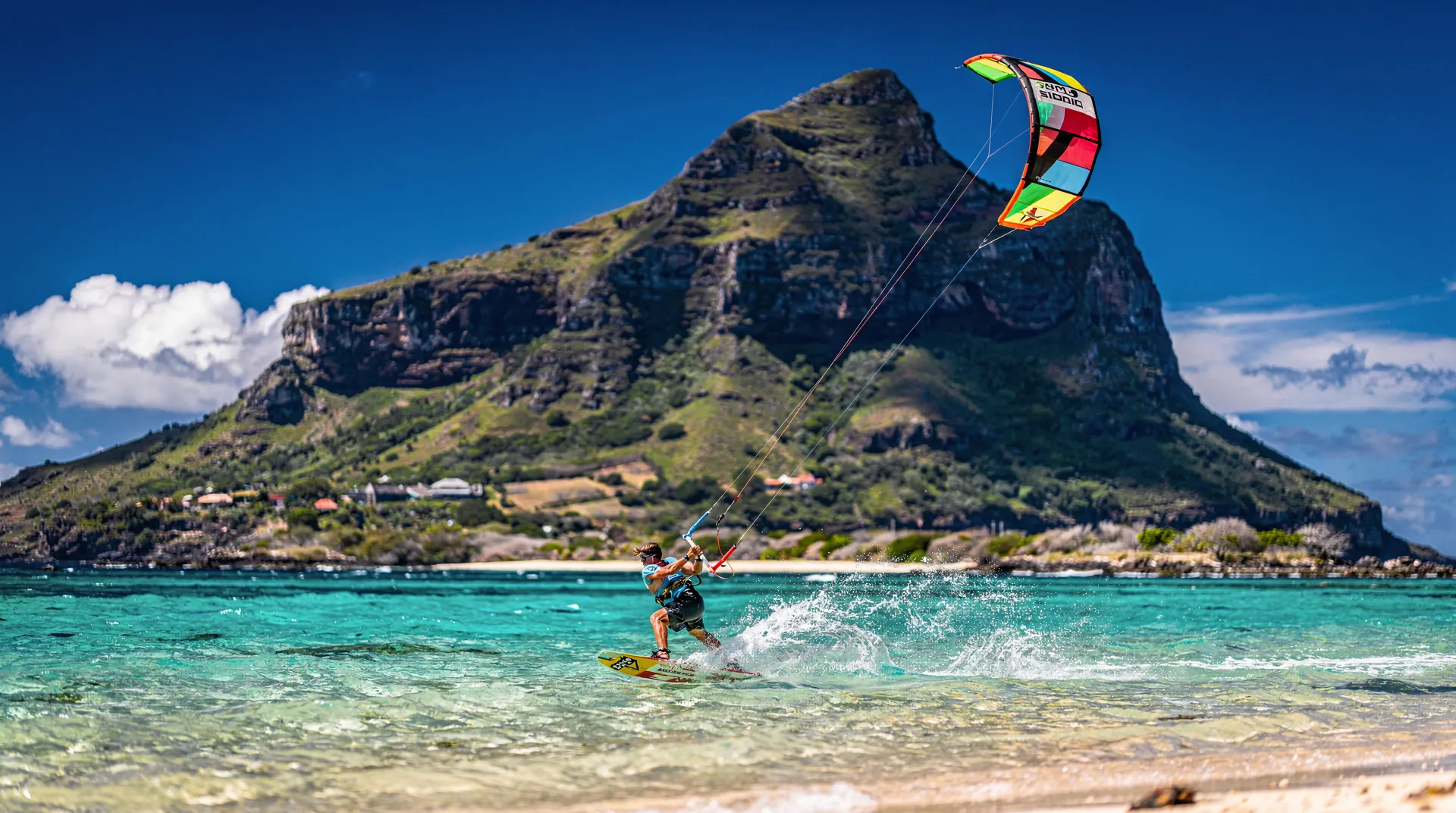
Le Morne Brabant, a volcanic peninsula listed as a UNESCO World Heritage site, is the most famous kitesurfing spot in the entire Indian Ocean. The village of Le Morne, at the southwestern tip of the island, benefits from steady trade winds that blow almost constantly from May to November.
In the same area, you can spend the day and also book a sunset catamaran cruise along the west coast — a perfect complement to a morning kitesurfing session. The white sand beach facing the turquoise lagoon makes for an absolutely stunning setting, as our complete guide to Le Morne beach explains in detail.
What makes Le Morne so special for kitesurfing is the layout of its waters: the inner lagoon offers a shallow, wave-free zone ideal for beginners, while the pass and outer reef provide more technical conditions for advanced riders looking to jump, pull tricks or ride the waves.
The spot is also famous for hosting the annual Mondial du Vent, an international kitesurfing and windsurfing festival that draws the world’s top riders as well as thousands of spectators. The event usually takes place in July and is, on its own, a good reason to visit Mauritius.
The best season for kitesurfing
Kitesurfing season proper runs from May to November, peaking between July and September. During this period, the trade winds blow steadily, typically between 15 and 30 knots depending on the day. Conditions are most consistent between 10am and 5pm.
From December to April (the rainy and cyclone season), the wind is less regular and more unpredictable. Sessions are still possible, but conditions vary. This period suits surfers better.
Kitesurfing schools at Le Morne
Several established schools certified by the IKO (International Kiteboarding Organization) operate at Le Morne. IKO lessons guarantee structured, safe teaching.
Kite Lagoon is one of the most established. It offers lessons in French and English, with instructors certified IKO level 2. Their programmes include:
- 2-hour taster lesson: around 80 euros per person
- 9-hour beginner package (three 3-hour sessions): around 250 euros
- Improvement lessons: from 60 euros an hour
- Equipment rental for independent riders: 50 to 70 euros per half-day
ION Club Le Morne, affiliated with the international ION Club group, offers complete packages including accommodation. Their centre is particularly well equipped with recent gear.
Kite Surfing Association of Mauritius also offers lessons at more affordable rates, with guided learning led by highly experienced local instructors.
Other kitesurfing spots
While Le Morne is the best known, other spots are worth a look:
Anse La Raie, in the north, offers a calm, shallow lagoon that’s perfect for beginners. The wind is lighter there but still enough to learn. Ideal if you’re staying in the Grand Baie area.
Pointe d’Esny, in the southeast, attracts intermediate riders thanks to its flat water and easy access. Wind is reliable there in season.
Mont Choisy, on the north coast, is used by local kiteboarders and offers a nice stretch of water, although the wind can sometimes be less consistent there.
Surfing in Mauritius
Tamarin: the temple of surfing
If Le Morne belongs to the kitesurfers, Tamarin is the sacred ground of Mauritian surfers. This small west coast village is home to the island’s most legendary wave: Tamarin Bay, a long, powerful left-hander that breaks beautifully when the South Atlantic swell reaches Mauritius.
The Tamarin wave breaks over a bed of sand and rock, creating variable conditions depending on swell size. On small swells (1 to 1.5 metres), it’s accessible to intermediate surfers. On large swells (2 to 3 metres and beyond), it becomes a serious wave reserved for experienced riders. Its reputation exploded in the 1970s following the film “The Forgotten Island of Santosha,” which showed Australian and Californian surfers riding this pristine wave.
Today, Tamarin remains a living surf spot with a genuine local culture. Mauritian surfers are out in the water every morning, and the surfing community is welcoming as long as you respect the priority rules in the lineup.
Other surf spots in Mauritius
One Eye, located in the reef pass facing Le Morne beach, is considered the most powerful and demanding wave in Mauritius. It’s a right-hander over reef that can exceed 3 metres. Reserved for very experienced surfers, it’s accessible only by boat or kitesurf.
Darne, in the south of the island near Souillac, offers several reef break spots for intermediate to advanced riders. The setting is wild and less crowded than Tamarin.
Ilot Sancho, accessible by boat from Mahebourg, offers an enjoyable reef wave on a good south swell.
Flic-en-Flac on the west coast has a few beach break spots that work on small swells, suitable for beginners.
Surf season in Mauritius
Unlike kitesurfing, surfing is potentially possible year-round, but the best conditions depend on the type of wave you’re after.
From May to October (dry season), southwest swells regularly feed the spots on the west and south coasts. Tamarin and One Eye are at their best. Winds are offshore in the morning, which creates ideal conditions with well-shaped waves.
From November to April (hot season), summer swells can activate certain spots on the north and east coasts. Conditions are generally smaller and more variable.
Surf schools
Tamarin Surf School is the go-to school on the west coast. Founded by passionate local surfers, it offers:
- 2-hour beginner lesson on the beach and in the water: 60 to 80 euros
- Package of 5 lessons: around 300 euros
- Board and wetsuit rental: 20 to 30 euros per half-day
Kite and Surf in Flic-en-Flac combines both disciplines and offers lessons suited to all levels.
Black Rock Surf Club runs guided sessions for beginners in protected areas, with suitable equipment (longboards, softboards).
Equipment
What you need to know before you go
If you’re an independent kiteboarder, you can bring your own kite (boats generally accept the gear), but boards are bulky. Most schools offer recent equipment suited to local conditions.
For surfing, foam boards (softboards) are recommended for beginners. Advanced riders often bring their own board, but rentals are available and affordable.
Sunscreen is essential: the Mauritian sun is intense even on cloudy days. Choose reef-safe mineral formulas.
Clothing and safety
A short wetsuit (shorty) can be useful to protect against board rash and the occasional jellyfish. The water is warm (25 to 29°C depending on the season), so a thick wetsuit isn’t necessary.
For kitesurfing, a helmet and impact vest are strongly recommended for beginners. IKO-certified schools provide these as standard.
Practical tips and budget
Planning your surf or kitesurf trip
If surfing or kitesurfing is your main reason for coming to Mauritius, choose your accommodation based on the spot you want to practise at. For Le Morne kitesurfing, stay in Le Morne or Riviere Noire. For Tamarin, opt for guesthouses in Tamarin or Flic-en-Flac (30 minutes to the north). For your arrival, a private transfer from the airport to your accommodation makes your first day easier, especially if you’re arriving with bulky surf gear.
Contact schools before your arrival, especially in high season (July-August), as slots fill up quickly. To get from one spot to another, for example from Le Morne to Tamarin, a rental car on the island remains the most practical way to carry your gear.
Indicative budget
For a week of kitesurfing in Mauritius (flight, basic accommodation, lessons and equipment rental):
- Tight budget: 1,500 to 2,000 euros per person
- Comfortable budget: 2,500 to 3,500 euros per person (3-star hotel)
For a week of surfing with lessons and rental:
- Beginner lessons (5 sessions): 300 to 400 euros
- Board rental: 100 to 150 euros per week
- Guesthouse accommodation: 40 to 70 euros a night
To put these amounts in context alongside the rest of your spending on the island, see our Mauritius budget guide.
Respecting the environment
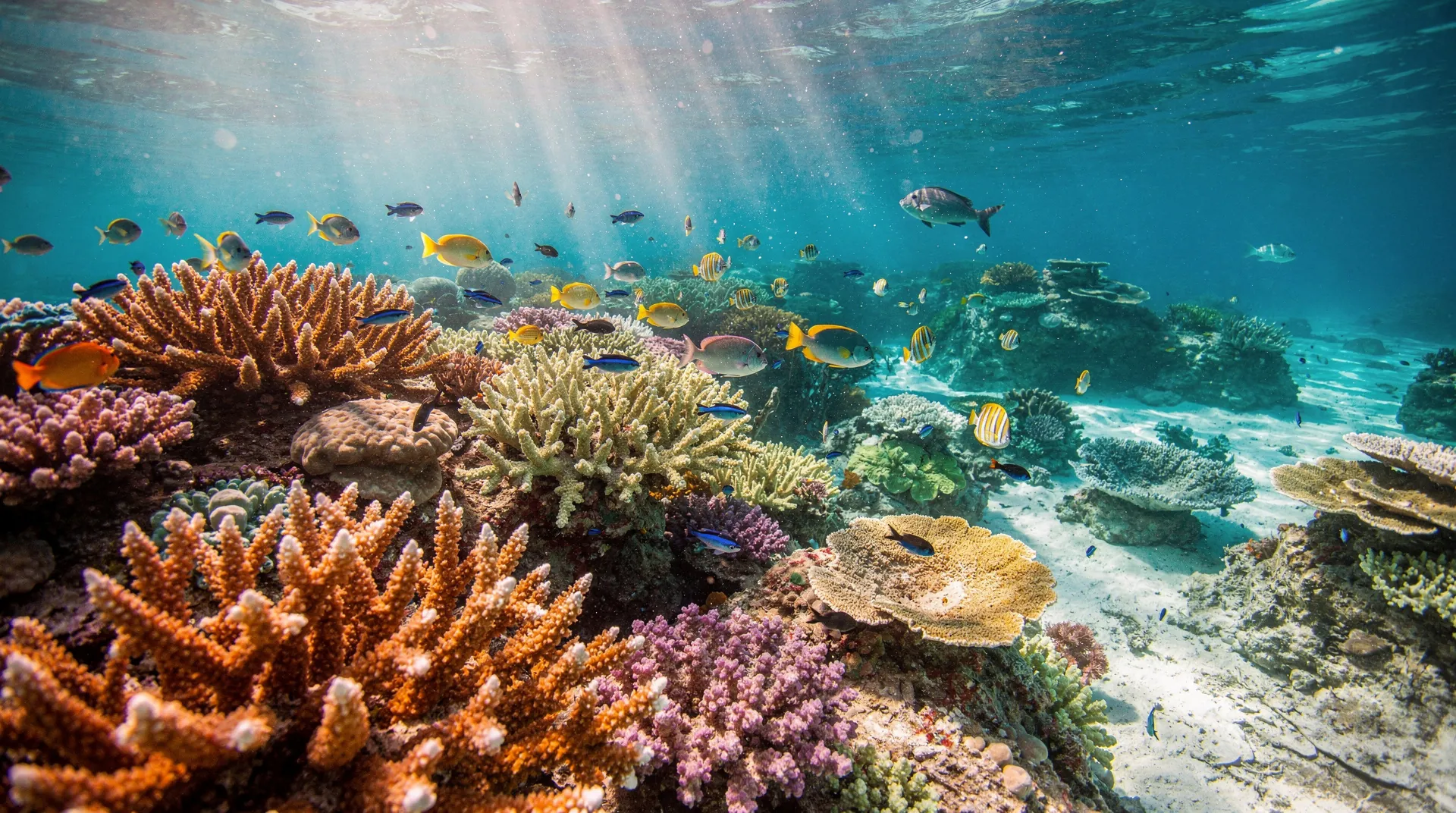
The coral reef that makes Mauritius so beautiful is also fragile. A few essential rules: never walk on the coral, pick up your rubbish from the beach, use sunscreen free of oxybenzone and octinoxate (substances harmful to coral), and never feed the fish.
At Tamarin, respect the pecking order in the water (local surfers have priority) and follow the unwritten rules of the lineup. The local surfing community is welcoming towards those who show respect.
Kitesurfing or surfing: which to choose
| Criterion | Kitesurfing | Surfing |
|---|---|---|
| Main spot | Le Morne | Tamarin |
| Best season | May to November (trade winds) | May to October (southwest swells) |
| Learning curve | More technical at first (kite control), fast progression afterwards | Progressive, depends a lot on the wave chosen |
| Beginner lesson budget | 80 EUR (2h) to 250 EUR (9h package) | 60 to 80 EUR (2h), 300 EUR for a package of 5 |
| Best for | Thrills, jumps, fast-paced riding | Surf culture, wave reading, a gentler sport to learn |
Alternatives and complementary activities
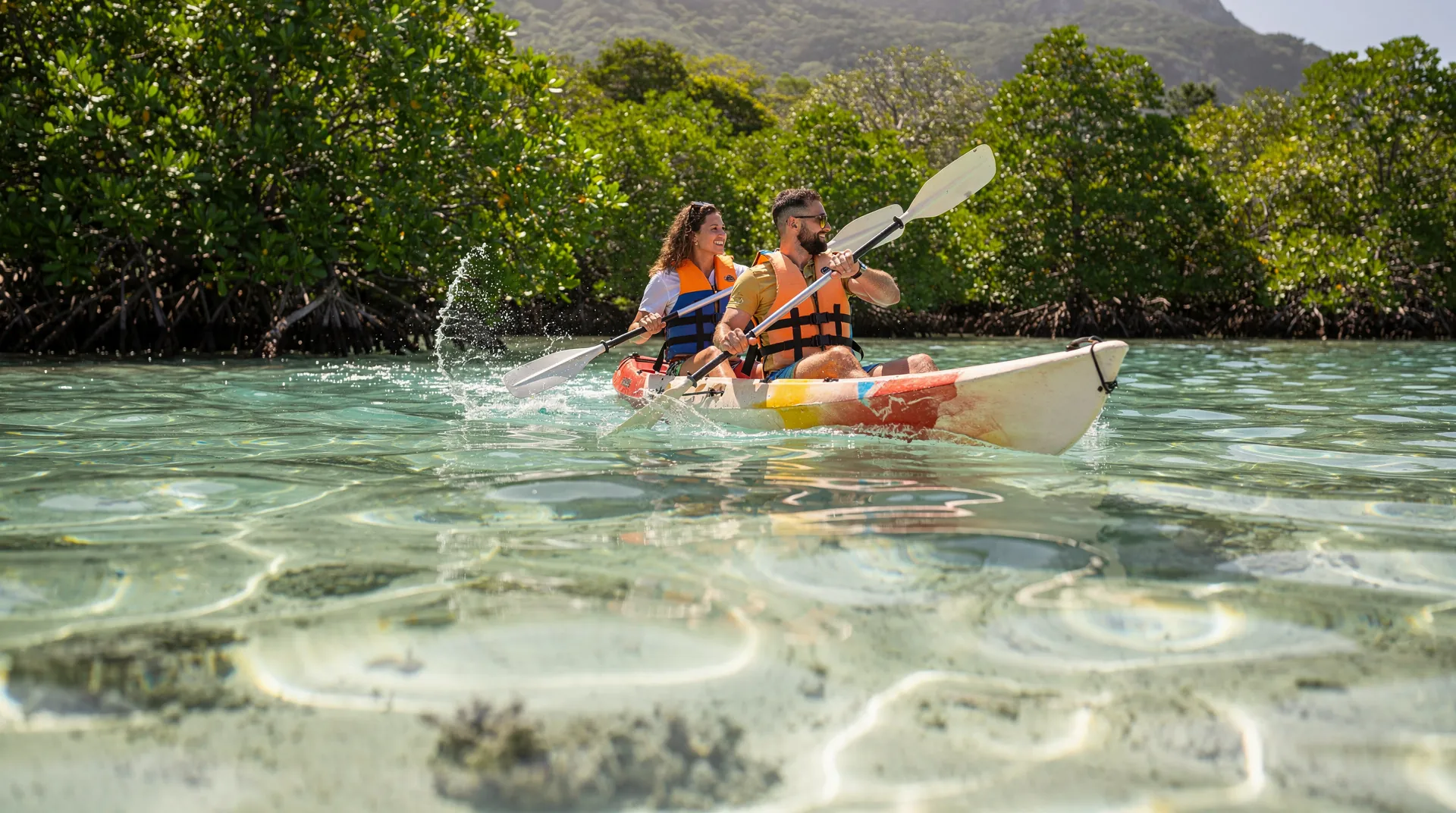
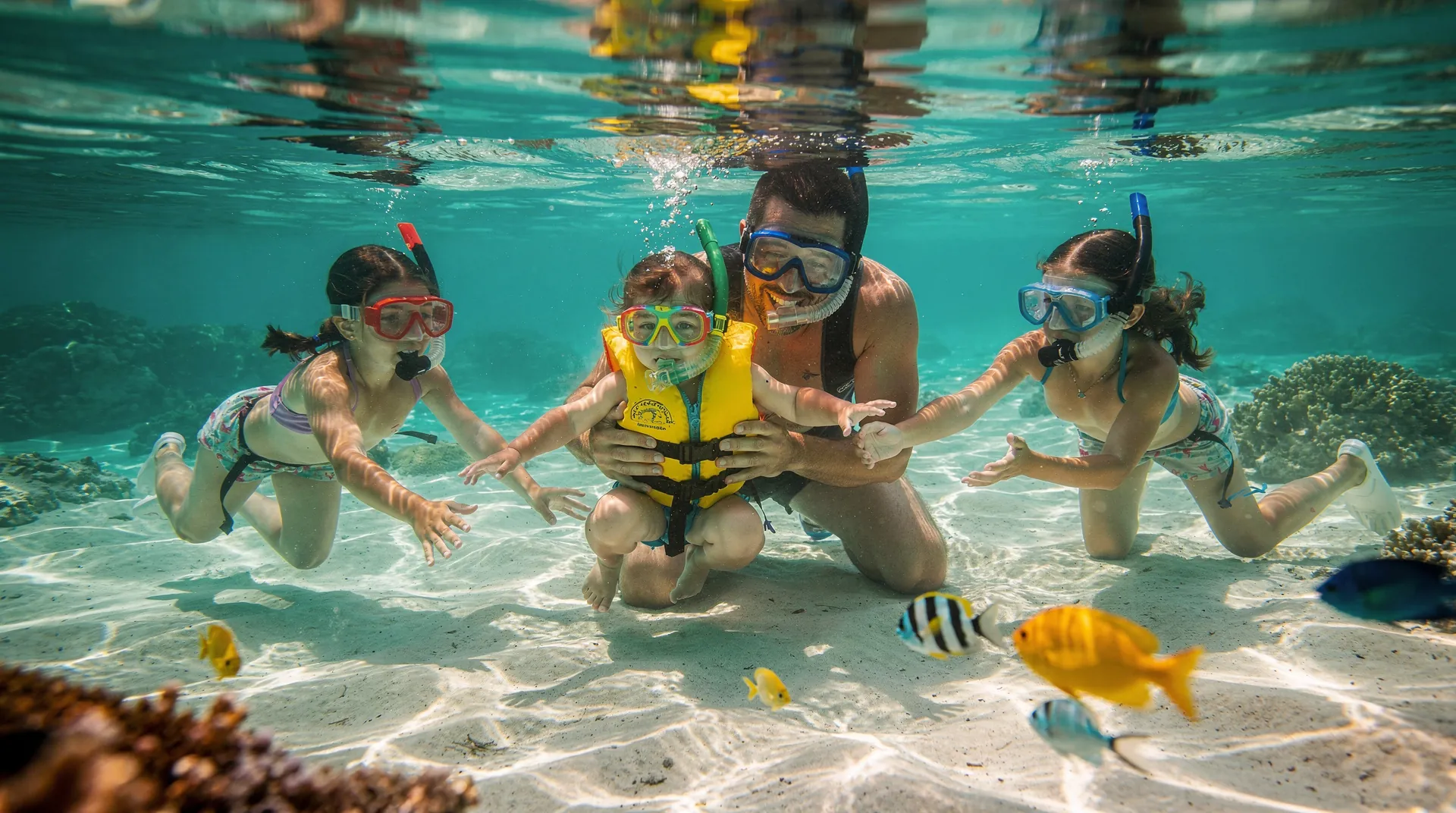
If the wind or swell aren’t cooperating on the day of your visit, or if you just want to mix things up, several Mauritian water activities pair well with a board sports trip. Kayaking and stand-up paddleboarding let you explore the lagoon at a gentler pace on windless days. To watch marine life without a board or sail, our snorkelling and diving guide covers the best lagoon spots. Finally, families or beginners reluctant to exert themselves can turn to other accessible water activities found elsewhere on the island.
Where to stay depending on your discipline
For kitesurfing, choosing accommodation in Le Morne or the Riviere Noire area significantly cuts down daily trips to the spot — ideally, you want to be able to walk to the beach with your gear. Our guide to where to stay in Le Morne lists suitable options. For surfing, Tamarin itself or Flic-en-Flac 30 minutes away offer a good balance between wave access and accommodation choice, including via our guide to where to stay in Tamarin.
Conclusion
Mauritius offers an exceptional playground for kitesurfing and surfing enthusiasts. The combination of steady winds, protected lagoons for learning and quality waves for confirmed riders makes the island a genuine board sports destination in its own right. Whether you go home with your first taste of gliding across the water or with memorable sessions on dream waves, Mauritius will certainly leave you wanting to come back and ride its turquoise waters.