Tamarin Beach: Complete Guide to Surfing, Dolphins and the West Coast
Can you swim with dolphins in Tamarin?
Yes, Tamarin is the main departure point for swimming with wild dolphins in Mauritius. Excursions leave early in the morning to observe spinner dolphins in their natural environment.
Tamarin Beach: the authentic soul of the west coast
Tamarin is a beach and village apart in Mauritius’s tourist landscape. Less developed and less upscale than Flic en Flac to the north or Le Morne to the south, Tamarin has kept a soul of its own — a strong local identity that surfers, dolphin lovers and travelers seeking authenticity particularly appreciate.
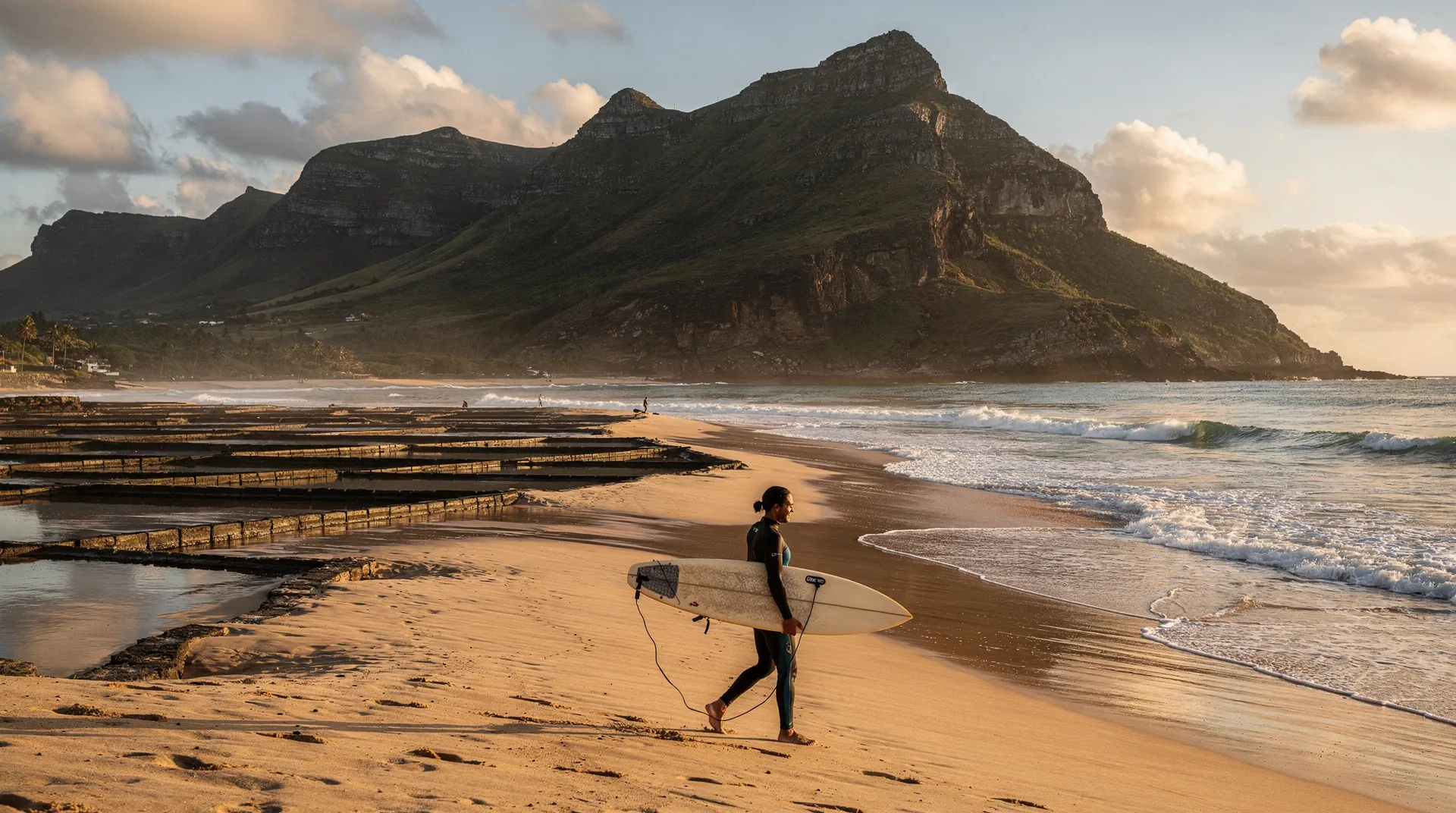
The village of Tamarin sits on an open bay, backed by impressive salt marshes — one of the few salt pans still in operation in Mauritius. Far from spoiling the landscape, this small-scale industrial presence gives it a unique, photogenic character: pyramids of white salt contrasting with the blue sky and turquoise waters of the bay.
| At a glance | |
|---|---|
| Where | West coast, 35 km south of Port Louis, between Flic en Flac and Le Morne |
| Price | Free beach; dolphin excursion around 1,500 to 2,500 MUR per person depending on operator |
| Time needed | Half a day for the dolphin excursion (early morning departure), a full day with surfing or the salt pans |
| Getting there | Car recommended (40 to 50 min from Port Louis); bus with a change at Quatre Bornes |
| Best time | May to October for surfing and more regular dolphin sightings; dolphins visible year-round |
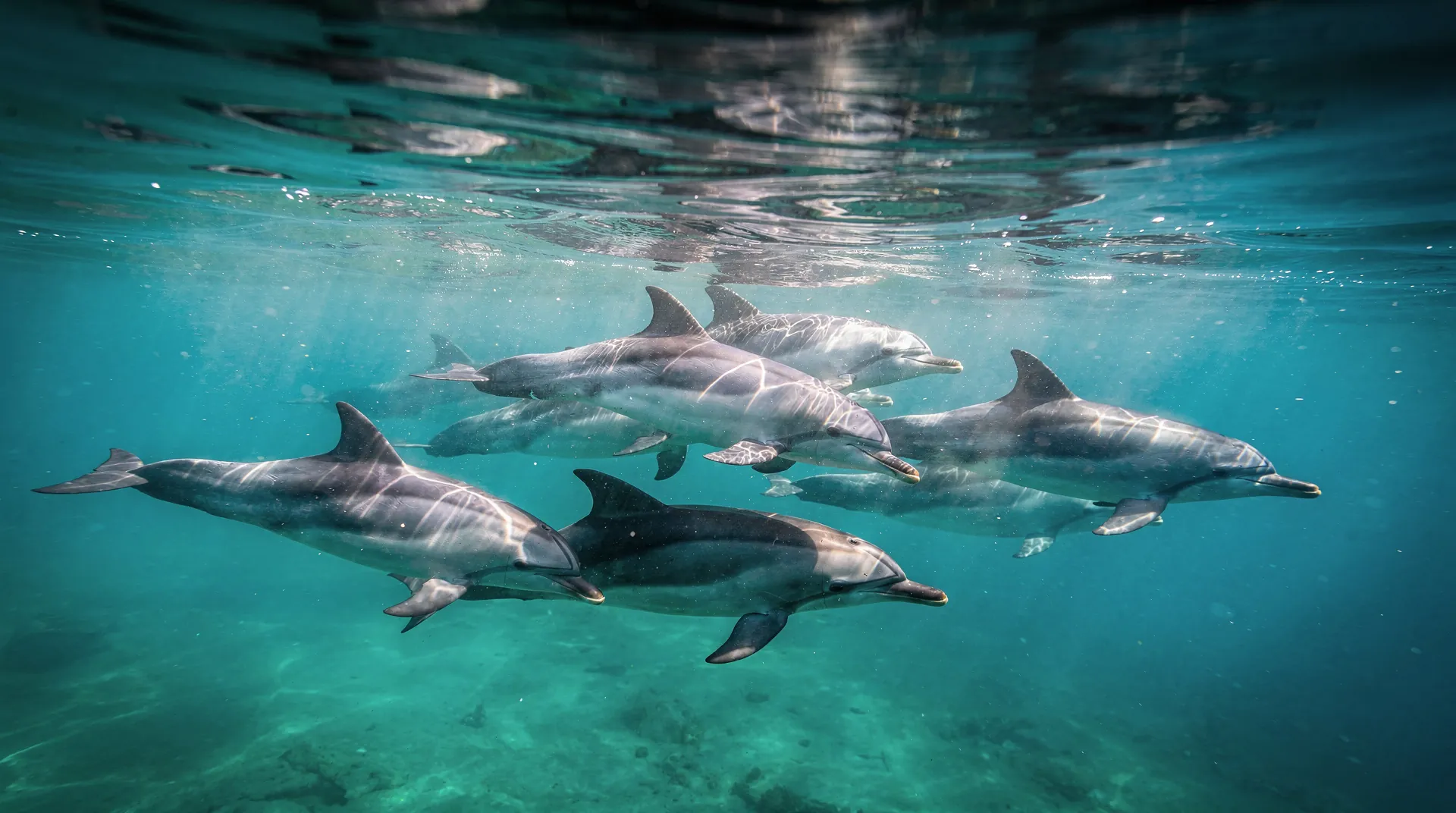
But what really makes Tamarin unique in Mauritius is the regular presence of dolphins. Spinner dolphins frequent the waters of Tamarin Bay almost permanently — they find a favorable environment here to rest after their nighttime hunting trips. It’s the main departure point for swimming with dolphins excursions in Mauritius.
How to get to Tamarin
By car
Tamarin is located on the west coast of Mauritius, about 35 kilometers south of Port Louis. From the capital, take the M1 motorway south to Bambous, then follow the signs to Tamarin via the Route du Sel. The drive takes about 40 to 50 minutes. From Flic en Flac (to the north), allow 25 minutes along the coastal road.
Our guide to car rental in Mauritius will help you plan your travel along this coast.
By bus
Buses serve Tamarin from Port Louis and from Quatre Bornes. Connections exist but are less frequent than in the north. Allow around 1h30 from Port Louis with transfers.
Parking in Tamarin
Parking areas exist at several points in the village and near the beach. Parking is generally easy to find outside weekends. For dolphin excursions (which leave very early in the morning), operators usually have their own parking or boarding areas.
Tamarin Beach: surfing and swimming
The Tamarin wave
Tamarin is known in the surfing world for its famous left-hand wave, which was put on the international map by a 1970s surf film (“The Forgotten Island of Santosha”). The wave works mainly during the southern winter (May to October) when south swells reach the coast. It’s not for beginners — it’s a technical wave suited to intermediate and advanced surfers.
Our guide to kitesurfing and surfing in Mauritius details the conditions and best times to surf in Tamarin.
Swimming
Swimming in Tamarin is possible but requires caution. Tamarin Bay is open to the west and less protected by the coral reef than some beaches in the north — waves and currents can occur, especially in winter when south-westerly swells arrive. Swimming is generally safe in calm weather, but not recommended on days of strong swell.
The safest swimming area is in the northern part of the bay, where the waters are slightly more sheltered. Locals swim regularly in the bay — ask them about the day’s conditions.
Tamarin’s dolphins
This is Tamarin’s main draw for travelers. Spinner dolphins (Stenella longirostris) live in the waters off the west coast of Mauritius year-round, and Tamarin is the best departure point for excursions in their company.
Excursions usually leave very early in the morning (before 8am) to find the dolphins during their resting phase. Motorboats or catamarans head to the areas frequented by the dolphins. Participants enter the water with mask and snorkel to swim alongside them — an extraordinary experience, but one that requires following good-conduct rules so as not to disturb the animals.
A guided dolphin-swimming excursion from Tamarin is the best option — the guides know the dolphins’ habits and follow an ethical approach. Our complete guide to swimming with dolphins in Mauritius explains everything you need to know before this experience.
Snorkeling in Tamarin
Snorkeling is possible in Tamarin Bay, particularly around the coral areas near the rocky edges. The marine life is interesting but less spectacular than at Blue Bay. The richest spots are toward the south of the bay, where the coral is better developed.
Dolphin excursions often include a stop at snorkeling spots, allowing you to combine both experiences in a single morning.
Tamarin’s salt marshes
A unique attraction in Tamarin is the salt pan, one of the last working salt marshes in Mauritius. The crystallization basins produce salt using age-old artisanal methods. The view from the air or from the road is particularly spectacular — the geometry of the basins, the pyramids of white salt and the sky’s reflections in the water create a striking abstract landscape.
Salt pan tours can be arranged to learn about the salt production process. Ask your accommodation or local operators for details.
Shade and vegetation
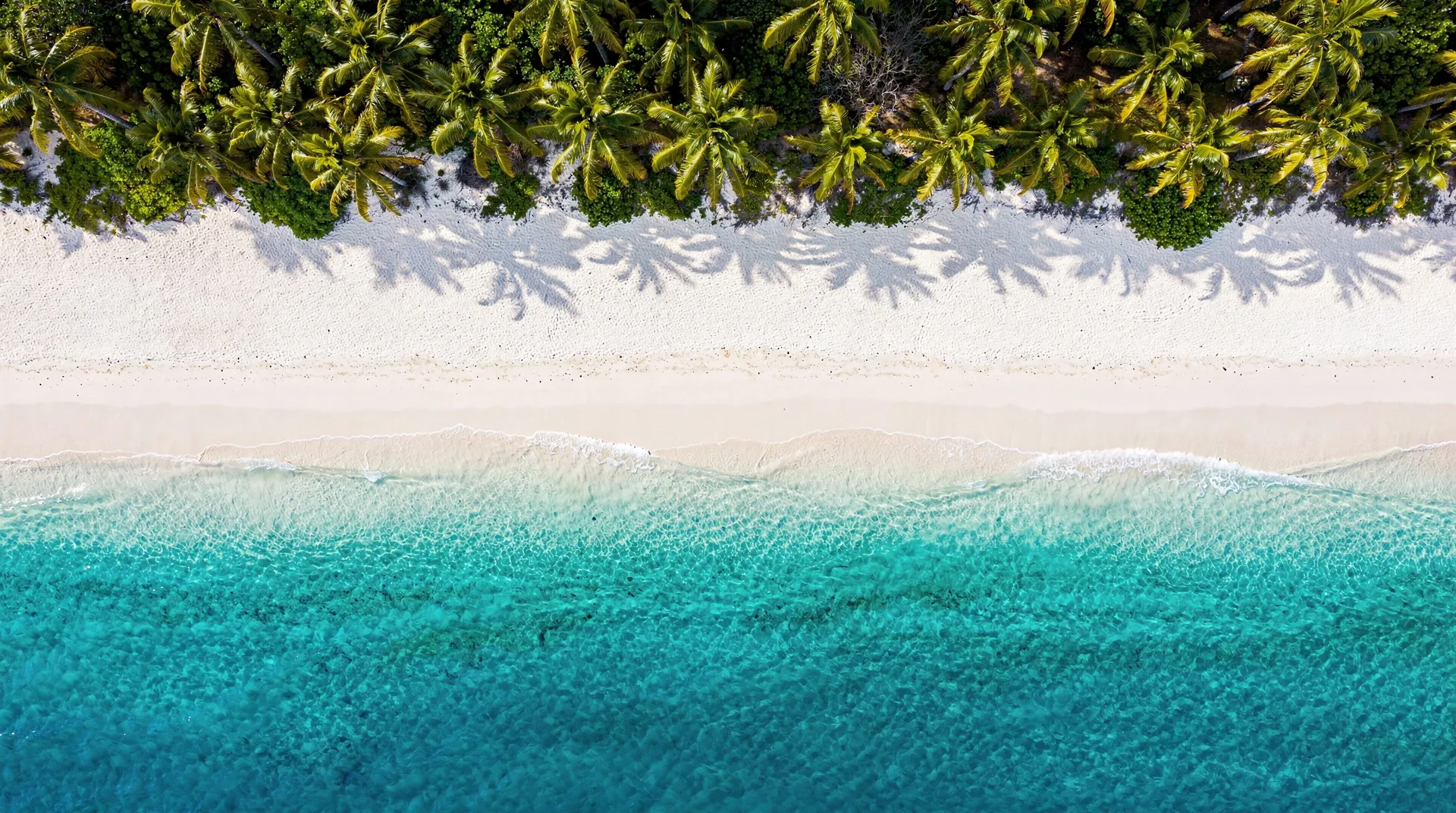
Natural shade on Tamarin Beach is limited. A few trees exist but don’t create as dense a canopy as the beaches in the north. Bring a parasol or choose less exposed times of day to enjoy the beach.
Atmosphere and vibe
Tamarin has an authentically local, relaxed atmosphere. Less touristy than Flic en Flac, the village has kept its character as a community of fishermen and surfers. Nice cafés and restaurants have opened in recent years, drawing a crowd of expats and independent travelers, but without spoiling the atmosphere.
Tamarin’s weekly market (ask about the days) is an interesting local experience.
Crowds and best time to visit
Tamarin is less crowded than the major beaches of the north coast or Flic en Flac. It mainly attracts surfers (during the southern winter for the waves), dolphin enthusiasts (year-round, with a slight peak in winter), and travelers looking for a local vibe.
The best time for dolphins is in the morning year-round, with a more regular presence during the southern winter (May-October). For surfing, the most consistent swells arrive from May to September.
| Period | Dolphins | Surf | Crowds |
|---|---|---|---|
| May to September (southern winter) | Very regular presence | Most consistent swells, best season | Moderate, peaks for surfers |
| October to December | Regular presence | Occasional swells | Growing with high season |
| January to March (southern summer) | Possible but less consistent presence | Wave almost absent | Lower for surfing, unsettled weather |
| April | Transition, good dolphin presence | Start of south swells | Moderate |
Who Tamarin is for
Fans of unique experiences: Swimming with wild dolphins is one of the most memorable experiences in Mauritius. Tamarin is the essential departure point.
Surfers: Tamarin’s left-hand wave is a legend of Mauritian surfing. Experienced surfers shouldn’t miss it.
Travelers seeking authenticity: Tamarin offers a less touristy, more authentic side of Mauritius than the hotel zones of the north.
Photographers: The salt marshes, the bay with the mountain backdrop, and the dolphins in the waves create unique photographic subjects.
Where to stay nearby
Tamarin has a handful of guesthouses, rental villas and small hotels. The offering is more limited than in the north but of good quality. Luxury villas with pools are available for rent in the hills overlooking the bay.
Check our guide where to stay in Mauritius for options in the southwest of the island.
Nearby activities
Ile aux Bénitiers
Off the west coast, Ile aux Bénitiers is accessible by catamaran from this region. A full-day catamaran excursion to Ile aux Bénitiers from the west coast is one of the best boat trips available.
Flic en Flac
25 minutes to the north, Flic en Flac offers a longer beach with plenty of services, restaurants and accommodation. Our guide where to stay in Flic en Flac covers accommodation options.
Le Morne
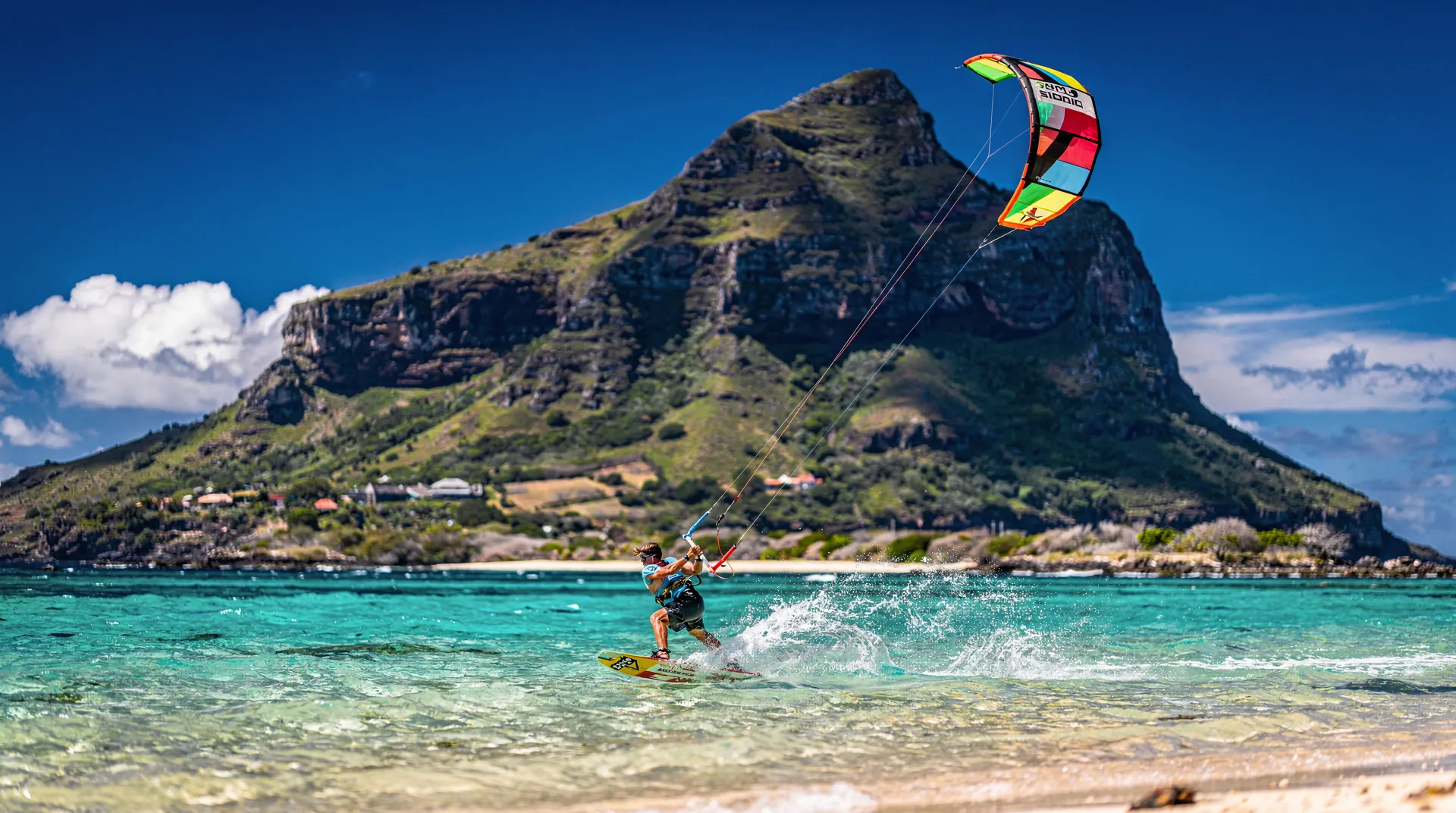
25 minutes to the south, the Le Morne peninsula offers spectacular scenery and the island’s best kitesurfing conditions.
Chamarel and the Seven Coloured Earths
20 minutes inland, Chamarel and its famous coloured earths, waterfall and artisanal rum distillery make for an essential inland excursion in southwest Mauritius.
Practical tips
Book the dolphin excursion in advance: Dolphin trips are very popular and spots are limited. Book your dolphin excursion in Tamarin at least 2 to 3 days ahead, and more in high season.
Get up early: Dolphins are found on the surface in the morning. Excursions usually leave between 7am and 8am. You need to be on the boat before the dolphins.
Ethical behavior: Don’t chase the dolphins, don’t touch them, and keep your distance. Spinner dolphins are in their daytime resting phase — respecting their natural behavior is essential for the activity to remain ethical and sustainable.
Swell and surf: If you want to watch surfers on the Tamarin wave, check the day’s swell conditions. Without swell, the wave doesn’t exist.
FAQ: Tamarin Beach
Are dolphin sightings guaranteed on excursions? No, nothing is guaranteed in nature. However, the encounter rate is high (85 to 95% of trips) because the dolphins are permanent residents. If none are found, most operators offer a free second trip or a partial refund.
Is surfing in Tamarin accessible to beginners? No, the Tamarin wave is technical and reserved for intermediate to advanced surfers. Other more accessible spots exist in Mauritius for learning to surf.
Can you see dolphins without taking an excursion? It’s possible to spot them from the shore or from a private boat, but the chances are much lower. Operators know the frequented areas and move quickly to maximize the chances of an encounter.
Are the salt marshes open to visitors? Guided tours can be arranged. Ask your accommodation or local tourist offices. Free access is possible on the roads around the marshes for photos from the outside.
Are there good restaurants in Tamarin? Tamarin has a selection of nice restaurants, including a few trendy spots frequented by expats. The offering is more modest than in Flic en Flac but of good quality, with a relaxed atmosphere and reasonable prices.
How much does a dolphin-swimming excursion in Tamarin cost? Generally between 1,500 and 2,500 Mauritian rupees per person depending on the operator, the duration and whether breakfast is included. Prices vary noticeably between providers, so it’s worth comparing several offers before booking.
Do you need to know how to swim for the dolphin excursion? A decent swimming level is recommended, as you’ll be moving in open water with mask and snorkel, sometimes over depths of several meters. A life jacket is usually provided or available on request for less confident swimmers.
The Tamarin wave: a legendary surf story
Tamarin’s left-hand wave entered world surfing legend thanks to the film “The Forgotten Island of Santosha” (1974), made by Australian surfer Larry Yates. This film, shot in Mauritius in 1972 and screened through the underground circuits of world surfing, revealed Tamarin as an almost untouched tropical surf destination, with an exceptional-quality wave in a paradisiacal setting.
The film had an unexpected effect: drawing surfers from around the world to Tamarin in the following years, it helped transform the fishing village into an international surf destination. Some surfers stayed, married Mauritian women and settled permanently — creating a unique multicultural surf community in Tamarin that still exists today.
The Tamarin wave is a left-hander (it breaks left to right when viewed from the sea) that forms over a coral reef on south-south-westerly swell. During the southern winter, when Antarctic depressions generate these swells, the wave can reach 1.5 to 2.5 meters in height, with hollow, tubular sections that satisfy even the most demanding surfers.
The ideal conditions are: 1.5 to 2 m swell with a long period (14-16 seconds), offshore wind (blowing from the east-northeast), mid-rising tide. These conditions typically occur from June to August, with quality swells about 2 to 3 times a month.
The west coast dolphin ecosystem
The dolphins of Mauritius’s west coast — mainly spinner dolphins (Stenella longirostris) — are the region’s most iconic natural attraction around Tamarin. Understanding their way of life makes for a more respectful and rewarding excursion.
Spinner dolphins are social animals that live in groups of 10 to 200 individuals. They are “coastal daytime” dolphins — they spend the day in the shallow, calm waters of the lagoon, half-resting, before migrating offshore to hunt at night. It’s during this daytime resting phase that tourist excursions take place.
Spinner dolphins get their name from their characteristic behavior of leaping with rotations — up to 7 spins per leap! This spectacular behavior (visible from boats and sometimes from shore) serves complex social functions: parasite removal, communication, and reinforcing social bonds.
The coexistence of dolphin tourism and species conservation is a sensitive subject. Scientific studies conducted in Tamarin have shown that frequent tourist interactions disrupt the dolphins’ resting cycles and can have negative long-term effects on their health. Regulations have been put in place to limit the number of boats in resting areas and to impose respectful approach protocols.
Choosing responsible operators for swimming with dolphins who respect these protocols is essential. Our guide swimming with dolphins in Mauritius details the criteria for choosing an ethical operator.
Tamarin’s salt marshes: industry and landscape
Tamarin’s salt pan is one of the last living traces of an artisanal industry once widespread in several parts of Mauritius. Now largely urbanized, the island’s salt pans have shrunk to a handful of operations.
The solar evaporation salt production process has remained unchanged for centuries. Seawater enters shallow basins (crystallizers) where it’s exposed to sun and wind. As the water evaporates, the salt concentration rises until crystals begin to form on the bottom. Salt workers then rake up the salt and gather it into characteristic pyramids to dry completely.
Tamarin salt has a distinctive mineral flavor linked to the minerals present in the local seawater. Some local produce shops in Mauritius sell it as a quality artisanal product — an original edible souvenir.
The view of the salt pans from the surrounding roads is photographically striking: the geometry of the basins, the sky’s reflections in the shallow water, the small pyramids of white salt and the silhouettes of the workers create striking abstract compositions.
Tamarin as a base for the southwest coast
The Tamarin region is well positioned geographically to explore several of the southwest coast’s attractions, often overlooked by tourists who stay in the north.
Le Morne, 25 km to the south, is one of the island’s most spectacular beaches, with its UNESCO-listed mountain backdrop and two-tone lagoon. Ile aux Bénitiers, accessible by catamaran from La Gaulette (20 km away), offers one of the best snorkeling experiences on the entire west coast. From this base, a catamaran excursion to Ile aux Bénitiers is easily accessible.
Chamarel and its Seven Coloured Earths are 20 km inland — Chamarel waterfall, one of the highest on the island, and the multicolored ochre, red and purple earths make up the essential inland excursion of the southwest.
For families, our guide to family activities in Mauritius offers plenty of ideas for the west and southwest region. To find the right accommodation, our guide where to stay in Mauritius covers all the options along the west coast.