Where to Stay in the South of Mauritius: Bel Ombre, Souillac, Nature and Budget
Where should you stay in the south of Mauritius?
Bel Ombre is the top pick for grand luxury in an exceptional natural setting. Souillac offers the authenticity of a Mauritian village at accessible prices. Rivière des Anguilles is the ideal base for exploring the waterfalls and wild nature of the south.
The south of Mauritius: unspoiled nature at the end of the road
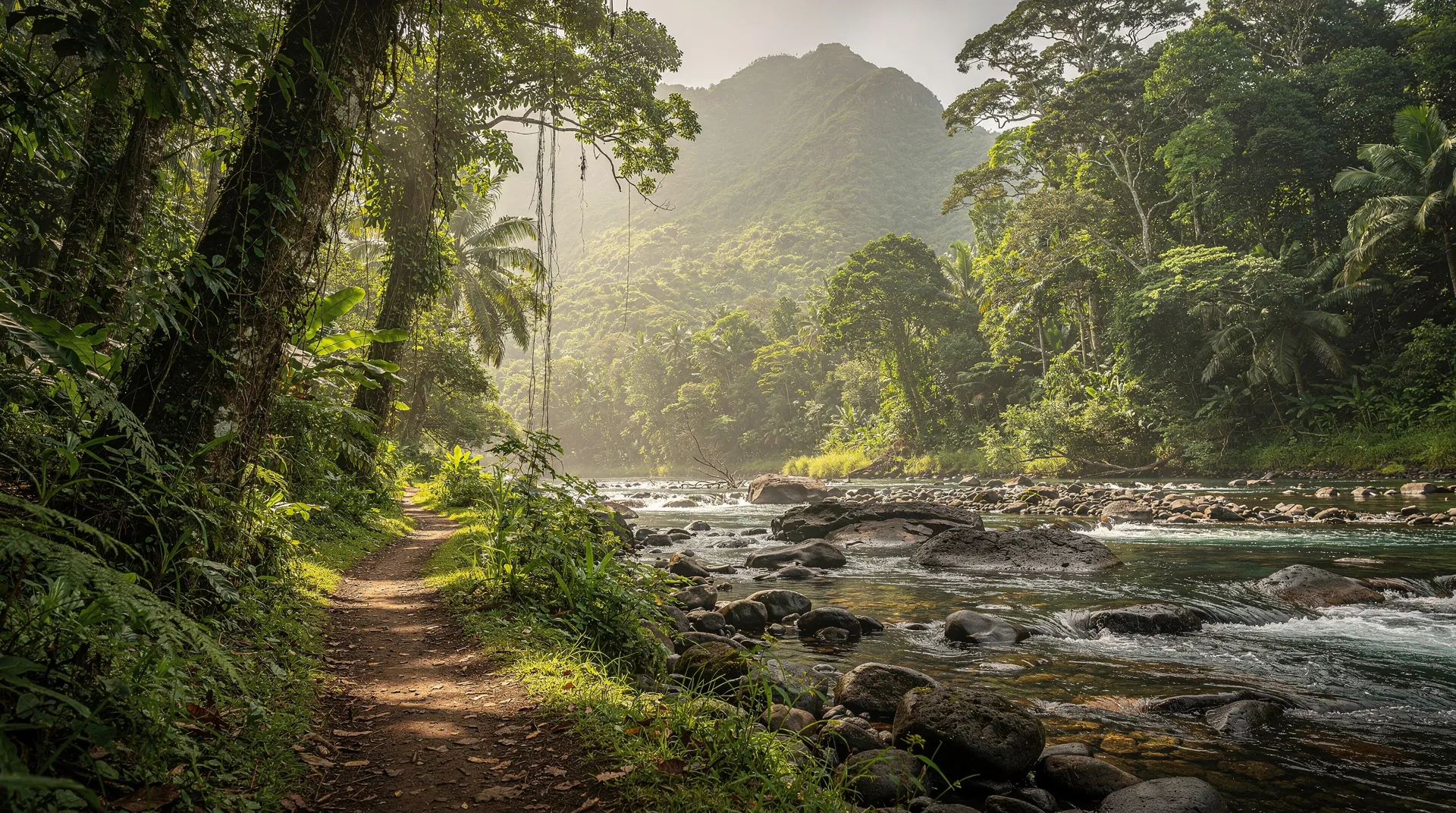
The south of Mauritius is the country’s least touristy and most authentic region. No large beach resorts, no shopping centers, no lively strips of sunset bars. What you do find: a wild coastline battered by Indian Ocean swells, basalt cliffs, rivers running to the sea through dense vegetation, and villages that still live to the rhythm of sugarcane and fishing.
The south stretches from Bel Ombre in the west to Mahebourg in the east, taking in Souillac, Rivière des Anguilles, Baie du Cap, and Saint-Martin along the way. Each area has its own character, and together they form a destination for travelers looking for something radically different from the usual tourist trail.
To understand why the south is so different from the rest of the island, our north vs. south comparison sets the two ends of the island side by side. Our general guide to where to stay in Mauritius covers all the areas for the full picture.
At a glance
| Where | Bel Ombre (luxury), Souillac (authentic), Rivière des Anguilles (nature), Mahebourg (cultural) |
| Price | from 30 to 60 EUR/night in a family guesthouse to 300-900 EUR/night at Bel Ombre’s Heritage hotels |
| Time needed | 2 to 4 nights are enough for a taste, more for a slower pace |
| How to get there | a rental car is essential, allow roughly 1h to 1h30 from the north |
| Best time to go | May to November for dry roads, though the south stays wetter than average year-round |
Bel Ombre — luxury in the heart of the deep south
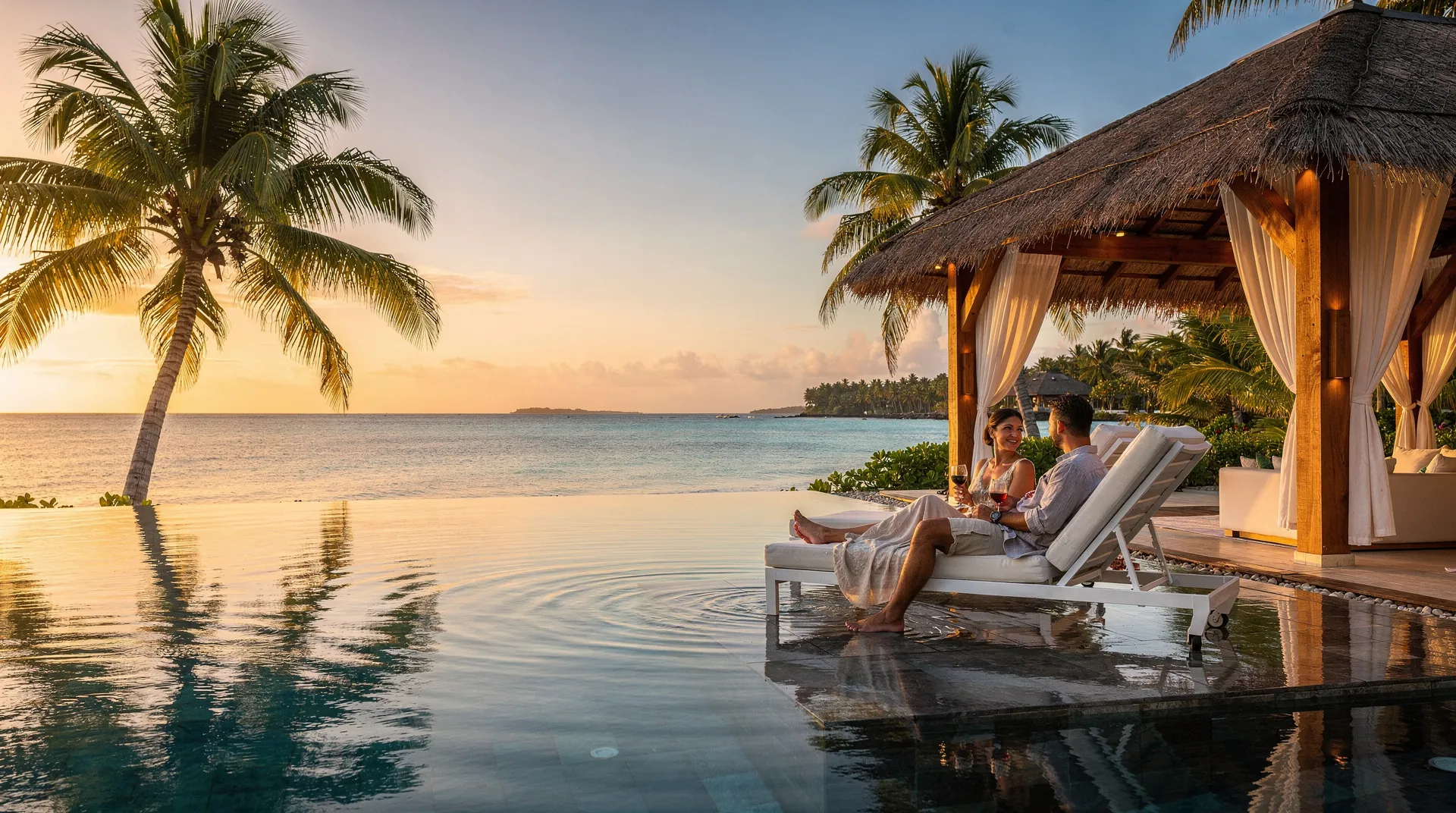
Bel Ombre is an outlier in the landscape of southern Mauritius: a 2,500-hectare historic estate that’s been reinvented as an eco-luxury tourism destination without betraying the natural environment that is its greatest asset. The estate’s two large hotels — Heritage Le Telfair (5-star, adults only) and Heritage Awali (5-star, family-friendly) — are set within the vegetation, facing a protected beach, in surroundings that feel like the edge of the world.
What we love about Bel Ombre: nature is everywhere — the estate includes a nature reserve with deer, tortoises, and endemic birds. The activities offered by the hotels are woven into the landscape: horseback riding across the estate, quad biking on the sugarcane trails, fly-fishing in the rivers. The beach, sheltered by a belt of rocks and vegetation, is essentially private — one of the few on the island that has kept its wild character.
To discover the reserve without staying there, a 4x4 safari in the Bel Ombre nature reserve lets you explore the estate on an excursion.
The estate’s restaurants rank among the island’s finest. The Telfair’s fine-dining restaurant serves creative French-Mauritian cuisine in an elegant colonial setting — a memorable dinner in an unmatched setting.
Types of accommodation available:
- Heritage Le Telfair Golf and Wellness Resort — 5-star, adults only, 156 suites, several restaurants, spa, golf, pools
- Heritage Awali Golf and Spa Resort — 5-star, family-friendly, access to the same activities as the Telfair
- A handful of luxury villas for rent within the estate, suited to groups or families
- Outside the Heritage estate, the accommodation options around Bel Ombre are very limited
Budget: the Heritage hotels are high-end properties — expect between 300 and 900 euros a night on a full-board basis depending on the season. Options are limited but consistent with the level of luxury on offer. Our where to stay in luxury guide includes Bel Ombre in its selection.
Ideal for: honeymooning or anniversary couples, travelers seeking nature and luxury together, golf enthusiasts, and families who can afford a stay at a high-end all-inclusive resort.
Souillac — village authenticity at the far end of the island
Souillac is a small coastal town in the south that bears no resemblance to the beach resorts of the north or west. There are no swimming beaches (the coast is too exposed and the current too strong), but there are dramatic cliffs, the natural site of Rochester Falls (waterfalls over black basalt rocks), and the atmosphere of an ordinary Mauritian town that has touristic value precisely because it doesn’t know it.
What we love about Souillac: its raw authenticity. The Friday morning market, street vendors selling dholl puri, the community cricket ground on Sundays, horse-drawn carts on the country roads. This isn’t a postcard scene — it’s real, everyday Mauritius living at its own pace.
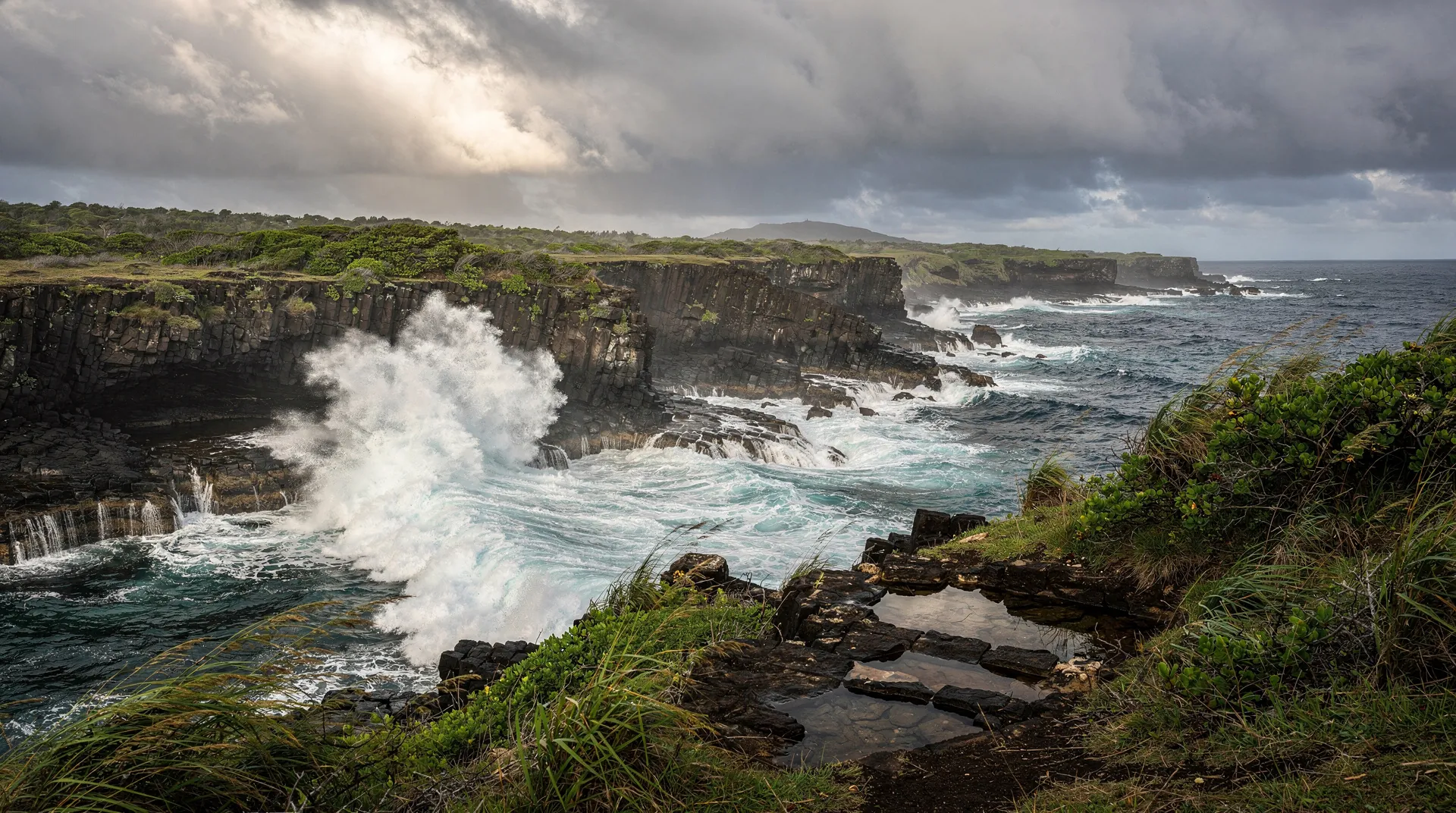
The Gris-Gris cliffs, a few kilometers from Souillac, are spectacular: black basalt rocks overlooking a rough sea that pounds the shore with striking force. It’s one of the island’s most dramatic landscapes, a world away from the turquoise lagoons of the north. The walk along the cliffs is one of the most stunning the island has to offer.
Types of accommodation available:
- A handful of small family guesthouses in central Souillac, very affordable (30 to 60 euros a night)
- Rooms with local hosts, often including breakfast
- Creole house rentals for stays of a week or more
- Very few hotels with tourist services — this isn’t the area for travelers who need standardized comfort
Budget: Souillac is one of the cheapest areas in Mauritius for accommodation. A stay here will cost noticeably less than an equivalent one in the north or in Belle Mare. Our budget accommodation guide lists Souillac among the best destinations for budget-conscious travelers.
Ideal for: independent travelers with a car, fans of wild nature and dramatic scenery, backpackers seeking Mauritian authenticity away from the tourist trail, and budget-conscious travelers.
Rivière des Anguilles — the base for exploring the southern hinterland
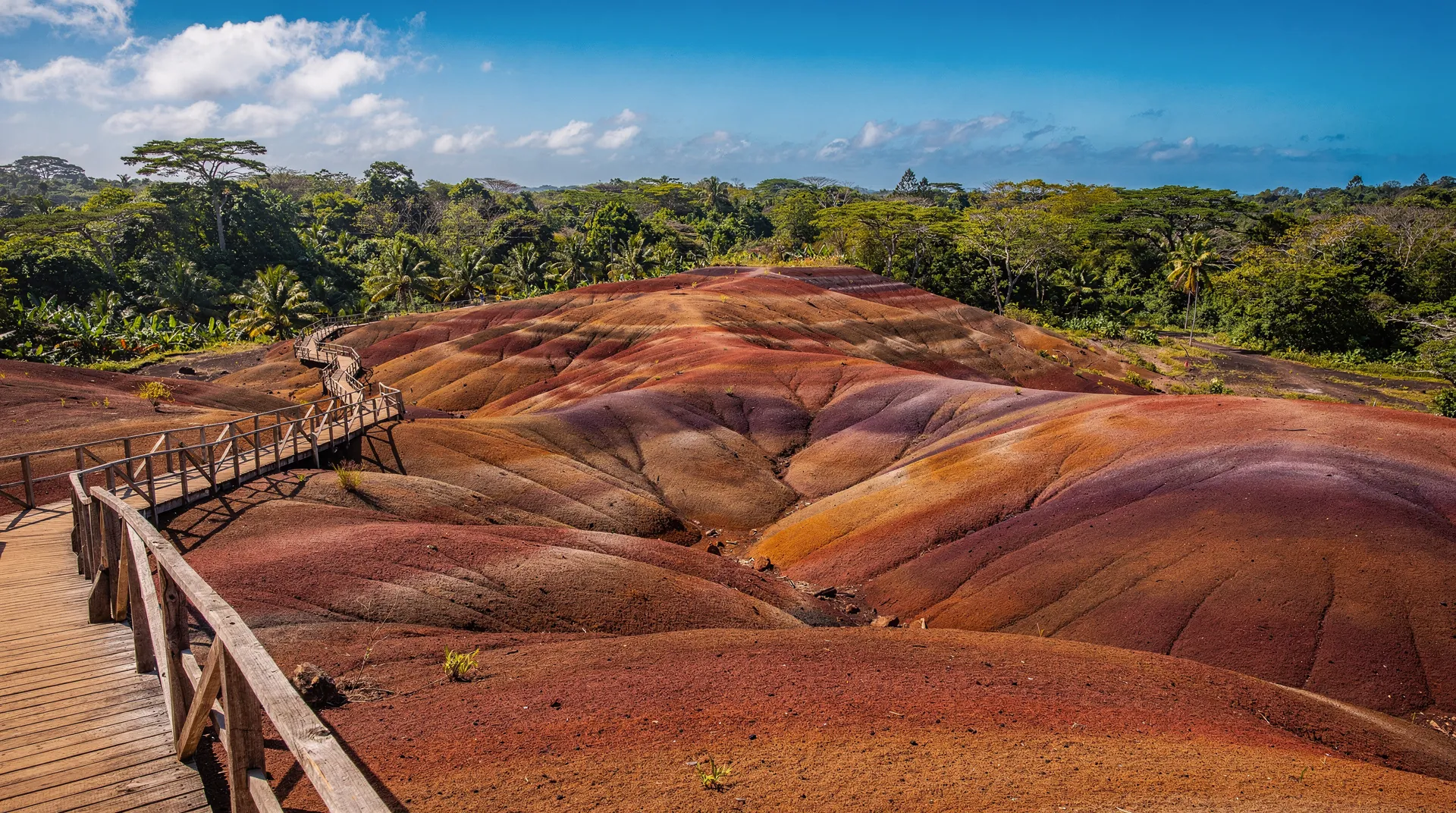
Rivière des Anguilles is an inland village in the south, on a riverbank a few kilometers from the coast. It’s a logical launch pad for exploring the natural sites of the southern hinterland: sugarcane fields stretching as far as the eye can see, the Rhumerie de Chamarel with its award-winning artisanal rums, and the road up to Chamarel and its famous seven colored earths.
What we love about Rivière des Anguilles: its central location in the south, which lets you branch out toward Souillac and its cliffs just as easily as toward Chamarel and the colored earths. It’s a practical base for a road trip through the south.
The Rhumerie de Chamarel is a 20-minute drive away — a must-visit to learn about traditional Mauritian rum distilling, with tastings and an on-site restaurant.
Types of accommodation available: rural gîtes, guesthouses, and a few villa rentals. Options are modest but sufficient for those arriving with a car and looking for authenticity over standardized comfort.
Mahebourg — the cultural hub of the greater southeast
Mahebourg is the main town of the southeast, a historic port town that played a significant role in the Franco-British wars of the early 19th century. The town is livelier than Souillac, with a bustling central market (Monday is the big market day), a well-curated history museum, and a pleasant waterfront overlooking the bay.
What we love about Mahebourg: the history, the Monday market (one of the most authentic on the island), its proximity to Blue Bay and Pointe d’Esny for snorkeling, and the local Creole restaurants with very accessible prices.
Types of accommodation available:
- 3-star hotels in the town center, decent and well located
- Guesthouses in Creole homes, often with a tropical garden
- Villa rentals in the Pointe d’Esny area, more charming than the hotels in the center
Budget: Mahebourg is generally affordable — you’ll find decent-quality accommodation for 40 to 80 euros a night.
Ideal for: culturally-minded travelers, families looking to explore the south on a budget, and as a base for Blue Bay and Pointe d’Esny.
Comparison table of the southern areas
| Area | Calm | Beach | Authenticity | Price | Nature |
|---|---|---|---|---|---|
| Bel Ombre | 5/5 | 4/5 | 3/5 | Luxury | 5/5 |
| Souillac | 4/5 | 2/5 | 5/5 | Budget | 4/5 |
| Mahebourg | 3/5 | 3/5 | 4/5 | Budget | 3/5 |
| Rivière des Anguilles | 5/5 | 1/5 | 5/5 | Budget | 4/5 |
Tips for staying in the south
A car is essential in the south of Mauritius. Public transport is nearly nonexistent between villages, and the distances between points of interest make a car-free stay impossible. Our renting a car in Mauritius guide covers everything you need to rent smoothly.
The weather in the south differs slightly from the north: the south coast gets more rain and the wind can be stronger on the cliffs. But showers are generally brief, and whether you’re on the windward or leeward side depends heavily on the exact location. Our Mauritius weather guide gives the details by area and by month.
Combining the south with other areas: the south is easy to visit as a day trip from the north through the interior, or from the west coast via Chamarel. Our 7-day itinerary includes a day in the southwest as a not-to-be-missed stop.
For travelers who want to discover the south while keeping a base in a more developed area, a day trip from Flic-en-Flac or from Mahebourg remains the most comfortable solution. Our family activities guide suggests several excursions into the south suitable for all ages.
Baie du Cap and Saint-Martin — the secret south
Between Bel Ombre and Souillac, the small coastal road passes through Baie du Cap and Saint-Martin, two fishing hamlets virtually unknown to the tourist trail. Accommodation here is almost nonexistent — a few isolated guesthouses and the occasional vacation rental run by locals. It’s an option for travelers seeking absolute calm and willing to depend entirely on a car for everything, including day-to-day errands. The road that hugs the coast here, between mountain and ocean, ranks among the most beautiful on the island — a detour worth taking even if you don’t stay the night.
Combining the south with a stay elsewhere: the formula that works best
Few travelers choose the south as the sole base for their trip to Mauritius — it’s more a region to build into a road trip or to visit as an excursion from a more central base. Our road trip guide and our where to stay for a road trip guide show how to fit 2 to 3 nights in the south between a northern base and a western base, without wasting time on redundant journeys. For couples in particular, one or two nights at Bel Ombre at the end of the trip make for a smooth, luxurious transition before heading back to the airport, which is less than an hour away.
Book a private transfer from the airport to the south of the island