
Cap Malheureux Beach: Complete Guide, Red-Roofed Church and Coin de Mire Views
Updated: August 2026
Is Cap Malheureux a good beach for swimming?
Cap Malheureux is above all a beach for photography and quiet contemplation. Swimming is possible, but the lagoon is shallower and less interesting than Trou aux Biches or Pereybere.
Cap Malheureux Beach: Mauritius’s Most Photographed Beach
Some places imprint themselves on your memory at first sight, and Cap Malheureux is one of them. The image has become iconic in every brochure about Mauritius: a small church, Notre-Dame-Auxiliatrice, with a bright red-tiled roof, sitting right at the edge of the turquoise sea, with the dramatic silhouette of Coin de Mire (the wedge-shaped island rising from the ocean) in the background, and sometimes Île Plate or Île Ronde as well. It’s one of the most reproduced images of the Indian Ocean.
| At a glance | |
|---|---|
| Where | Northern tip of Mauritius, 8 km from Grand Baie |
| Price | Free access to the beach and church |
| Time needed | 1 to 2 hours, more if combined with Pereybere |
| Getting there | Car (15 min from Grand Baie) or regular bus |
| Best time | May to October, early morning for the best light |
But Cap Malheureux is much more than a postcard. It’s a genuine fishing village at the northern tip of the island, spared from heavy tourist development, which has kept a local, authentic character that few places in northern Mauritius can still claim. The beach that runs alongside the village is small, quiet and lightly visited — a rare quality in this region.
The name “Cap Malheureux” (literally “Unfortunate Cape”) tells a story: it was on these shores that the British landed in 1810 to seize control of the island from the French. A monument on the cape commemorates this historic event. The beach and its surroundings carry as much history as natural beauty.
How to Get to Cap Malheureux
By Car
Cap Malheureux sits at the northern tip of Mauritius, about 8 kilometres northeast of Grand Baie along the coastal road. From Grand Baie, follow the B13 towards Pereybere, then continue north to the Cape. The drive takes around 15 minutes. From Port-Louis, allow 35 to 40 minutes.
A car is handy for Cap Malheureux, especially since the site is worth visiting early in the morning for the best photographic light. Our car rental in Mauritius guide will help you plan your trips.
By Bus
Buses connect Grand Baie to Cap Malheureux regularly. The journey takes about 20 to 25 minutes. The bus stop is a short walk from the church and the beach.
Parking at Cap Malheureux
A small free car park sits in front of the church, close to the beach. It’s modest in size — around twenty spaces — and can fill up quickly in high season or at weekends. Arrive before 9am to find a spot easily.
Cap Malheureux Beach
Features
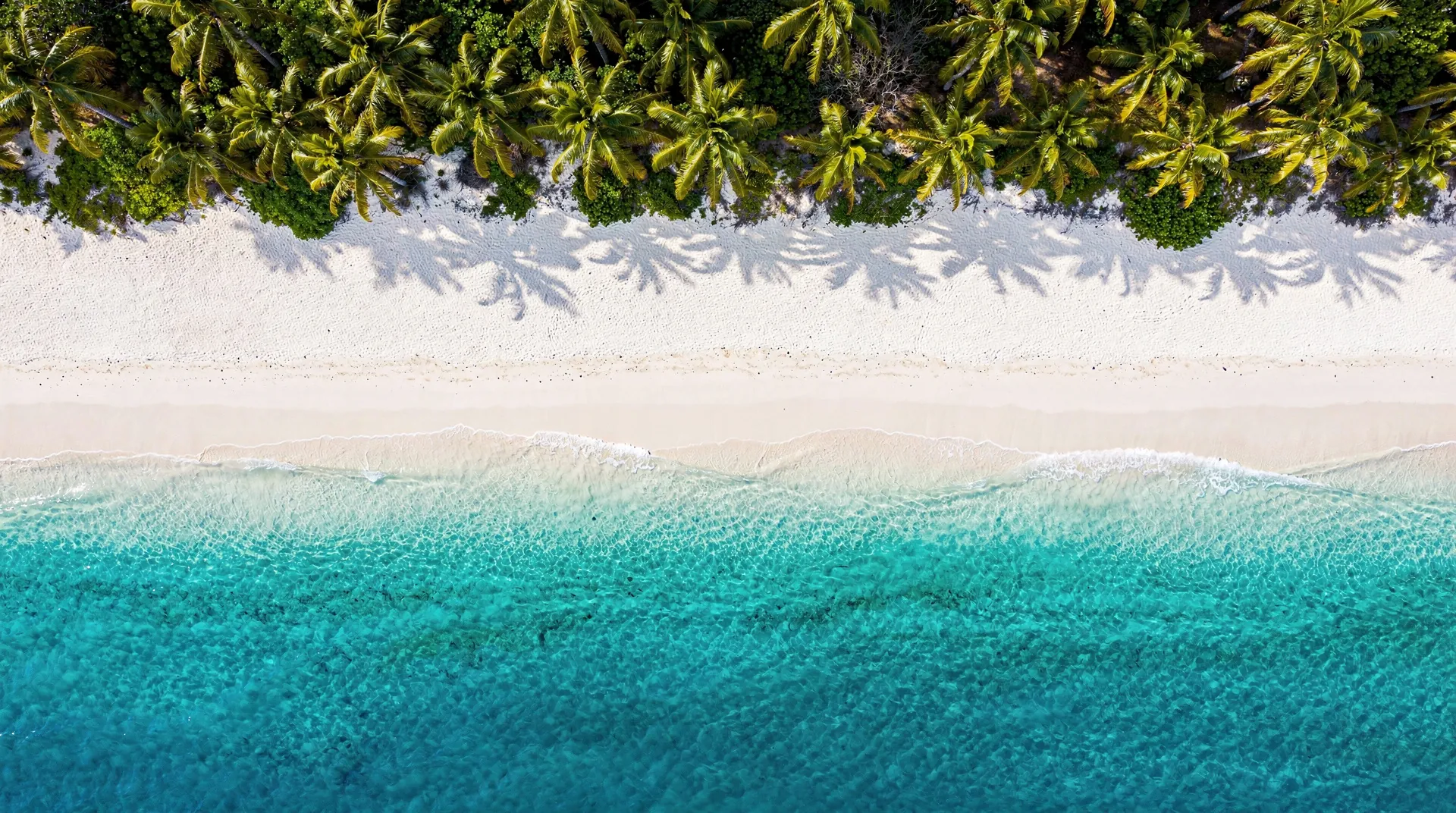
Cap Malheureux beach is a small white-sand beach about 200 metres long, framed by rocky edges and backed by casuarina trees and palms. The lagoon is shallow over a wide area, with a sandy bottom and a few coral patches.
The view from the beach is among the finest in Mauritius: straight ahead, the island of Coin de Mire rises about 8 kilometres out, sometimes flanked by Île Plate and Île Ronde. The colours shift through the day — deep blue in the morning, silver at midday, gold and pink at sunset.
Swimming
Swimming is possible but modest. The lagoon is shallow and not as well protected as Trou aux Biches or Pereybere. In an east wind (common on the north coast), light chop can make swimming less pleasant. Cap Malheureux is more a beach for contemplation and photography than serious swimming.
For quality swimming in the north, Trou aux Biches (10 km to the west) and Pereybere (4 km southwest) offer far better conditions. Our beaches of Mauritius guide compares all the options.
Snorkelling at Cap Malheureux
Snorkelling isn’t Cap Malheureux’s strong suit. The lagoon isn’t as rich in coral and marine life as Pereybere or Trou aux Biches. A few fish can be found in the coral patches near the rocky edges, but the experience is limited.
For quality snorkelling from the north coast, an catamaran excursion to the northern islands — which passes close to Coin de Mire, visible from Cap Malheureux — offers a much better experience, with snorkelling at the northern islands and lunch included.
Notre-Dame-Auxiliatrice Church
The church is Cap Malheureux’s main draw, essential both photographically and historically. Built in 1907, this small Catholic church with its distinctive red-tiled roof is one of the prettiest in Mauritius. The plain, light-filled interior is also worth a look — just visit outside of services (Mass is held on Sunday mornings and on weekdays).
The combination of the red church, turquoise waters and the silhouette of Coin de Mire in the background is the emblematic image of Mauritius. For the best photographic light, come in the morning (8am-10am) when the light is golden and side-lit, or in the late afternoon for the warm tones of sunset.
Shade and Atmosphere
Cap Malheureux beach has decent natural shade thanks to the casuarinas and scattered palms lining it. The atmosphere is peaceful and authentic — fishing boats are often moored in the bay, children play on the sand, elders gather in the shade. It’s an ordinary yet beautiful scene of Mauritian life.
The village has kept its fishing-village character, with colourful houses, a few small grocery shops and a drinks stall. There’s little intrusive tourist development — just a handful of small, discreet hotels and guesthouses.
Facilities and Services
Services at Cap Malheureux are modest but sufficient for a day visit. One or two restaurants serve Creole cuisine and seafood at very reasonable local prices. Grocery shops let you stock up on water and snacks.
Public toilets are limited — the restaurants have facilities for their customers. There’s no water sports equipment rental on the beach.
Crowds and Best Time to Visit
Cap Malheureux is noticeably less crowded than Grand Baie or Trou aux Biches, which is part of its charm. Even in high tourist season, the beach stays quiet on weekdays. At weekends, a few local families gather on the sand.
The best time for photography is May to October, with dry weather, clear water and the sun aligned with the church in the morning. In the southern summer (November-March), the water can be slightly murkier and weather conditions less stable.
Who Cap Malheureux Is For
Photographers: Cap Malheureux is an absolute must for photography in Mauritius. The church, Coin de Mire and the turquoise lagoon make for unforgettable images at any hour of the day.
Travellers seeking authenticity: This is one of the few villages on the north coast that hasn’t yet been fully converted into a tourist zone. Local life still unfolds here naturally.
Couples out for a stroll: The small beach and the view over the islands create a romantic, contemplative setting, perfect for a morning walk or a sunset visit.
Families on a day trip: Cap Malheureux is worth a half-day excursion from Grand Baie, combined with Pereybere and the northern villages.
Accommodation Nearby
A few guesthouses and small hotels exist in Cap Malheureux and neighbouring villages. Choice is limited, but staying here lets you enjoy the calm of early morning — getting up at dawn to see the light on Coin de Mire is an unforgettable experience. Most travellers stay in Grand Baie and visit Cap Malheureux on a day trip.
To find the right accommodation in the north, check our guide to where to stay in Grand Baie or our general guide to where to stay in Mauritius.
Nearby Activities
Pereybere
4 kilometres to the southwest, Pereybere beach has a lagoon better suited to swimming and snorkelling, plus lively restaurants. The two beaches pair perfectly within the same half-day.
Grand Baie
8 kilometres to the south, Grand Baie is the hub of tourism in the north. Boat trips, restaurants, shops and nightlife. For accommodation, our where to stay in Grand Baie guide is a solid reference.
Excursions to Coin de Mire and the Northern Islands
Coin de Mire, visible from Cap Malheureux beach, is accessible by boat from Grand Baie. Catamaran excursions to the northern islands pass close to Coin de Mire and include snorkelling and lunch. It’s a chance to see up close the island that stands out as a silhouette from the beach.
Mont Choisy
10 kilometres to the west, the long beach at Mont Choisy offers 3 kilometres of fine sand and shade for family swimming after visiting Cap Malheureux.
Practical Tips
Respect the church: Notre-Dame-Auxiliatrice is an active place of worship. Visit it respectfully — dress appropriately (no beachwear), keep your voice down inside and don’t interrupt services.
Best photo light: The morning between 8am and 10am offers the best light for photographing the church with Coin de Mire in the background. Avoid midday, when harsh light flattens the colours.
Picnicking: The beach is a perfect spot for a quiet picnic. Pick up supplies at the village grocery shops or in Grand Baie.
Pairing with other visits: Cap Malheureux is best visited as part of a circuit with Pereybere, Grand Baie and possibly Mont Choisy — a full day along the coastal road in the north.
Fishing boats: Fishermen sometimes offer informal boat trips from Cap Malheureux. These are cheap but unregulated — ask careful questions before agreeing to one.
Cap Malheureux Beach FAQ
Can you go inside the church? Yes, the church is open to visitors outside of religious services. Entry is free. Respectful behaviour is expected — dress appropriately.
Why is it called “Cap Malheureux”? The name refers to the British landing of 1810 on these shores, which marked the seizure of the island from the French. A “misfortune” for the French, hence the cape’s name.
Are there restaurants at Cap Malheureux? Yes, one or two small restaurants serve local Creole cuisine at very reasonable prices. Choice is limited — if you want more options, Pereybere or Grand Baie are 15 minutes away by car.
Can you swim with dolphins from Cap Malheureux? No, dolphins are mainly found on the west coast (Tamarin). From Cap Malheureux, a catamaran excursion to the northern islands is the most suitable boat trip. To swim with dolphins, see our swimming with dolphins in Mauritius guide.
Is the visit worthwhile if you’re not a photographer? Absolutely. The beauty of the site, the authenticity of the village, the view over Coin de Mire and the peaceful atmosphere make it worth visiting for any traveller, even without a camera.
Do you need to book the catamaran excursion in advance? Yes, especially in high season (July-August, December-January): spots on excursions to Coin de Mire and the northern islands fill up fast. Booking a few days ahead is recommended.
How much time should you allow for Cap Malheureux alone? Allow 45 minutes to an hour for the church, the beach and the village if you’re not combining it with other stops. Most travellers fit it into a half-day with Pereybere or Grand Baie.
Coin de Mire: The Island Visible From Cap Malheureux
The island of Coin de Mire (or Gunner’s Quoin in English) is the natural landmark that catches the eye from Cap Malheureux beach. This 74-hectare black basalt island, whose shape from the coast resembles a carpenter’s wedge, is a protected nature reserve about 8 kilometres north of the northern tip of Mauritius.
Coin de Mire is home to colonies of magnificent frigatebirds (Fregata magnificens) and red-tailed tropicbirds (Phaethon rubricauda), two spectacular seabird species. It also hosts a population of giant land tortoises and is a breeding site for several endemic Mauritian reptile species.
The island is only accessible by boat, and landings are regulated by the Ministry of the Environment. Catamaran excursions that run along the north coast pass close to Coin de Mire, allowing you to observe it from the water, sometimes with a snorkelling stop in the surrounding waters. A catamaran cruise to the northern islands from Grand Baie is the best way to get closer to it.
The History of Cap Malheureux
The name “Cap Malheureux” sums up a precise date: on 29 November 1810, a British fleet of 70 ships and 10,000 men landed on this cape to seize Mauritius (then called Isle de France) from the French. The French surrender took place on 3 December 1810, marking the end of French rule over the island and the start of the British era, which would last until independence in 1968.
A modest memorial monument stands on the cape, recalling this historic episode. The plaque records the dates and key figures of the event that changed the island’s destiny.
Before the British landing, Cap Malheureux was already a strategic navigation point for sailors, who used the northern tip of the island as a landmark. Its position at the junction between the northwest and northeast coasts made it a natural lookout over the island’s maritime approaches.
Fishing at Cap Malheureux
Cap Malheureux remains an active fishing village, and fishing is still very much part of daily life. Early in the morning, fishing boats leave the shore to reach fishing grounds beyond the coral reef. They typically return in late morning or early afternoon with the day’s catch.
Watching these colourful boats (the pirogues and brightly painted wooden vessels) go in and out of the lagoon is a picturesque sight that perfectly captures the traditional maritime life of Mauritius. Some fishermen sell their catch directly at the harbour — a chance to buy ultra-fresh fish (bonito, grouper, tuna) at prices well below restaurant rates.
A One-Day North Coast Circuit From Grand Baie
Cap Malheureux fits perfectly into a one-day circuit around the north coast of Mauritius, starting from Grand Baie. Here’s an optimised itinerary:
8am — Leave Grand Baie for Cap Malheureux (15 minutes). Morning photos of the church with the golden light and turquoise lagoon. 9am — Visit the village, chat with fishermen, buy fish if available. 10am — Drive to Pereybere (4 km). Swimming and snorkelling in the Pereybere lagoon. 12:30pm — Lunch at one of Pereybere’s restaurants overlooking the lagoon. 2pm — Drive to Trou aux Biches (7 km from Pereybere). Afternoon swimming and relaxation. 4pm — Return to Grand Baie. Evening in Grand Baie for dinner and, if you like, the nightlife.
This circuit covers the highlights of the Mauritian north in a comfortable single day. For travellers with a rental car, it’s one of the best ways to explore this region. Our car rental in Mauritius guide details the best options.
Sunsets at Cap Malheureux
While Flic en Flac is renowned for its sunsets on the west coast, Cap Malheureux offers equally spectacular evenings on the north coast. Facing north-northwest, the cape’s beach gives views of the sun sinking towards the Indian Ocean horizon, with Coin de Mire and the northern islands standing out in silhouette against the golden light.
In the southern summer (November-January), the sun sets far enough to the north to be visible from Cap Malheureux. In winter (May-July), it sets more towards the northwest, and the sky’s colours still light up the whole horizon from the beach. For the closest accommodation to enjoy these moments without a car, our guide to where to stay in Grand Baie or where to stay in Mauritius will point you in the right direction.