Mauritius in February: weather, risks and bargains
Is it risky to visit Mauritius in February?
February is the month with the highest cyclone risk and the hottest temperatures. Outside school holidays, prices drop sharply. A good choice for flexible travellers with solid insurance.
Mauritius in February: the month of extremes
February is the most intense month of the year in Mauritius. The hottest, the most humid, the highest cyclone risk — but also, outside school holiday periods, potentially the cheapest. It’s a month that isn’t for everyone, but it can offer an unforgettable experience to prepared and flexible travellers.
At a glance
| Weather | 31-33°C daytime, 85-90% humidity, frequent late-afternoon thunderstorms |
| Sea | 28-30°C, the warmest of the year, good snorkelling/diving visibility |
| Cyclone risk | High (alongside January), 5-15% chance of an alert during a week-long stay |
| Prices | High in the first half (school holidays), -35 to -50% in the second half |
| Best base | West coast (Flic-en-Flac, Tamarin, Le Morne), drier microclimate |
| Book in advance | Travel insurance with explicit cyclone cover |
For a full overview of Mauritian weather across the year, our complete Mauritius weather guide compares every month and helps you decide whether February fits your profile. If you’re torn between several months, the best time to visit Mauritius guide lays out the pros and cons of each season according to your priorities.
Weather and temperatures in February
Record temperatures
February regularly breaks Mauritius’s heat records. Coastal maximum temperatures average 31 to 33°C, with frequent peaks of 34 or 35°C on the hottest days. The Port-Louis weather station has recorded highs above 37°C several times in February.
Overnight lows are just as high: 24 to 26°C along the coast. Sleeping without air conditioning in February is quite a feat, even for people used to heat. Nights on the central plateau are slightly cooler (20 to 22°C), but the humidity there is more intense. Your accommodation absolutely must have effective air conditioning — check this before booking. See our guide to accommodation in Mauritius to find the best-equipped properties.
Humidity, the aggravating factor
Relative humidity in February regularly exceeds 85%, sometimes 90% inland. The heat index can reach 40°C during the hottest hours of the day (noon to 3pm). This heat-humidity combination is the month’s main challenge for many travellers.
The west coast — Flic-en-Flac, Tamarin, Le Morne — benefits from a slightly drier microclimate thanks to the foehn effect off the central mountains. This is the area to favour above all in February to maximise your chances of more comfortable days. Even when the rest of the island is overcast, the west coast can enjoy clearer skies.
Rainfall and tropical storms
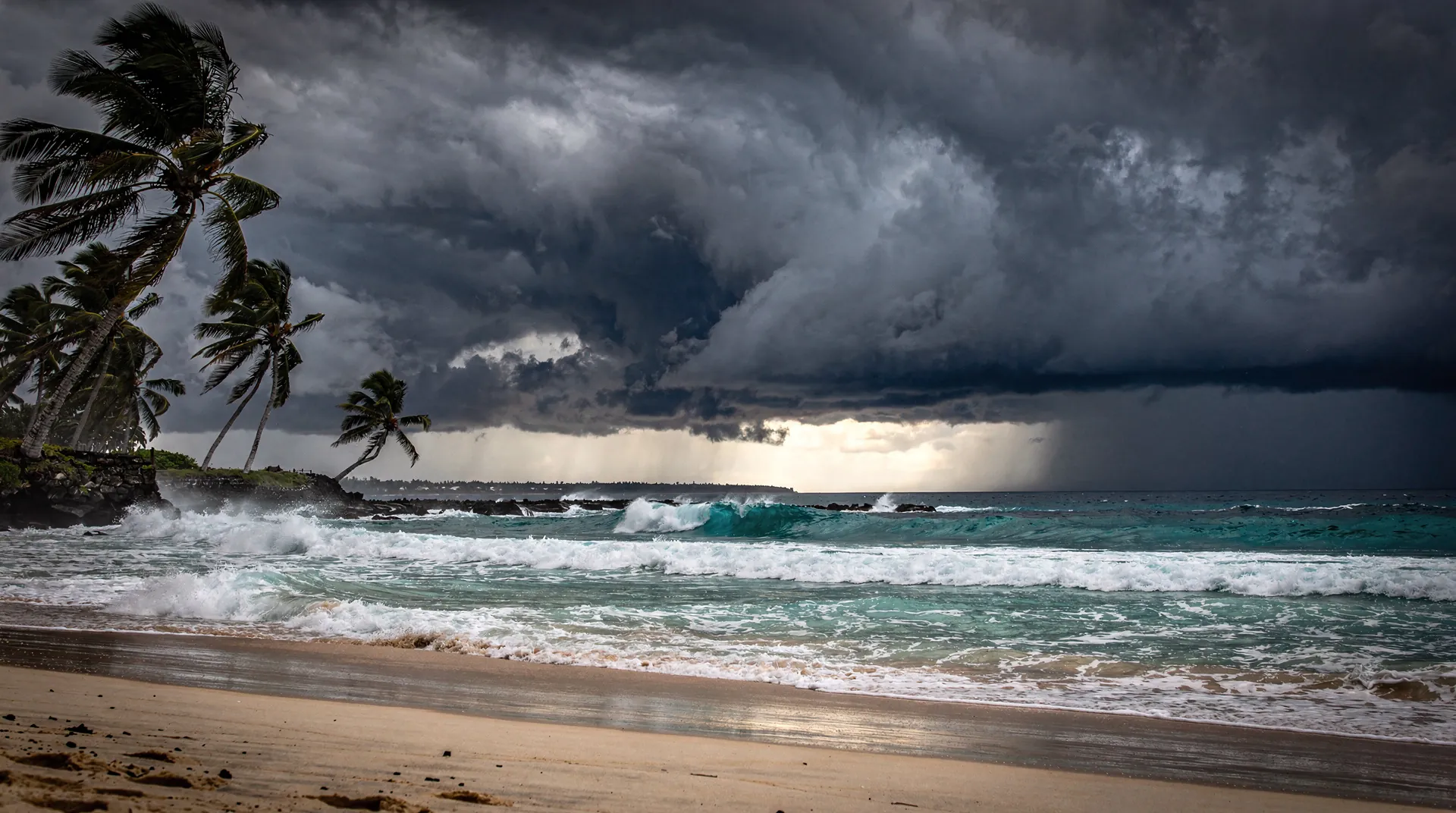
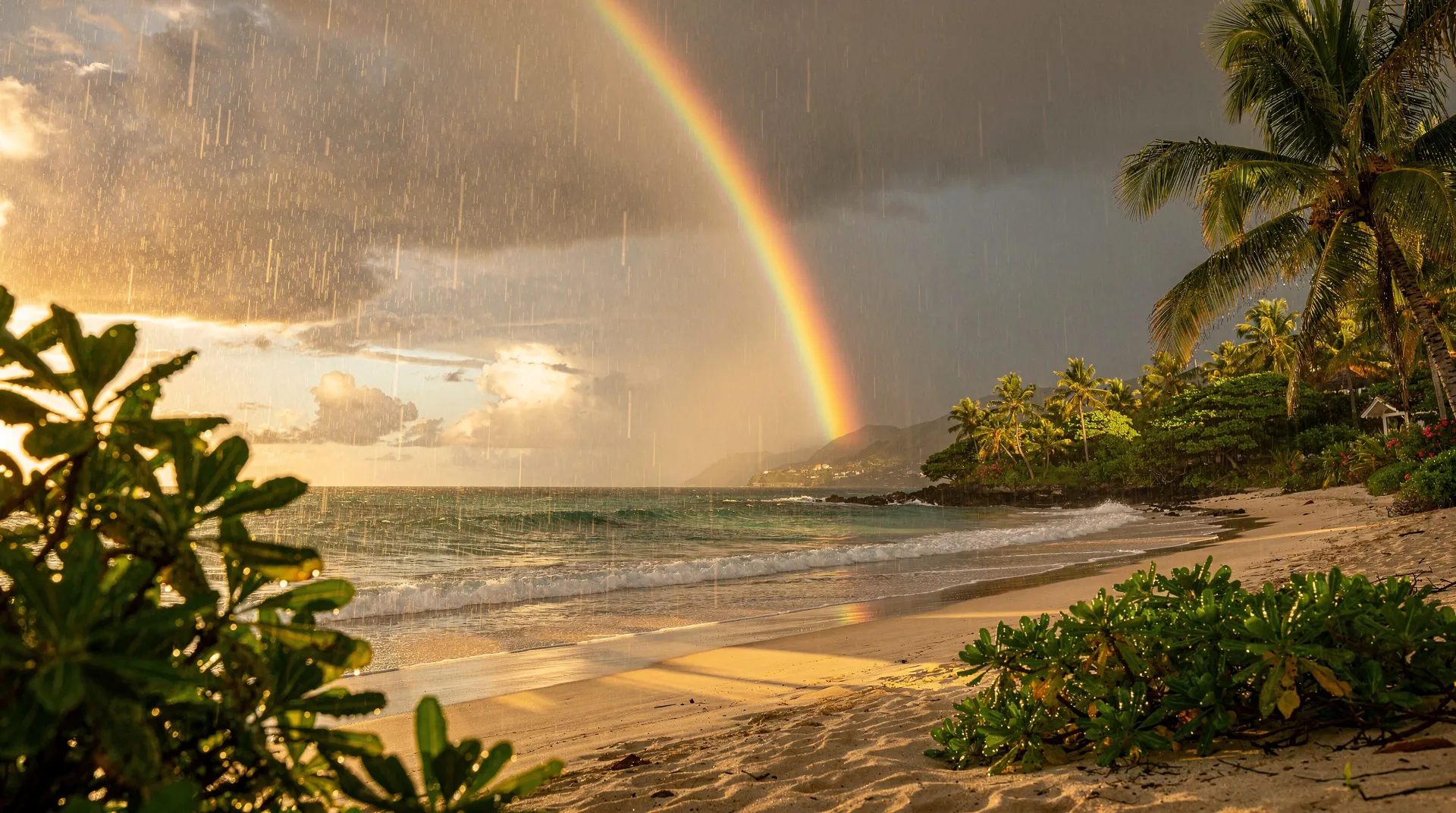
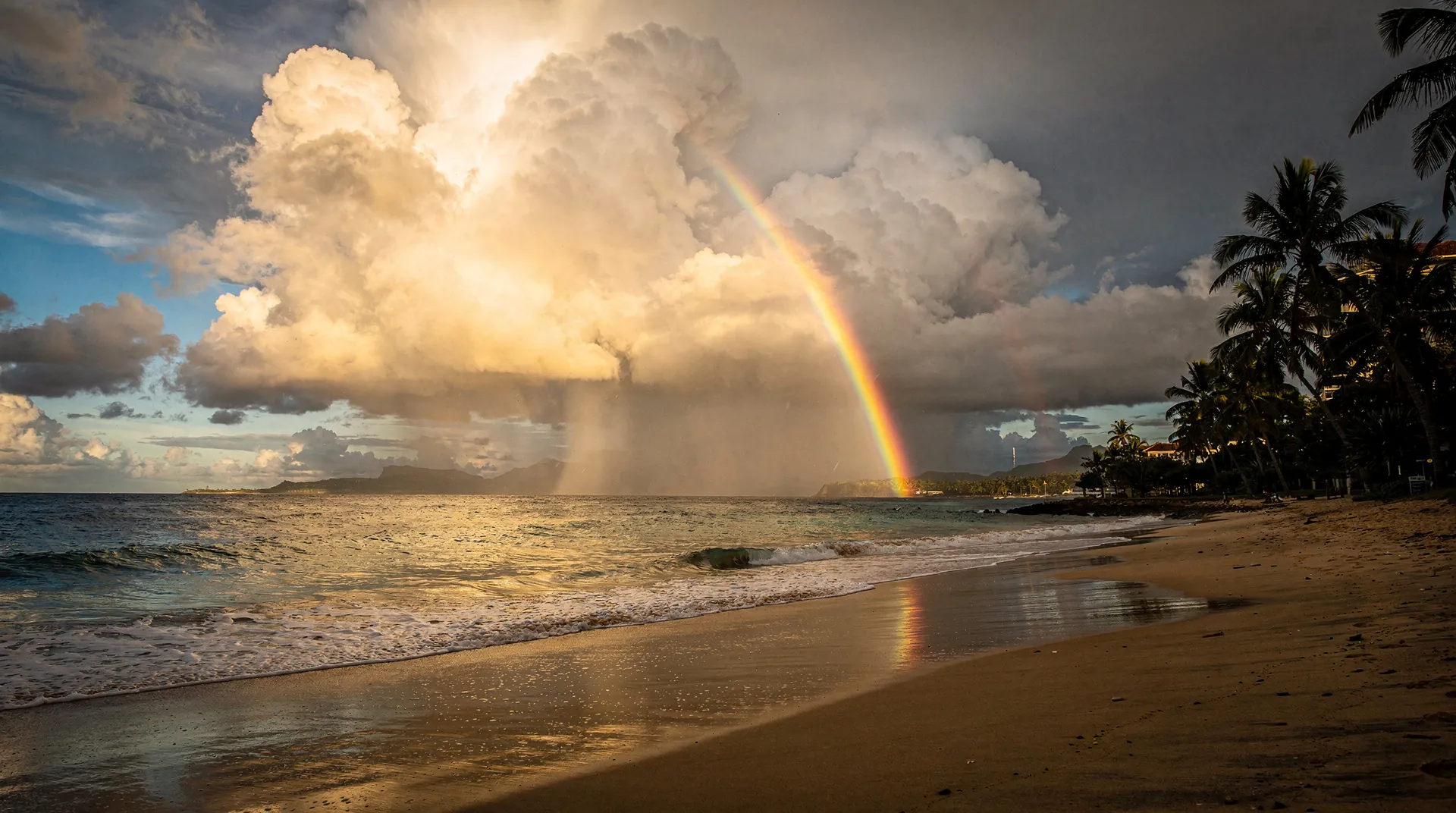
February is one of the rainiest months. The northwest coast records an average of 130 to 160 mm of rain over 12 to 15 days. Tropical downpours are brief but intense. The typical Mauritian pattern is clearly visible in February: blue skies in the morning, cumulus clouds building by late morning, a storm in early afternoon, then sunshine returning.
Lightning and nighttime thunder are common in February, adding to the season’s dramatic, fascinating character. These storms can be impressive but are generally brief — an hour or two at most before the sky clears again.
Sea and underwater visibility
The sea reaches its annual peak temperature in February: 28 to 30°C along the coast, sometimes 29°C in sun-exposed lagoons. It’s the warmest sea of the year, ideal for long swims and snorkelling. Underwater visibility is 15 to 25 m, slightly reduced by the plankton bloom stimulated by the warm water. For divers, a light wetsuit is enough — the 28-29°C water allows long sessions without feeling cold. Our snorkelling and diving guide covers the best west-coast sites for this time of year.
Cyclone risk in February
February shares with January the status of highest-risk month of the cyclone season. Statistics from the past 50 years show that February has seen more cyclones pass near the island than any other month. Systems are often more intense in February because the waters are at their warmest, feeding more energy into tropical disturbances.
Our complete guide to cyclones in Mauritius explains the four-level alert system, what to do, and how to protect yourself with good travel insurance. Reading this guide before booking a February trip is essential.
That said, let’s put things in perspective: even in February, the probability of a cyclone passing directly over the island during your week-long stay is around 5 to 15%. The vast majority of February travellers come home having experienced nothing worse than a tropical storm. The island has efficient warning infrastructure and hotels have well-rehearsed protocols.
Crowds and prices in February
High and low season overlap
February is schizophrenic in terms of visitor numbers. The first half of the month, which often coincides with French zone C school holidays (ski holidays), keeps prices high — almost at January levels. The second half, outside the holidays, is by contrast one of the quietest and cheapest periods of the year.
Valentine’s Day (14 February) causes a slight price bump at luxury hotels targeting couples, especially resorts with private beaches and romantic dinners. This effect is limited to two or three days and mainly affects 5-star properties. If you’re planning a romantic getaway, our guide to couples’ activities in Mauritius will help you plan memorable moments despite the summer weather.
Attractive prices outside the holidays
Outside school holidays, prices in the second half of February can be 35 to 50% lower than high-season rates. A 4-star hotel costing 300 euros a night in July can drop to 150-180 euros. Airlines also offer attractive fares on direct flights from Paris or Lyon.
This is the window that budget-conscious travellers watch for, willing to accept the weather risk in exchange for substantial savings. Our Mauritius budget guide puts these savings in context against other seasons.
Recommended activities in February
Diving and snorkelling: a highlight of the month
February is excellent for diving. The warm waters attract remarkable biodiversity. It’s turtle season, with sea turtles particularly active, manta rays at certain west-coast sites, and schools of trevally and tuna in the channels. Nighttime bioluminescence can be spectacular on moonless nights. Our snorkelling and diving guide to Mauritius covers the best sites depending on which coast you’re staying on.
The Blue Bay lagoon, a protected marine park, offers exceptional snorkelling in February thanks to the rich coral and the regular presence of green turtles grazing on the seagrass beds. The beaches of Mauritius best sheltered by their lagoons offer the best swimming conditions even when the sea is rougher offshore.
Cultural discovery and festivals
Maha Shivaratri (the Great Night of Shiva) often falls in February according to the Hindu lunar calendar. Hundreds of thousands of pilgrims dressed in white walk from all over the island to the sacred lake of Grand Bassin in the central highlands. Witnessing this procession is a profound and unique cultural experience — one of the largest human gatherings in the southern hemisphere. Some travellers plan their entire trip around this festival.
Tamil Cavadee (often in January or February) sees Tamil Hindu devotees carry decorated structures to temples in impressive processions involving ritual piercings. Another rare cultural experience.
Chinese New Year sometimes falls in February. Grand Baie and Port Louis come alive with red-and-gold decorations, fireworks and dragon dances in the streets.
Waterfall and landscape visits
Waterfalls are at their most impressive during the rainy season. Chamarel Falls, Alexandra Falls and Tamarin Falls are magnificent in February — their flow is at its peak, creating striking scenery framed by lush vegetation. Our guide to Chamarel and the Seven Coloured Earths covers the best waterfalls in the region and explains how to organise this must-do excursion.
By booking a guided excursion to Chamarel with a visit to the coloured earths and the waterfalls, you get hotel pickup and a guide who knows the best viewpoints depending on the day’s weather.
Tropical vegetation is at its lushest in February: intensely green forests, giant ferns, broad-leafed banana plants. For nature photographers, it’s a fascinating time.
Catamaran excursions
Catamaran excursions are possible in February in good weather — and there are often lovely windows between the downpours. Operators rarely cancel trips except in the event of a confirmed cyclone alert. The full-day catamaran trip to Ile aux Benitiers with dolphin watching in Tamarin bay makes for a memorable day even in the wet season.
Book with operators offering a flexible cancellation policy — it matters more in February than in July.
Activities to avoid or adjust
Mountain hiking: the risk of flooded, muddy trails is real. Climbs up Piton de la Petite Rivière Noire or Corps de Garde are not recommended after heavy rain — wait two days after a storm before attempting a high-altitude hike. Our hiking guide to Mauritius lists the trails to avoid in the wet season.
Open-sea water sports: outside beaches sheltered by a lagoon, conditions can be unpredictable. Catamaran tours can be cancelled without notice during disturbances.
Swimming on the south coast: the south coast can get rough during atmospheric disturbances. Avoid Gris-Gris and Souillac beaches if the sea is choppy.
Kitesurfing: February winds are irregular and conditions too unstable for serious kitesurfing or surfing. These sports are far better suited to June-August.
Recommended areas in February
West coast (Flic-en-Flac, Le Morne, Tamarin): this is the area to favour above all in February. It benefits from the island’s driest microclimate thanks to the foehn effect off the central mountains. Even on rainy days elsewhere on the island, the west coast can stay sunny in the afternoon. Sunsets over the sea here are superb.
North coast (Grand Baie, Trou aux Biches): a good option with a nice balance of nightlife, varied restaurants, and generally acceptable weather conditions. Easy access to excursions and plenty of shops within walking distance.
South coast (Blue Bay): the Blue Bay marine park is a must-do excursion even in February. The rich coral and the presence of turtles make this lagoon unique. As a day trip from a west-coast base, a visit to Blue Bay is well worth the effort.
Avoid the east coast as a priority: Belle Mare in the height of the austral summer regularly sees rainy, windy afternoons. It’s better visited as a day excursion from the west coast rather than used as your main base.
Accommodation in February
Choosing accommodation in February comes down to two factors: price and air conditioning. Outside school holidays, private villas and apartments often offer the best deals. An apartment with a private pool in Tamarin or Flic-en-Flac can be rented at very attractive rates in the second half of February.
For hotels, large resorts with direct beach access and an indoor or semi-covered pool are appreciated when weather conditions are uncertain. Our complete guide to accommodation in Mauritius will help you choose the right option for your group and budget.
Whichever option you choose, be sure to check that air conditioning is present in the rooms and that the internet connection is reliable — useful for following weather alerts in real time.
Getting around in February
Renting a car remains the best option, even in February. Be careful on mountain roads after rain. Our car rental guide to Mauritius gives practical advice for driving safely during the wet season.
Swimming with dolphins in February
Tamarin Bay is one of the rare places in the world where spinner dolphins live almost year-round. In February, they’re present in the bay every morning, resting after their nights hunting out at sea. A morning boat or catamaran excursion to swim with dolphins is one of the most memorable experiences the island has to offer, whatever the season. Choose a responsible operator who respects the regulatory distance.
Preparing for a February trip: checklist
- Take out travel insurance with explicit cyclone cover (check the compensation terms in the event of an alert)
- Book accommodation with confirmed air conditioning in every room
- Pack lightweight cotton or linen clothing — synthetic fabrics are stifling in high humidity
- Bring a light raincoat for sudden tropical downpours
- Download the Mauritius Meteorological Services app to follow alerts
- Choose the west coast as your main base if possible
- Book catamaran excursions with operators offering a flexible cancellation policy
- Opt for morning excursions rather than afternoon ones (storms often arrive in early afternoon)
- Stay very well hydrated — humid heat dehydrates you faster than in Europe
- Plan one or two meals at small local restaurants to sample authentic Creole cuisine
Comparison with neighbouring months
January offers a festive post-New Year atmosphere that’s still present, with slightly lower cyclone risk than February, but equally high prices in the first half of the month.
March represents a clear improvement: cyclone risk drops, temperatures start to fall, and rain becomes less frequent. If you can shift your trip by a month, March is often preferable.
October and May remain the reference months for the best weather conditions. If you want tropical heat without the drawbacks of the wet season, November is a good alternative — more sunshine and the start of summer temperatures with still low cyclone risk.
Insurance and flexibility: the reflexes to adopt in February
Travelling in February without cancellation/interruption insurance with an explicit cyclone clause is an unnecessary risk. Check that the policy covers early repatriation in the event of a class 3 or 4 alert, not just cancellation before departure. Our travel insurance guide to Mauritius details the coverage to compare before booking.
For accommodation, favour platforms or hotels offering a flexible cancellation policy up to 24-48 hours before arrival. The same goes for boat excursions: a serious operator will cancel as a precaution without charging you, while a less scrupulous one will cost you your afternoon or your money. Our catamaran excursions guide and budget guide help you weigh up the month’s risk-to-savings ratio.
February for families with children
February combines two challenges for young children: humid heat that quickly tires little ones, and cyclone risk that can disrupt an activity schedule. It’s not an off-limits month, but it demands more flexibility than April or October. If you’re travelling with young children, our family guide to Mauritius details precautions by age group, and the west coast remains, as for all traveller profiles, the safest base for maximising sunny days.
Verdict: should you visit Mauritius in February?
February is the month for adventurous, budget-conscious travellers. If you go in with your eyes open — knowing the heat will be intense, the humidity heavy, the rain frequent, and a cyclone possible — you can enjoy the island at unbeatable prices and experience exceptional cultural moments (Maha Shivaratri, Chinese New Year, marine wildlife).
For families with heat-sensitive children, people with heart conditions or who cope poorly with humidity, and anyone who’d rather not experience a cyclone alert, another period is a better choice. October, May or even November offer a much better overall balance according to our best times to visit guide.
Overall February rating: 5/10 — For bold, well-prepared travellers only. But the bargains and cultural festivals are real.