Colonial Houses of Mauritius: Eureka House, Château de Labourdonnais and Creole Heritage
Which colonial house is the most interesting to visit in Mauritius?
Eureka House in Moka is the most authentically restored and the best documented. Château de Labourdonnais is more touristy, but its estate and restaurant make it a lovely outing. Ideally, visit both during the same trip.
Mauritius’s colonial heritage: a Creole architecture unlike any other
The colonial architecture of Mauritius is one of the most distinctive in the Indian Ocean. Shaped by three centuries of Franco-British rule, it developed a genuinely Creole style that blends European building techniques with local materials and tropical climate constraints: steeply pitched corrugated-iron roofs to shed torrential rain, deep verandas that create shaded living spaces, timber partitions that breathe in the humid heat, and gardens laid out like formal English parks or left wilder, like tropical woodland.
These houses tell the island’s history better than any book: the French planter families who shaped the Mauritian economy and society, the British administrators who layered their own architectural codes onto the French legacy, and the resulting cultural blending together form a living heritage of exceptional richness.
Sadly, many of these houses have disappeared or fallen into disrepair. Humid heat, cyclones, lack of upkeep and property pressure have taken their toll on numerous historic homes. The few that have been restored and opened to the public deserve to be visited and supported all the more.
| At a glance | |
|---|---|
| Where | Moka (Eureka House) and Mapou, near Pamplemousses (Château de Labourdonnais) |
| Price | around 450 rupees (Eureka House) and 500 rupees (Labourdonnais) per adult |
| Time needed | 1h30 to 2h per site, half a day to combine both |
| Getting there | a car is essential — see our car rental guide |
| Best time | year-round, mornings are best for light in the gardens |
Eureka House vs. Château de Labourdonnais
| Criteria | Eureka House | Château de Labourdonnais |
|---|---|---|
| Type | Domestic museum, very authentic | Working agricultural estate, more touristy |
| Entry | around 450 rupees | around 500 rupees |
| Highlight | Period furniture, garden and waterfalls | Orchards, gourmet shop, restaurant |
| Ideal for | History and architecture lovers | Families and food lovers |
Eureka House: Creole authenticity in Moka
Overview
Eureka House, or Maison Eureka, is generally considered the finest and most authentic colonial house open to the public in Mauritius. Built in 1830, it sits in a lush valley in Moka, a Central Plateau locality about twenty kilometres from Port Louis, surrounded by gardens and rivers that give it an extraordinary atmosphere.
The house owes its name to the legend that the English merchant who bought it in 1856 exclaimed “Eureka!” (I have found it!) upon discovering the property. Since 1985 it has been run by a family descended from Mauritian planters, who have carried out a meticulous restoration of the whole estate — main house, outbuildings and gardens.
Architecture and collections
Maison Eureka is a superb showcase of the colonial Creole style at its finest. The timber building, with 109 doors and windows (a mark of wealth in the 19th century, since each opening was taxed), unfolds in an L-shape around a central veranda offering views over the garden and the Moka River. The interior has been furnished with period pieces, colonial crockery, paintings of navigators and explorers, and a remarkable collection of engravings depicting the flora and fauna of Mauritius from the days of Île de France.
The Creole furniture — mostly ebony and camphor wood — reflects the skill of 19th-century Mauritian craftsmen. The colonial kitchen, with its cast-iron stoves, copper pots and spice jars, is particularly evocative.
The garden surrounding the house is remarkable in its own right. A river naturally irrigates it, creating a series of waterfalls and natural pools. Centuries-old trees — mango, badamier and giant fig — shade beds of tropical flowers. Two spectacular waterfalls, reached by a path from the garden, are often the visit’s most unexpected highlight.
Practical information
Eureka House is open Monday to Sunday from 9am to 5pm. Entry costs around 450 rupees per adult, including a guided tour of the house and free access to the gardens. A Creole restaurant serves lunches based on traditional Mauritian recipes — it’s one of the best places on the island to try authentic Creole cuisine in a colonial setting.
To get there, follow the road to Moka from Port Louis or from the centre of the island. The house is signposted. Allow 25 minutes by car from Port Louis. Our car rental guide for Mauritius is essential for visiting this site, which is poorly served by public transport.
Château de Labourdonnais: luxury and citrus in the north
Overview
Château de Labourdonnais is an agricultural estate founded in the 19th century in the town of Mapou, a few kilometres from Pamplemousses and the Botanical Garden. It takes its name from the famous governor Mahé de Labourdonnais, a founding figure of Mauritian colonial society, although the estate never actually belonged to him.
Unlike Eureka House, which is primarily a domestic museum, Labourdonnais is a working agricultural estate, with tropical fruit orchards, a fruit brandy distillery, a chocolate factory and a range of artisanal food products sold on site and across the island. The colonial house itself, restored at great expense, is used for guided tours and hosts a gourmet restaurant.
The estate and its produce
The estate covers several dozen hectares planted with mango, lychee, papaya and avocado trees, plus a wide variety of citrus and other tropical fruit. The guided tour of the estate (about 45 minutes) takes in these orchards, explains the organic farming methods used, and covers the estate’s history from its founding.
The shop is one of the finest on the island for artisanal gourmet products. It stocks tropical fruit jams made on site, fresh fruit juices (mango, lychee, passion fruit), syrups, fruit liqueurs and a range of chocolates made from Mauritian cacao. These products make excellent gifts and are far more original than standardised tourist-shop souvenirs. Our guide to souvenirs to bring back from Mauritius has more ideas for authentic purchases.
The colonial house
The estate house, built in the 1850s and restored in the early 2000s, is a fine example of French-style Creole colonial architecture. The veranda running all the way round the building, the white-painted timber shutters, the corrugated-iron roof and the formal French-style gardens make it a highly photogenic setting.
The interior isn’t a museum piece to the same degree as Eureka House — the rooms are mainly used for private events and the restaurant. But the quality of the restoration and the care given to architectural details make it a fine illustration of how well-off 19th-century planter families lived.
Practical information
Château de Labourdonnais is open every day from 9am to 5pm. Entry to the estate with a guided tour costs around 500 rupees per adult. The gourmet restaurant, one of the most highly regarded in the north of the island, requires a reservation. Prices at the restaurant are high, but the quality lives up to them.
The estate is located in Mapou, 5 kilometres east of Pamplemousses. By car from Grand Baie, allow 20 to 25 minutes. It’s best visited in combination with the Botanical Garden and the L’Aventure du Sucre museum, which are both located in the same area.
Other colonial houses and Creole architecture
Colonial Port Louis
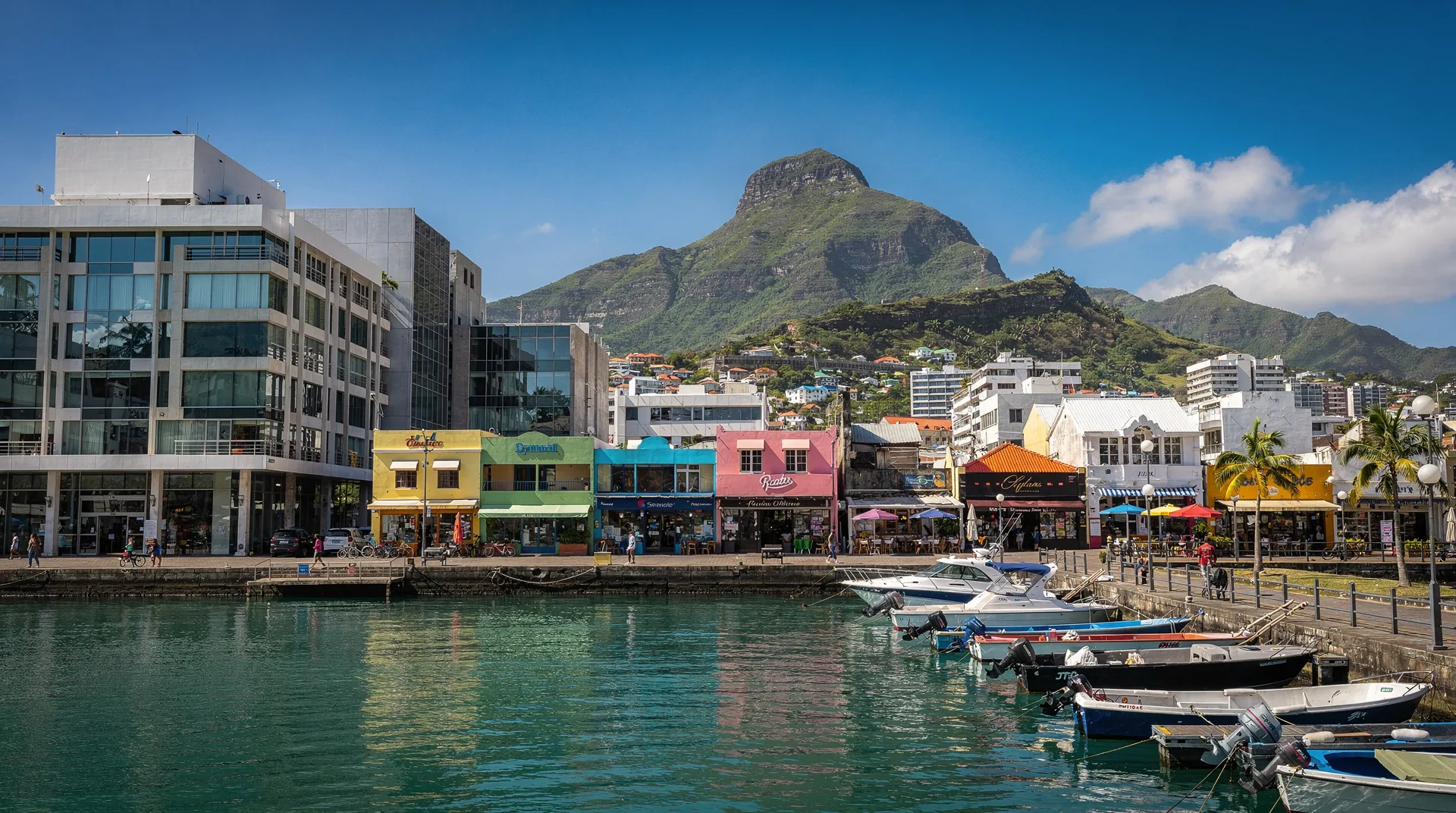
The capital Port Louis retains some fine examples of colonial architecture in its historic centre, particularly around the Champ de Mars (the oldest racecourse in the southern hemisphere, created in 1812) and in the Cathedral and Government quarters. The government buildings on Place d’Armes — the Château de Labourdonnais (seat of the Prime Minister, not to be confused with the northern estate) and Government House — are fine examples of official Franco-British colonial architecture.
Along the highland roads
The Central Plateau roads linking Curepipe to Quatre Bornes and Rose Hill still offer a few typical Creole houses with colourful facades, tin roofs and flower-covered verandas. These ordinary middle-class colonial homes, though less spectacular than the great planter mansions, form the living fabric of Mauritian architectural heritage.
The Chamarel road and the south
In the south and southwest of the island, a few historic sugar estates preserve remnants of rural colonial architecture. The road between Bel Ombre and Chamarel crosses landscapes that still evoke the grand estates of the past. To explore this region without driving, you can book a Chamarel excursion with the waterfall and the coloured earths, which passes through these plantation landscapes.
Domaine de Saint Aubin, a third option in the south
For travellers exploring the south of the island, the Domaine de Saint Aubin near Rivière des Anguilles usefully rounds out the Eureka House / Labourdonnais duo. This working 19th-century colonial house offers tours of its artisanal rum distillery and vanilla plantation, with a Creole lunch served in the main house. It’s a good stop if your itinerary passes through the south, rather than making the round trip from the north just for the colonial houses.
Combined with a hike in the south of the island in the morning and a Creole lunch at Saint Aubin in the afternoon, this estate lets you enjoy a full cultural day without having to head back up to Moka or Pamplemousses.
Photographing the colonial houses
Morning light (before 10am) is best for photographing the white facades and verandas, which easily become overexposed in full daylight. At Eureka House, the garden waterfalls are more photogenic after rain, when the river’s flow is stronger. At Château de Labourdonnais, late-afternoon light over the orchards and French-style gardens is particularly flattering. Our photography guide to Mauritius covers other practical tips for photographing the island in good conditions.
Fitting the colonial houses into your trip
A day combining Eureka House in the morning and Château de Labourdonnais in the afternoon (or vice versa) is the most efficient way to cover both main houses open to the public. The two sites are, however, in different areas — Moka for Eureka, Mapou/Pamplemousses for Labourdonnais — and a car is essential.
From the north of the island (Grand Baie, Trou aux Biches), start with Château de Labourdonnais and the Pamplemousses Botanical Garden, then head down to Moka for Eureka House in the afternoon. From Port Louis or the Central Plateau, the reverse order makes more geographical sense.
Our guide to 7-day itineraries in Mauritius fits these cultural visits into a complete programme. To plan your travel, our guide to travel times between areas gives you all the distances and timings you need. Don’t forget to plan your budget, including museum entry fees, gourmet restaurants and shopping at these historic estates.
Mauritius’s colonial heritage is fragile, and these sites depend on tourist visits to remain financially viable. By visiting them, you directly help preserve a unique architectural heritage that, without support, will keep gradually disappearing under the pressure of cyclones and property speculation. To round off this cultural day, book a guided tour of the Pamplemousses Botanical Garden combined with the nearby Château de Labourdonnais — an outstanding cultural morning in the north of the island.
Later in the day, a trip north offers the chance to join the northern islands catamaran cruise to combine culture and sea in the same day from your base in Grand Baie.