Mauritius in August: Weather, Whales and Activities
Can you see whales in Mauritius in August?
Yes, August is one of the best months to spot humpback whales off Mauritius, particularly along the south and west coasts.
Mauritius in August: cool, windy and extraordinary
August is the peak of the austral winter in Mauritius. The wind blows hard, the sea feels cool along the exposed coasts, and nighttime temperatures are the lowest of the year. Yet August holds a trump card that few tropical destinations can rival: humpback whales. These ocean giants pass off the coast of Mauritius during their winter migration, offering a unique natural spectacle that returning travellers often cite as the highlight of their trip.
August is also the month for active travellers: kitesurfers, hikers, divers and surfers find dream conditions in the crisp austral winter air. Our guide to the best time to visit Mauritius ranks August as an excellent month for active, nature-loving travellers, and a slightly less ideal one for those chasing warm seas and pure relaxation.
August at a glance
| Where to stay | West coast (Flic-en-Flac, Le Morne, Tamarin) to escape the wind |
| Prices | High in the first half of the month (July-level), a little softer afterwards |
| Sea | Cool for Mauritius (22 to 24°C), very comfortable for most travellers |
| Wind | Strong, 20 to 40 knots on the east coast and south |
| Not to miss | A humpback whale watching trip |
| Book ahead | Yes — accommodation 3 to 4 months ahead, whale watching as soon as you arrive |
Weather and temperatures in August
The lowest temperatures of the year
August shares with July the title of coolest month. Daytime highs sit between 22 and 25°C along the coast. Overnight lows drop to 16-18°C on the coastline and can dip close to 10-12°C on the central plateau on the chilliest nights. Morning fog is common in Curepipe and the highlands.
These temperatures can surprise travellers expecting year-round tropical heat. A warm jumper and a jacket for the evenings are not a luxury but a necessity in August, especially if you plan on terrace dinners or mountain excursions. In the air-conditioned restaurants of the resorts, the evening chill can catch you off guard — pack an extra layer.
On the central plateau — Chamarel, Curepipe, Vacoas — temperatures sometimes fall to 10°C at night. Locals in these areas wear coats in August, a tropical quirk that never fails to surprise visitors.
Wind: the star of the show in August
August is the windiest month of the year. South-easterly trade winds blow at 20 to 40 knots along the east coast and exposed areas, with gusts of up to 50 km/h during the strongest spells. This wind has three distinct effects: it makes the east coast difficult for swimming and lounging, it creates perfect conditions for kitesurfing and surfing, and it pleasantly cools the beach areas on the west coast.
On the west coast, the wind is effectively softened by the island’s central mountains. Flic-en-Flac and Le Morne remain peaceful havens even on the windiest days elsewhere on the island. That’s exactly why the west coast is so appealing during austral winter — it gets the good weather without the wind.
Minimal rainfall: the strong point
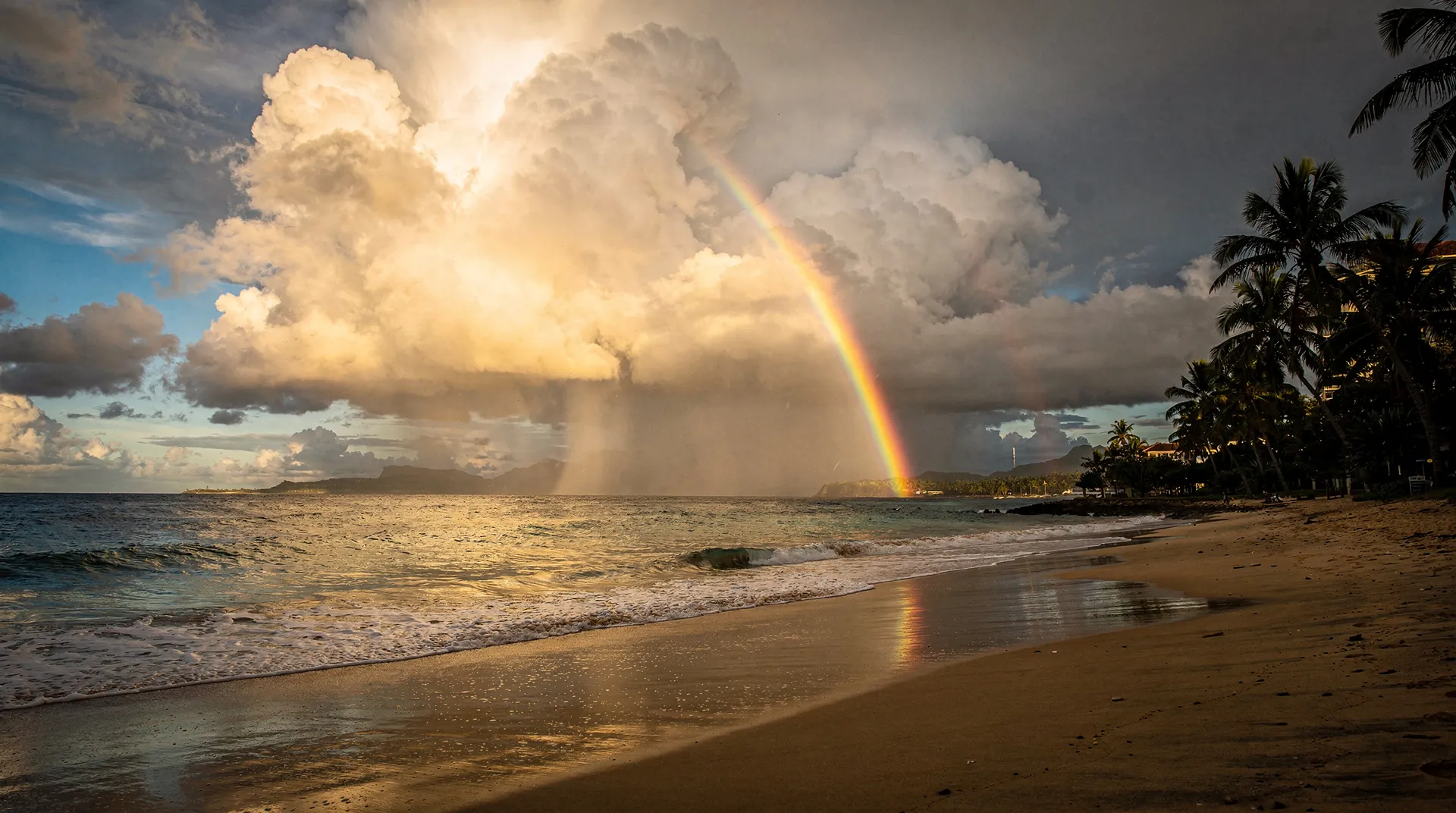
August is the driest month of the year. Rainfall on the north-west coast drops to just 35-45 mm spread over only 4 to 6 days. Sunny days are the norm. The winter light is particularly beautiful, with high-contrast skies, wind-sculpted clouds and remarkably crisp colours. It’s photographers’ favourite month for capturing Mauritian landscapes.
The sea in August: cool but crystal clear
The sea reaches its lowest annual temperature: 22 to 24°C. For many Mauritians, that counts as “cold.” For travellers used to Atlantic waters (17-18°C), it’s very comfortable for swimming. A 3mm wetsuit is recommended for longer dives. Underwater visibility peaks for the year at 35-45 m at the best sites — exceptional conditions for divers. Our snorkeling and diving guide covers the best spots on the west coast to make the most of this remarkable visibility.
Waves on the south coast reach 1 to 3 metres during Australian swell events, waking up surf spots, notably in Tamarin and along the south coast. This is one of the most active periods for surfing in Mauritius.
The star event of August: humpback whales
The humpback whale migration
From July to October, humpback whales (Megaptera novaeangliae) migrate from Antarctic waters to the equatorial Indian Ocean to breed and calve. Mauritius sits right on their natural migration route. These giants, 12 to 16 metres long and weighing up to 40 tonnes, pass off the island’s south and west coasts.
August is one of the best months to see them. Windy as conditions may be, they coincide with the whales’ peak presence in Mauritian waters. Specialised operators head out each morning in search of pods. The whales’ distinctive blow (visible from several hundred metres away), their spectacular breaches out of the water, and the slap of their tail fins on the surface are among the sights lucky observers can witness.
Ethical whale watching
Whale watching in Mauritius follows strict regulations: a minimum distance of 100 m, engines slowed on approach, and a strict ban on swimming with the whales. Choose certified operators who respect these rules for a responsible, sustainable experience. Our complete guide to whale watching in Mauritius details recommended operators, the best viewing areas and the ethical rules to follow.
A whale watching trip typically lasts 3 to 4 hours from the west coast. There’s never an absolute guarantee of a sighting, but the success rate in August-September exceeds 70% according to experienced operators. If your first outing comes up empty, most operators offer a second trip at a reduced rate. Book your whale watching trip in Mauritius ahead of time — August is the most sought-after month of the season and spots fill up fast.
Dolphins and whales together
In August, the Mauritian coast sometimes offers the rare sight of dolphins and whales in the same view. The spinner dolphins that live year-round in Tamarin bay sometimes cross paths with migrating whale pods. A swimming with dolphins excursion in the morning, combined with a whale watching trip in the afternoon, makes for a truly memorable day.
Crowds and prices in August
The tail end of the school holidays
The first half of August is still marked by the French school summer holidays. Visitor numbers remain high, with rates comparable to July. From mid-August onward, the gradual return of holidaymakers frees up hotel rooms and prices start to soften slightly.
The second half of August offers a great compromise: the best weather conditions of the austral winter (exceptional visibility, calm seas on the west coast), but noticeably fewer crowds than in July. Restaurants are less packed and excursions feel more intimate. Our Mauritius budget guide gives precise benchmarks for each week of August.
Prices still high early in the month
Prices in early August are comparable to July’s — among the highest of the year. Book 3 to 4 months ahead to secure the best rooms. Our complete guide to accommodation in Mauritius can help you find an option that fits your budget: privately owned villas sometimes offer better rates for families, even in high season.
The second half of August gets slightly cheaper as high season winds down. Flexible travellers who can choose between the first and second half of the month should opt for the second — similar conditions, better prices, fewer crowds.
Recommended activities in August
Kitesurfing and surfing: peak conditions of the season
Le Morne spot is at its absolute best in August. The One Eye, a legendary wave that breaks 500 m offshore facing Le Morne Brabant, is active and spectacular. Advanced kitesurfers and top-level surfers sometimes travel specifically for August. International kitesurfing competitions take place during this period — a free show from the beach.
The south coast (Tamarin, Rivière des Galets) offers quality surf thanks to the Australian swells. Tamarin Bay, a historic surf spot in Mauritius dating back to the 1970s, is at its best in August. Our guide to kitesurfing and surfing in Mauritius covers every spot on the coast by level and discipline.
Hiking and trekking: ideal coolness
The cool August air is perfect for long hikes and climbs. The Black River Gorges, the Grand Bassin plateau, and the peaks of the Moka mountain range are stunning in the cool, crystal-clear conditions. Bring a windbreaker, as the wind can be strong at altitude — gusts at the summit of Piton de la Petite Rivière Noire can be impressive but not dangerous.
The guided hike at Le Morne Brabant is particularly rewarding in August, with a 360° panorama over the lagoon in the crisp clarity of the austral winter.
The endemic wildlife — Java deer, green monkeys, rare birds like the Mauritius fody — is especially easy to spot in the national park’s forests in August. Park rangers sometimes organise guided tours focused on the endemic wildlife.
Diving with maximum visibility
With 35-45 m of visibility, August offers the best diving and snorkeling conditions of the year. The Wolmar Wall, the Cathedral at Flic-en-Flac and the drop-offs along the west coast are breathtaking in this absolute clarity. Even experienced divers, used to world-renowned sites, are amazed by the quality of Mauritian waters in August.
Catamaran trips to Ile aux Benitiers and Crystal Rock are particularly beautiful in August: visibility in the lagoon is at its peak, and the white sand seabed and coral are visible from several metres below the surface.
Ile aux Cerfs in August
Ile aux Cerfs remains accessible in August, though the trade winds can make the crossing a little choppy. The lagoon stays sheltered and the white sand beaches are gorgeous. Crowds in the second half of August are noticeably lighter than in July, which makes for a much better experience.
Cultural discovery and food
August is a good month to explore the island’s cultural sites, which are less crowded than in July. The Pamplemousses botanical garden is a pleasant visit in the cool weather — giant tortoises are active and peacocks roam freely. Port-Louis and its central market offer an authentic taste of Mauritian life, with the scent of spices and colourful fabrics.
The coloured earths of Chamarel are spectacular in winter against an intensely blue sky. Visiting the Black River Gorges in the morning, then Chamarel in the afternoon, makes for an exceptional day of discovery.
Family activities in August
For families travelling early in the month (during the school holidays), August offers the same appeal as July with an extra bonus: the whales. A whale watching trip is an unforgettable experience for children and adults alike. Our guide to family activities in Mauritius offers more ideas suited to an August holiday.
Events in August
Father Laval Day (approaching on 9 September, pilgrimages start in August): Blessed Father Laval, the Catholic missionary who devoted his life to the Mauritian people in the 19th century, is revered across the island. Thousands of pilgrims of all faiths visit his tomb in Sainte-Croix (a suburb of Port-Louis) throughout the austral winter — a remarkable cross-religious spiritual tradition in this multicultural country.
Sporting competitions: sailing, kitesurfing, marathons and triathlons — August is a busy sporting month. The international wind-sports community is out in full force. Some events are open to spectators and create a festive atmosphere at the spots.
Sea festival: in some coastal villages, local celebrations pay tribute to the sea and traditional fishermen. Fishing competitions and seafood tastings bring the coastal communities of Grand Baie and the west coast to life.
Recommended areas in August
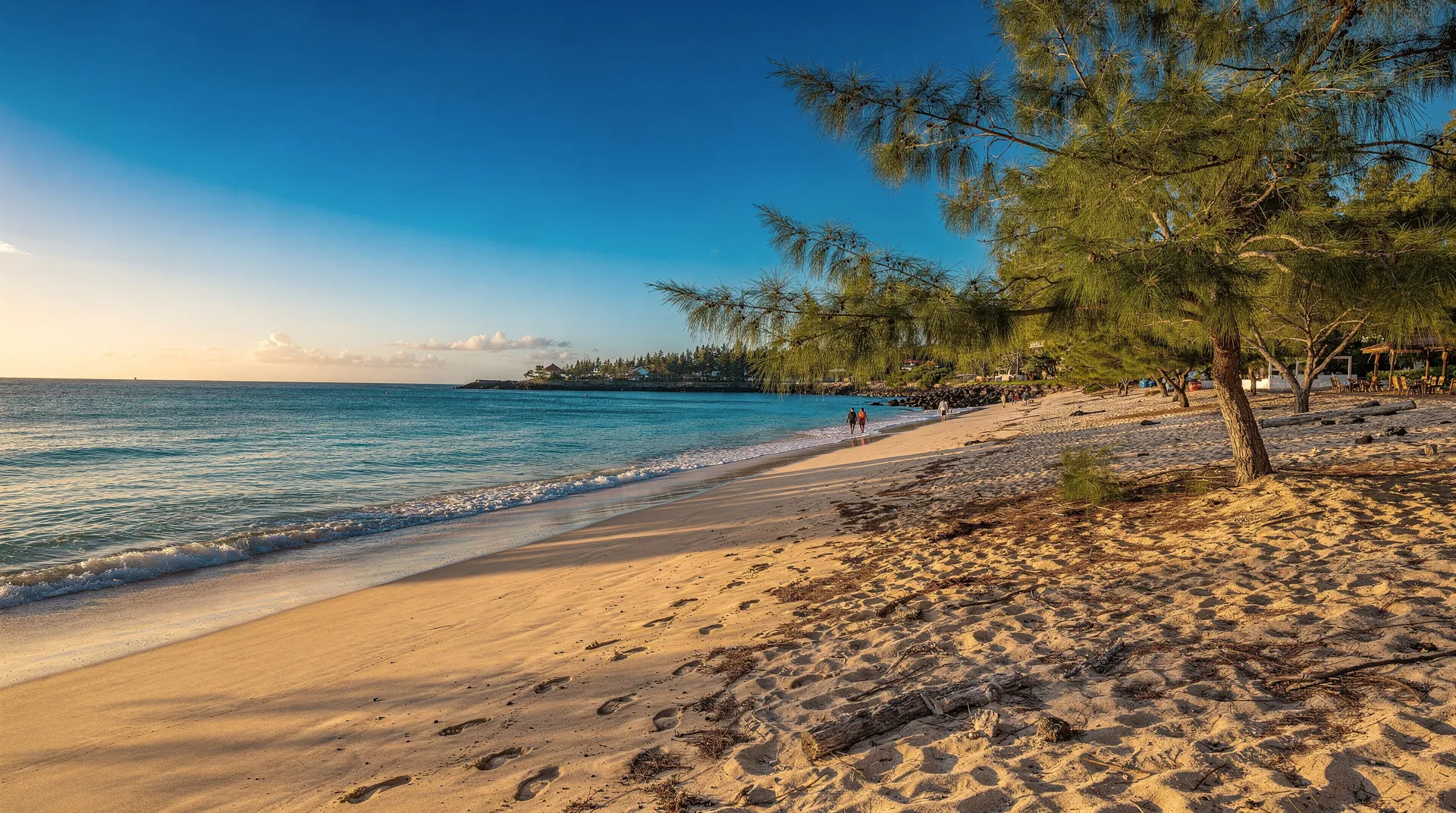
Le Morne and south-west coast: the iconic spot for wind sports. Le Morne beach is spectacular with Le Morne Brabant (a UNESCO World Heritage site) as a backdrop. The lagoon is perfect for kitesurfing in the flat-water zone and for diving beyond the reef.
West coast (Flic-en-Flac, Tamarin): ideal for diving, dolphin watching and calm, quiet swimming. Tamarin Bay is a classic for surfers looking for quality waves without the extremes of Le Morne.
South coast (Le Souffleur, Rochester Falls, Bel Ombre): spectacular basalt landscapes whipped by winter winds. Le Souffleur, a natural geyser formed by waves surging into a basalt crevice, is especially impressive during the big swells of August — a unique natural spectacle.
North coast (Grand Baie): less windy than the east coast in winter, the north coast still offers great conditions for boat trips. Excursions to the northern islets (Coin de Mire, Ile Plate) are pleasant in good weather.
Inland (Chamarel, the gorges, central plateau): the relative cold of August makes inland excursions particularly enjoyable. The native forest of Bel Ombre and the Black River Gorges are stunning with their winter greenery.
Accommodation and getting around in August
For August, book early — ideally 4 to 6 months ahead for the first half of the month. The west coast is the natural base for making the most of August: calm sea, guaranteed sunshine, and easy access to whale watching and diving excursions.
For active travellers, a base in Le Morne or Tamarin makes it easy to reach the kitesurfing and surfing spots. Our guide to renting a car in Mauritius is useful for getting around freely between spots — public transport doesn’t cover all the sporting areas.
What to pack for August
August catches unprepared travellers off guard. Be sure to pack: a windbreaker (essential on the east coast and for excursions), a jumper or light fleece for the evenings, a 3mm wetsuit if you plan on long dives, and layers to handle the swing between cool mornings and sunny afternoons. Don’t forget warm clothing for excursions into the highlands towards Chamarel or the central plateau, where temperatures can drop noticeably. Our guide to practical information and formalities rounds out this list with documents and steps not to forget.
Comparison: first or second half of August?
| Criteria | First half | Second half |
|---|---|---|
| Crowds | High (French school holidays) | Gradually decreasing |
| Accommodation prices | Highest of the year, alongside July | Noticeably softer |
| Weather | Windy, dry, cool at night | Same, often the best visibility |
| Humpback whales | Good period | Peak period (August-September peak) |
| Atmosphere | Lively, restaurants full | Quieter, less crowded excursions |
For a good balance between weather and budget, the second half of August remains the best choice for most travellers.
Verdict: is Mauritius worth visiting in August?
August is an outstanding month for travellers who love wild landscapes, outdoor sports and unique natural experiences like whale watching. It’s also one of the most expensive months (in the first half) and the windiest of the year.
If you’re a kitesurfer, hiker, diver or nature lover, August could be the perfect month. If you’re mainly after a calm beach and warm sea, wait for October or November — the contrast will be striking and you’ll be far better served.
Overall rating for August: 7.5/10 — Outstanding for active travellers and nature lovers, less ideal for pure relaxation.