Mauritius in July: weather, crowds and activities
Is it better to visit Mauritius in July or August?
The two are similar. July is busier and slightly more expensive. August offers nearly identical conditions with fewer crowds. Both are excellent for sports activities.
Mauritius in July: the great French summer rush
July is one of the busiest months in Mauritius. French summer school holidays, along with those of other French-speaking countries, send thousands of tourists to the island. The beaches along the west coast are lively, restaurants are packed every evening, and prices hit their second annual peak after December-January. Even so, July remains an excellent month to visit Mauritius — provided you know what you’re looking for and where to go.
Because while July is expensive and crowded, it is also remarkable weather-wise: dry, sunny, cool without being cold, with some of the best conditions of the year for sports. For families tied to school calendars, it’s often the only possible window — and Mauritius remains a fantastic destination even in high season. Our guide to the best time to visit compares July with every other month depending on your travel style.
At a glance: July in Mauritius
| Criteria | Detail |
|---|---|
| Weather | Cool and dry, 22 to 25°C by day, strong trade winds |
| Prices | High — 2nd peak of the year after December-January |
| Crowds | High season, booking essential |
| Best area | West coast (Flic-en-Flac, Le Morne, Tamarin) |
| Book in advance | Hotels, flights, excursions — ideally 4 to 6 months |
| Great for | Kitesurfing, hiking, diving, families on school holidays |
Weather and temperatures in July
The coolest month of the year
July, along with August, is the coolest month of the year in Mauritius. Daytime highs drop to 22 to 25°C along the coast, with days sometimes capped at 20°C during cloudy, windy spells. Nights are cool, between 16 and 19°C on the coast, and can drop to 12 to 14°C on the central plateau.
For visitors used to hot summers, these temperatures can come as a surprise. A jumper, a light jacket or even a thin puffer coat is recommended for evenings, especially by the sea where the trade winds make it feel colder. In west coast resort restaurants, air conditioning can make dinners quite chilly — bring an extra layer for indoor evenings.
On the central plateau (Curepipe, Vacoas, Chamarel), temperatures can drop to 10-12°C at night. Locals on the plateau wear coats in July — a surprising sight in the tropics that amuses visitors.
Dry, sunny weather: the big upside
July is one of the driest months of the year. Rainfall on the northwest coast is minimal: 45 to 55 mm over 5 to 7 days. Most days are sunny with a remarkably deep blue sky — the winter blue of the southern hemisphere has a particular intensity. The occasional showers are light and brief, with no real impact on activities.
The central plateau is slightly cloudier, and the Curepipe and Vacoas areas can see morning drizzle. But in the coastal resort areas of the west and north, the sun shows up almost every day.
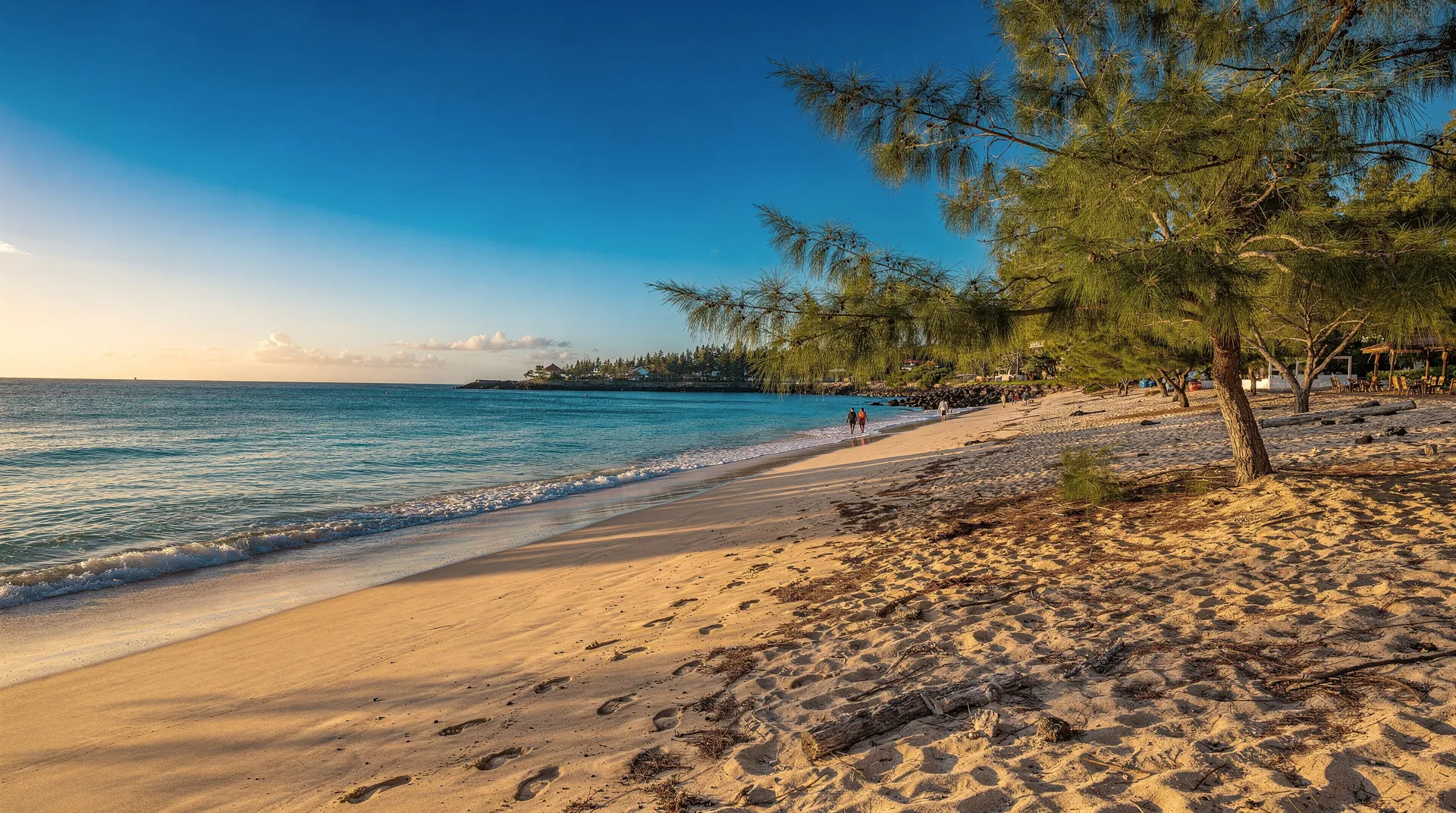
The quality of light in July is remarkable for photography: the low winter sun creates long shadows and warm golden tones at the end of the day, especially on the west coast with sunsets over the Indian Ocean.
The sea in July: cool but crystal clear
The sea reaches its lowest temperature of the year in July-August: 22 to 24°C depending on the area. For Mauritians used to warm water, it’s practically cold. For French travellers arriving from an Atlantic at 17-18°C, it’s perfectly comfortable. Swimming remains possible and pleasant, especially on the west coast where the sea is calm.
Underwater visibility is excellent: 30 to 40 m at the best west coast sites. It’s one of the best times of year to see the Mauritian seabed in full clarity. The west coast benefits from calm seas thanks to the shelter of the central mountains. The east coast sees stronger swells and currents linked to the trade winds.
Strong trade winds: the flip side
The southeast trade winds blow at their strongest in July. Winds of 20 to 35 knots are common on the east coast and in exposed areas. These winds are perfect for kitesurfing and surfing, but can make some east coast beaches uncomfortable for lounging — sand in your eyes, parasols hard to keep upright.
On the west coast, the wind is softened by the central mountains. The beaches of Flic-en-Flac and Le Morne stay calm and pleasant even during spells of strong wind elsewhere on the island.
Crowds and prices in July
High season, confirmed
July is clearly a high-season month. Hotels are often fully booked in the 4- and 5-star categories, especially along the west coast. Popular excursions — catamaran trips, Ile aux Cerfs, diving — need to be booked ahead, sometimes several days in advance. Restaurants in Grand Baie and Flic-en-Flac are packed every evening.
The atmosphere is festive and lively, which suits travellers who enjoy the buzz of a holiday and the social scene of the big beaches. But those seeking peace and quiet and authenticity may be disappointed in the main tourist areas — you’ll need to seek out quieter spots like Tamarin, Mahebourg or the south coast beaches.
High prices: budget accordingly
July rates are among the highest of the year. Four-star hotels cost between 200 and 400 euros a night, and five-star properties can top 700 to 1000 euros. Direct flights from Paris are also pricier than in low season. Our Mauritius budget guide gives precise benchmarks for every type of traveller.
Book well in advance — ideally 4 to 6 months — for the best rooms at the best hotels. Last-minute deals in July are rare and rarely worthwhile. Our complete guide to accommodation in Mauritius compares every option and area to help you find the best fit for your budget.
Recommended activities in July
Kitesurfing and windsurfing: at the peak of the season
July is the month for kitesurfing in Mauritius. Le Morne lagoon (Mauritius Kite Lagoon) buzzes with kitesurfers converging from all over the world to this legendary spot. One Eye, the iconic wave accessible from Le Morne beach, is at its best in July-August — a world-class wave that draws the most experienced riders.
Kitesurf schools offer lessons for beginners and improvers alike in optimal conditions. The steady, predictable wind makes it the ideal place to progress quickly. Beginners are safe inside the protected lagoon, while experts tackle the outer waves.
Mountain hiking: perfect conditions
July is one of the best months for hikers in Mauritius. Cool temperatures (22 to 24°C during the day) allow for long efforts without risk of heatstroke. Trails are dry and easy to walk. Views from the peaks are clear and spectacular — air quality during the southern winter is exceptional.
Recommended routes include Piton de la Petite Riviere Noire (828 m, about 5 hours round trip), Corps de Garde (720 m, 4 hours), Montagne du Rempart and the Black River Gorges. The national park is home to Java deer, green monkeys and endemic birds, easily spotted on these trails in July.
Scuba diving: exceptional visibility
The peak visibility of July (35-40 m) offers outstanding diving and snorkelling conditions. Flic-en-Flac has world-renowned sites in the southern summer: Cathedral (a natural underwater arch at 20 m), Shark Place (reef sharks), the Wolmar drop-off and the Coral Cathedral. Dolphin encounters are common in July along the west coast.
Night diving in July reveals remarkable nocturnal wildlife: octopuses on the hunt, lobsters emerging from their shelters, and more active reef sharks. West coast dive centres are among the best equipped in the Indian Ocean.
Swimming with dolphins
The spinner dolphins of Tamarin bay show up every morning, all year round. In July, sea conditions on the west coast are excellent for swimming with dolphins. Choose a responsible operator — demand is high in July and some less scrupulous operators can disturb the animals. Book as soon as you arrive to secure a spot on the swim with dolphins in Tamarin excursion.
Humpback whale watching
July is a great month for humpback whale watching. These huge cetaceans pass through Mauritian waters during their annual migration from Antarctic waters to tropical breeding grounds. Boat trips from the west coast let you spot these 15- to 20-metre giants, sometimes with their calves. Our complete guide to whale watching in Mauritius covers the best outings, recommended operators and rules to follow for a responsible experience.
Catamaran excursions
Catamaran trips are excellent in July: calm seas on the west coast, guaranteed sunshine, exceptional underwater visibility. The catamaran cruise to the northern islets — Coin de Mire, Ile Plate, Gabriel — is one of the finest trips on the island. Book ahead — catamarans are often full during high season.
The excursion to Ile aux Cerfs from the east coast remains popular in July despite the occasional wind. The turquoise lagoon and white sand beaches of the island are spectacular under the winter sun.
Family activities
July is, above all, the month for French families travelling to Mauritius. The cool weather is ideal for children: no risk of heatstroke, pleasant water activities, safe beaches. Our guide to family activities in Mauritius is particularly useful for planning days that mix swimming, cultural excursions and relaxed moments suited to all ages. For families with young children, the protected lagoons of the west coast are the safest.
For families who want a structured plan, our family itinerary for Mauritius offers a complete 7- to 10-day programme suited to summer school holidays.
Cultural visits
Grand Baie and Port Louis are busier than ever in July. Port Louis’s central market, with its spices, fabrics and local crafts, is worth a full morning. Also visit Chamarel and its Seven Coloured Earths — the spectacle of the ochre and red earth is particularly striking under the winter blue sky.
Events in July
French National Day (14 July): Mauritius isn’t French, but the strong community of French expats and tourists makes this a festive date at certain venues in Grand Baie and Port Louis. Some restaurants hold special evenings.
Kitesurfing tournaments: Mauritius sometimes hosts stages of international kitesurfing tours during the southern winter. Local competitions and demonstrations take place along the Le Morne coast. The atmosphere around the kitesurfing spots is especially festive in July.
Festival Kreol (prelude): although the main Festival Kreol takes place in October-November, cultural Creole events dot the southern summer — sega music, Creole cuisine and local crafts feature in various cultural spaces around the island.
Recommended areas in July
West coast (Flic-en-Flac, Wolmar, Tamarin): the number-one area in July for family swimming, diving and relaxing. Calm sea, guaranteed sunshine, plenty of restaurants and activities. Flic-en-Flac beach, several kilometres long, is beautiful even in high season.
Le Morne: a must for kitesurfers and anyone who wants an exceptional natural setting. The Le Morne peninsula, with its 556 m UNESCO-listed mountain, is stunning in winter. Le Morne’s resorts are among the most luxurious on the island.
East coast for wind sports fans: Belle Mare and the northeast coast offer alternative spots for kitesurfing and windsurfing, with fewer crowds than Le Morne. The wide white sand beaches are beautiful even when windy.
North coast (Grand Baie, Trou aux Biches): very lively in July, ideal for those who want the buzz of a holiday. Easy access to excursions to the northern islets (Coin de Mire, Ile Plate), plenty of restaurants and shops.
South coast (Blue Bay): a pocket of calm even in high season. The Blue Bay marine park is less crowded than the beaches up north and offers exceptional snorkelling in a protected setting.
Tips for avoiding the downsides of high season
Book everything in advance: hotel, flights, excursions, restaurants for special dinners — demand sometimes outstrips supply in July. Ideally 4 to 6 months ahead.
Avoid the most crowded areas: Grand Baie on a Saturday night in July can wear out even the most patient. Explore the markets and restaurants of Flic-en-Flac, Tamarin or Mahebourg for a more relaxed vibe.
Head out early in the morning: the most popular beaches are noticeably nicer before 10am. Catamaran and dolphin excursions leave at 7-8am — a bonus for seeing the dolphins too.
Rent a car: having a hire car lets you explore the less crowded areas. Our guide to renting a car in Mauritius gives the best options for high season, including tips for handling parking during busy periods.
What to pack in July
Many travellers underestimate how cool the southern winter can be and arrive with only summer clothes. Pack at least a jumper or light fleece, a windbreaker for evenings by the sea and for boat trips where the wind sharpens the chill, plus something warmer if you plan to head up to the central plateau (Curepipe, Chamarel) where nights can drop to 10-12°C.
Still, keep swimsuits and high-factor sunscreen — the July sun remains strong during the day despite the cool air. A light wetsuit (shorty) is useful for long snorkelling or diving sessions, as the sea is at its coolest point of the year. Our flight and airline guide for Mauritius and our travel insurance guide round out your preparation for a high-season trip.
July compared to other southern winter months
| Month | Weather | Crowds | Prices | Highlights |
|---|---|---|---|---|
| May | Mild, sea still warm | Low | Low | Best value for money |
| June | Cool and dry | Low to moderate | Mid-range | Calm before the July rush |
| July | Cool, strong trade winds | High season | High | Kitesurfing, families, hiking |
| August | Same as July | High season | High | Whales, fewer crowds than July |
For a quieter trip with comparable weather, our page on Mauritius in August breaks down the differences between the two months. Those who want to stay in the middle of the nightlife can check our guide to where to stay in Grand Baie, while lovers of calm will appreciate Mont Choisy beach, less crowded than the heart of Grand Baie. After a day of wind and sport, a visit to a Mauritius spa is a great way to recover.
Verdict: should you visit Mauritius in July?
July is an excellent month weather-wise, but its value for money suffers from the high season. If you’re travelling with children in school in France, you often have no choice — and Mauritius remains a fantastic destination even when crowded. The island’s quality more than makes up for the downsides of the crowds.
If you’re flexible, May or September offer comparable conditions with fewer crowds and much lower prices. But if July is your only window, book early, budget accordingly, and enjoy an island at the peak of its sporting and cultural form.
Overall July rating: 7.5/10 — Excellent climate but expensive and very busy. Ideal for sports lovers and families who accept the high season trade-off.