Where to stay on Mauritius's west coast: Flic-en-Flac, Tamarin, Le Morne
Where should you stay on the west coast of Mauritius?
Flic-en-Flac is the best all-rounder, balancing lively atmosphere, beach and services. Tamarin suits travellers looking for authenticity and dolphins. Le Morne is the choice for luxury lovers and spectacular scenery. La Gaulette is best for kitesurfing and a local vibe.
Mauritius’s west coast: the coast of sunsets
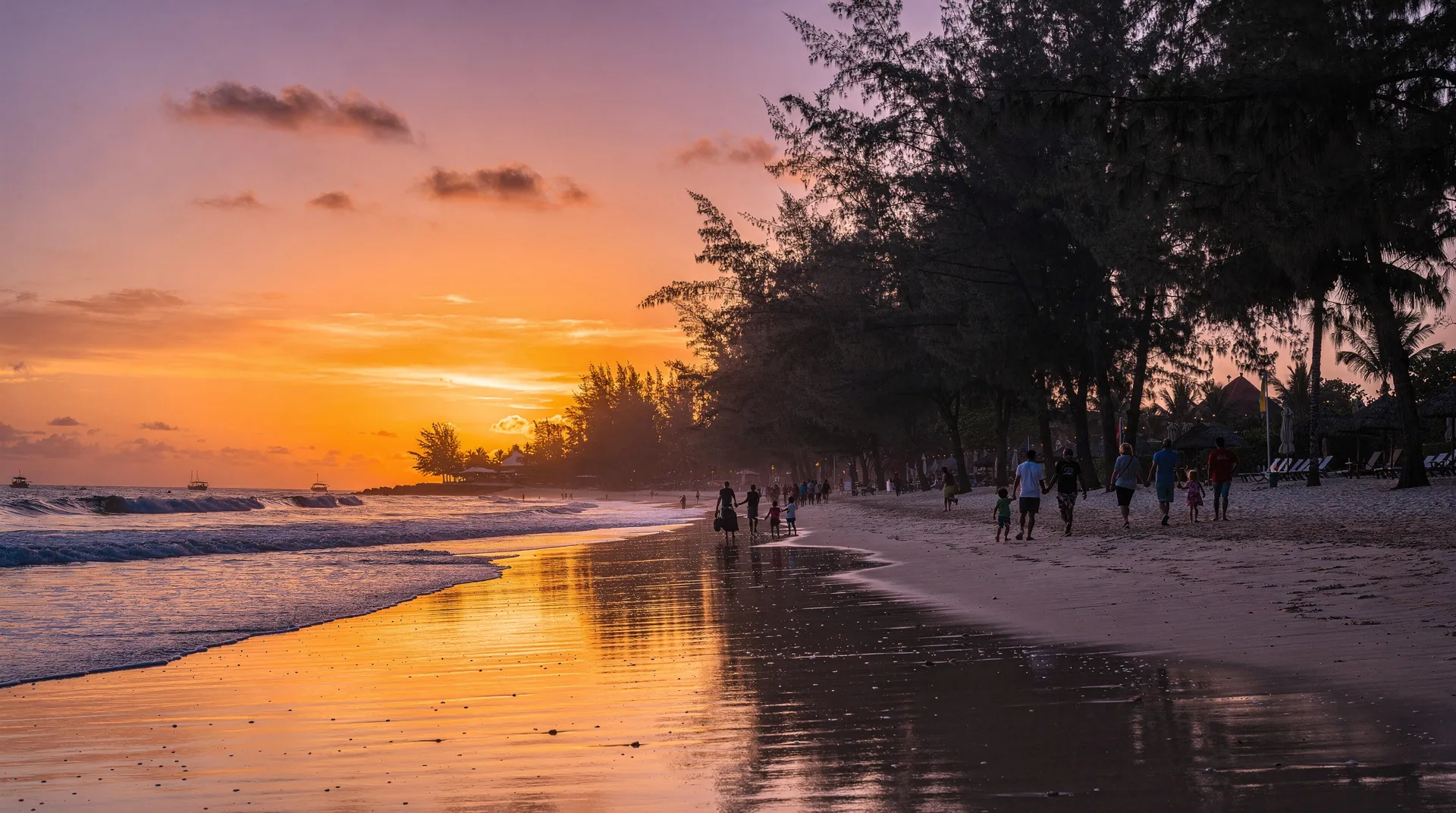
The west coast of Mauritius is known as the “leeward coast”: sheltered from the prevailing trade winds by the central mountain range, it enjoys a warmer, sunnier microclimate than the east coast, especially during the southern winter (June to September). And above all, it faces west — which means sunsets dropping straight into the sea horizon, a daily spectacle that draws thousands of travellers to this coast every year.
The west coast covers an arc running from Albion in the north down to the Le Morne peninsula at the far south-west, taking in Flic-en-Flac, Rivière Noire, Tamarin and La Gaulette along the way. Each village has its own personality, atmosphere and accommodation profile. To help you decide between the west coast and the east coast, our east vs west comparison guide lays out the two coasts in detail.
At a glance
| Where | Albion, Flic-en-Flac, Tamarin, La Gaulette, Le Morne — from the north to the south of the leeward coast |
| Indicative budget | around €40-80/night in La Gaulette, €50-100/night for an apartment in Flic-en-Flac, up to €300-1,200/night in Le Morne |
| Time needed | from 4-5 days to enjoy one area, one to two weeks to combine several villages |
| Getting there | a rental car is strongly recommended for getting between villages, otherwise a day taxi |
| Best time to go | May to December, avoiding January-February (the lull in the rainy season); the west coast is particularly pleasant during the southern winter (June-September) |
Flic-en-Flac — the west’s lively beach resort
Flic-en-Flac is the west coast’s main beach resort. Its long stretch of white sand, clear water and sunsets make it one of the island’s most popular destinations. The area is about 30 minutes south of Port-Louis and 45 minutes from the airport.
What we love about Flic-en-Flac: the combination of an easily accessible, beautiful beach, a good choice of restaurants and shops, moderate nightlife, and well-developed tourist services. It’s the ideal area for travellers who want to enjoy the sea without feeling too cut off.
Flic-en-Flac’s water is known for its exceptional clarity: the leeward coast is generally calmer than the east coast, giving it remarkable visibility. Snorkelling at either end of the beach reveals plenty of marine life, and Flic-en-Flac’s dive centres are among the best on the island — the “Trou aux Coqs” dive site is a must.
Types of accommodation available:
- Large 4-5 star hotels with direct beach access, pools and entertainment (Hilton Mauritius, Radisson Blu, Sugar Beach)
- 3-star hotels offering full board, half board or room only
- Directly rented apartments and villas, often excellent value for money
- Aparthotels for longer stays
Budget: Flic-en-Flac’s big hotels charge between €120 and €400 a night. Directly rented apartments let you stay in the area for €50-80 a night. Our guide to where to stay in Flic-en-Flac details the best addresses in every category.
Ideal for: couples, families with school-age children, travellers who want the sea and a lively atmosphere without Grand Baie prices.
Tamarin — village authenticity and morning dolphins
Tamarin sits about twenty kilometres south of Flic-en-Flac, in a crescent-shaped bay protected by a sandbar. The village long lived off fishing and salt production before being discovered by surfers in the 1970s. Since then it has grown without losing its soul: it’s still a real village with real Creole houses and real residents.
Tamarin’s big draw: the spinner dolphins that gather offshore every morning. Dozens of operators run sunrise trips to swim with them — an experience that ranks near the top of most travellers’ Mauritius highlights.
Swim with dolphins off Tamarin first thing in the morningWhat we love about Tamarin: the authentic village atmosphere, the surf-culture restaurants, the resident dolphins, and a golden-sand beach that’s different from the white beaches up north. Expats who’ve chosen to settle in Mauritius have often picked Tamarin for its balance between nature and services.
What might surprise you: Tamarin’s beach isn’t the island’s most photogenic — the water is greener than turquoise, and the sand is golden rather than white. The shopping options are limited. It’s not the place for travellers who need a full tourist offering right on their doorstep.
Types of accommodation available:
- Directly rented villas, often spacious and with a pool, ideal for stays of 1 to 3 weeks
- A handful of charming boutique hotels with pools
- Furnished apartments for longer stays
- Very few international hotels — this isn’t chain-hotel territory
Budget: villas start at €700-900 a week for a 2-bedroom with a pool. Boutique hotels charge between €100 and €200 a night. Our guide to where to stay in Tamarin lists the best options.
Ideal for: surfers, couples seeking authenticity, families wanting a villa stay, remote workers, dolphin lovers.
Le Morne — luxury facing a world heritage site
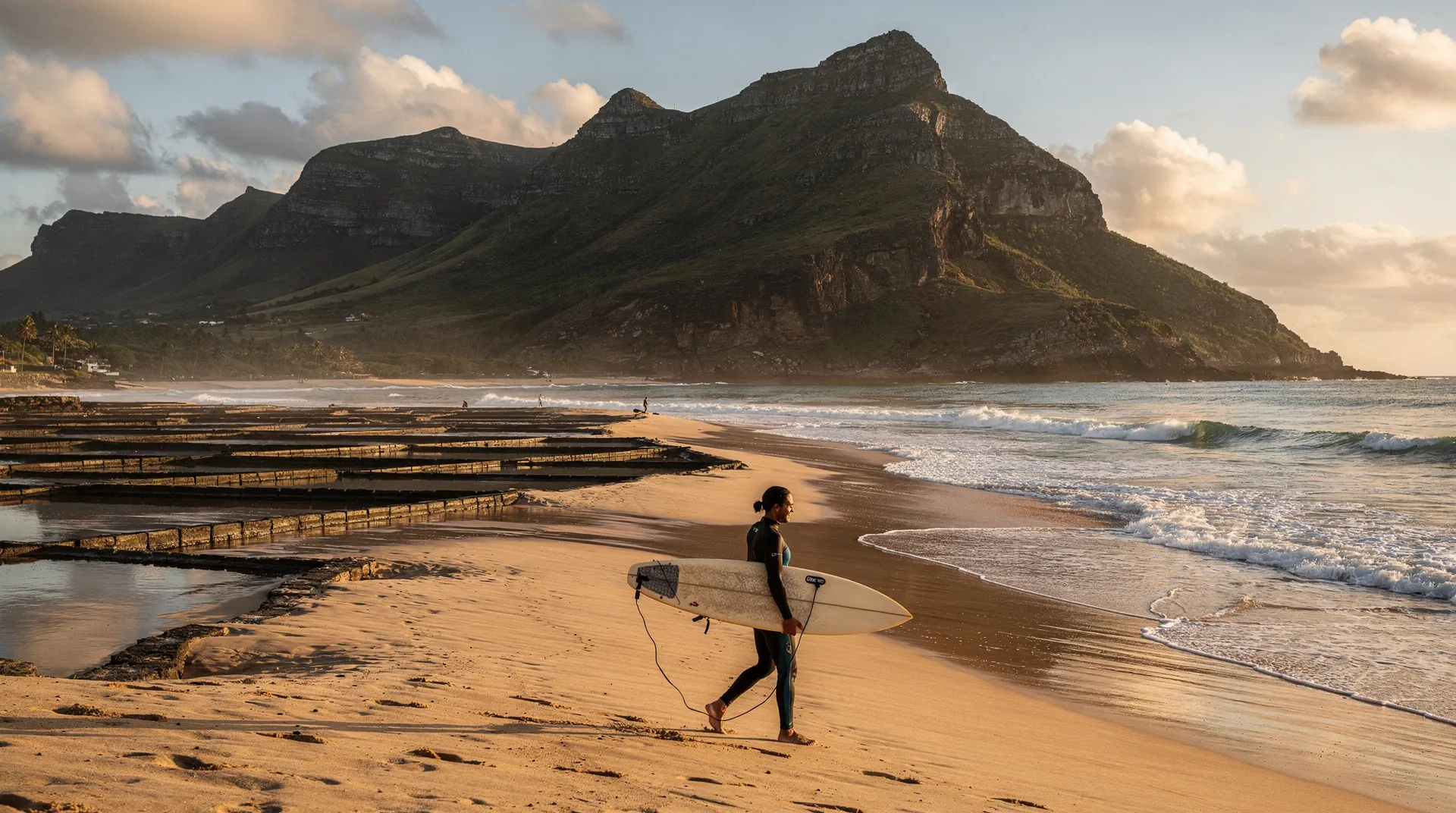
Le Morne sits at the island’s south-western tip, on an isolated peninsula at the foot of Le Morne Brabant (a UNESCO site). The area is a pocket of luxury within a spectacular natural setting: the lagoon is a remarkable turquoise, the beach sand is dazzlingly white, and the mountain looming above turns every sunrise into pure drama.
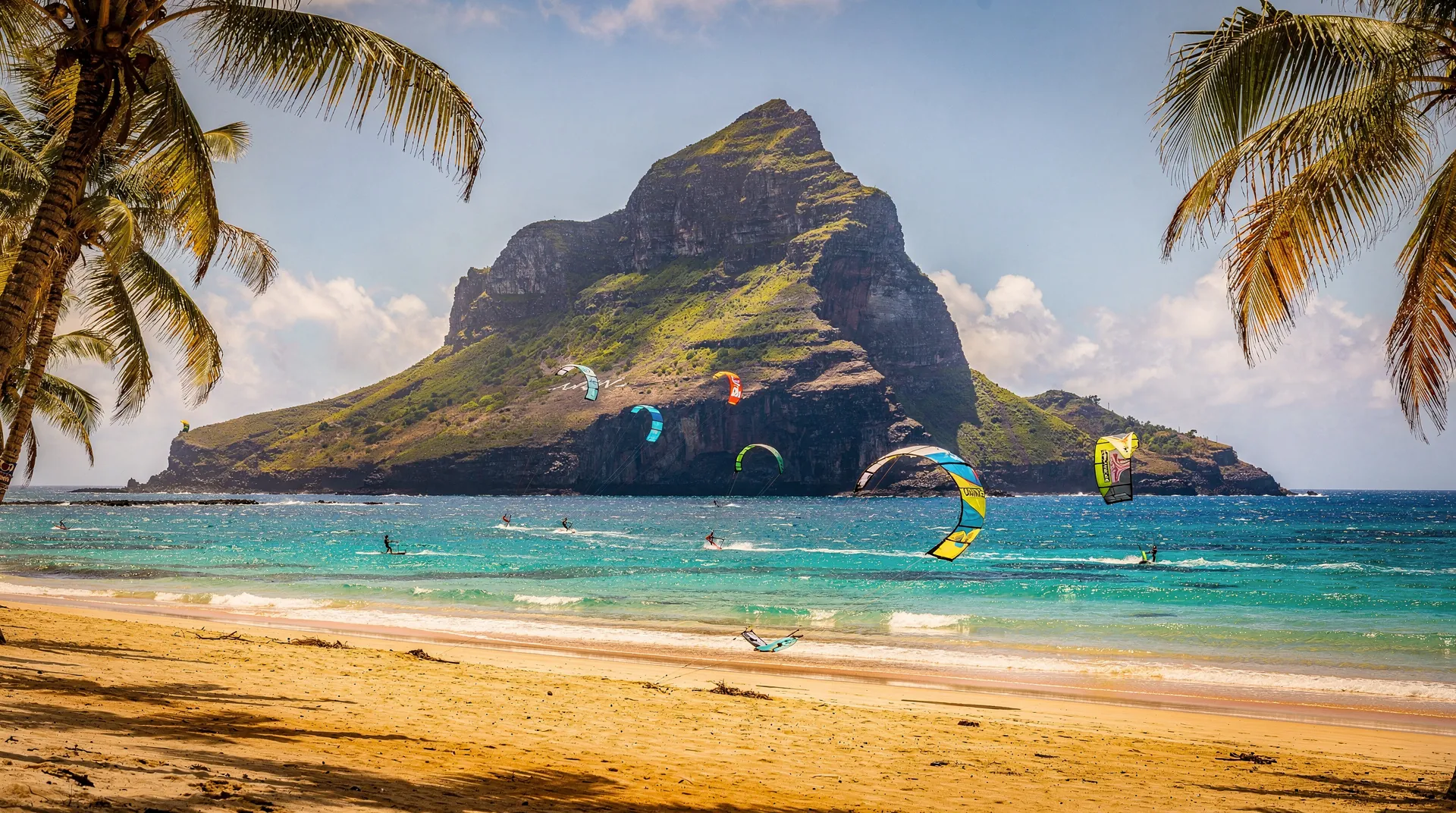
What we love about Le Morne: the outstanding natural setting, hotels that rank among the island’s finest, a lagoon perfect for kitesurfing and windsurfing, and a long beach that’s rarely crowded. This is where you come for grand luxury in a still-wild natural setting.
What might surprise you: the peninsula is isolated — the nearest village’s restaurants and shops are 20-30 minutes’ drive away. If you stay at one of Le Morne’s big hotels, you’ll typically be on full board by default, which limits your chances of exploring local cuisine.
Types of accommodation available:
- Le Paradis Beachcomber Golf Resort and Spa — 5 stars with an 18-hole golf course, multiple restaurants, spa, direct lagoon access
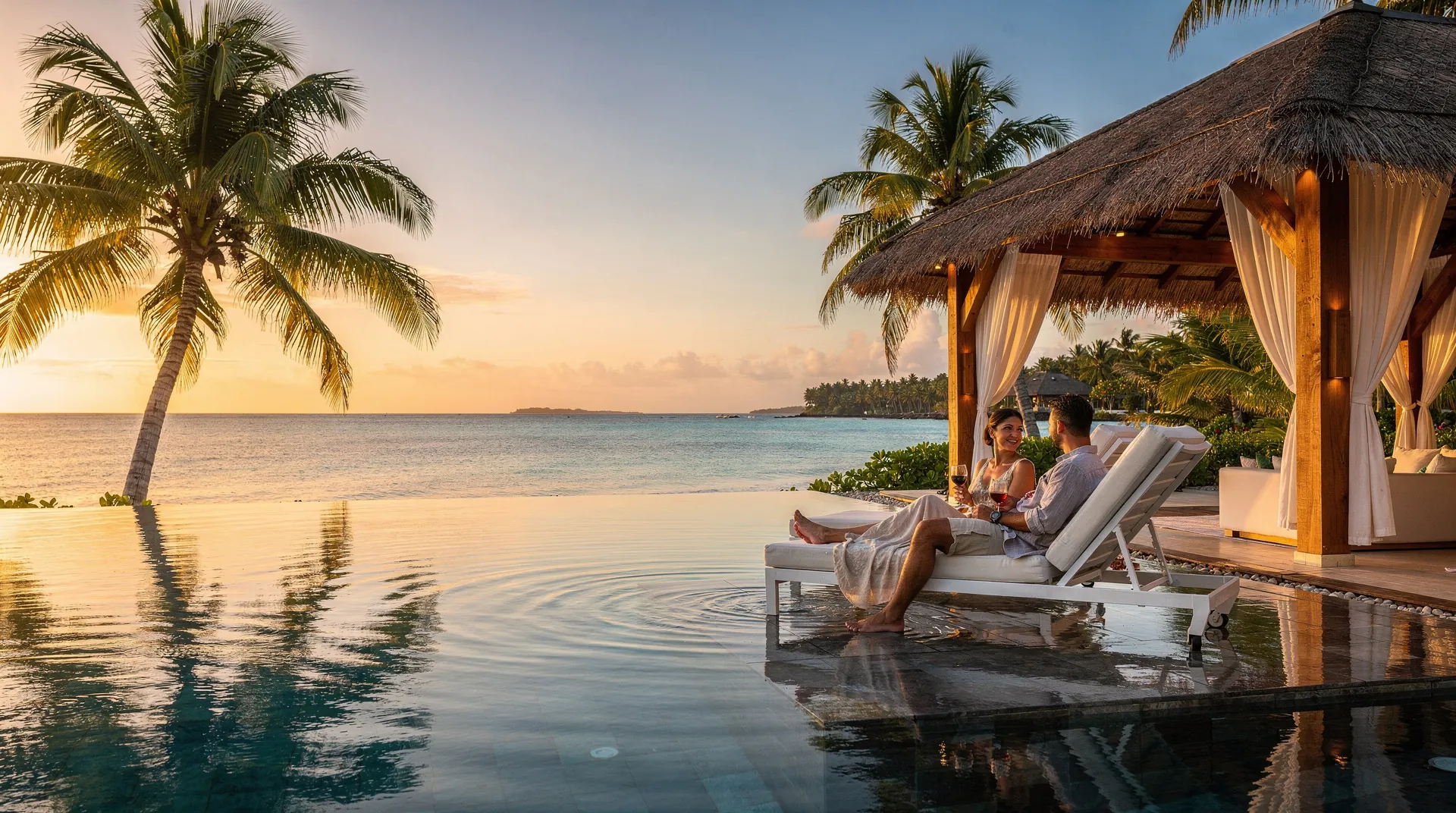
- Dinarobin Beachcomber Golf Resort and Spa — a more intimate 5-star, adults only, very romantic
- LUX Belle Rive — 4 stars, excellent value for the area
- A handful of rental villas around the peninsula for groups
Budget: Le Morne’s hotels are among the island’s priciest — between €300 and €1,200 a night depending on the property and season. The luxury generally lives up to the price tag. Our guide to where to stay for luxury covers this area in detail.
Ideal for: honeymooners, adults-only travellers after grand luxury, kitesurfers, golfers.
La Gaulette — the kitesurfers’ village
La Gaulette is a small coastal village between Tamarin and Le Morne, facing the lagoon that separates the main island from Ile aux Bénitiers. It’s a low-key area by conventional tourist standards, drawing mainly international kitesurfers attracted by the legendary spot next door at Le Morne, along with independent travellers who’ve discovered the place’s quiet beauty.
What we love about La Gaulette: the stunning view over the lagoon and Ile aux Bénitiers, the preserved village atmosphere, accommodation that’s affordable compared to the resorts of neighbouring Le Morne, and its proximity to the kite spot. Several villa rentals offer a direct lagoon view with sunset — for a fraction of what Le Morne’s hotels charge.
Types of accommodation available:
- Guesthouses and B&Bs with locals, very affordable
- Directly rented Creole villas, often with a sea-view terrace
- A few boutique hotels for kite lovers (simple rooms, community spirit)
Budget: this is one of the cheapest areas on the west coast — expect €40-80 a night for a good-quality place with a sea view. Our guide to budget accommodation lists La Gaulette among the west coast’s best options.
Albion — the west coast’s northern gateway
Albion is a small peninsula on the boundary between the north and the west, about twenty kilometres from Port-Louis. It’s a quiet, little-visited area that suits travellers wanting easy access to the capital while still enjoying the mellow west coast feel.
What we love about Albion: the calm, the white coral cliffs that line part of the coast, a handful of low-key dive spots, and tourism development that’s still modest. The Angsana Balaclava resort north of the area is a 5-star property with a lovely marina.
Getting between the west coast villages
The west coast stretches some thirty kilometres from Albion to Le Morne, and the villages don’t all serve the same purpose — don’t count on a single base to cover everything on foot. Allow around 20 minutes’ drive between Flic-en-Flac and Tamarin, and another 20 minutes between Tamarin and Le Morne via La Gaulette. A rental car remains the most practical way to hop between beaches and viewpoints without relying on bus timetables. For travellers who’d rather not drive, our with-or-without-car comparison guide details the alternatives (day taxis, hotel shuttles).
For water sports enthusiasts, the Le Morne lagoon and the La Gaulette spot rank among the island’s best for kitesurfing — it’s better to stay directly in one of these two villages rather than driving there every day from Flic-en-Flac.
Snorkelling and boat trips from the west coast
The leeward coast’s especially clear water makes it an ideal base for snorkelling and diving. From Flic-en-Flac, several spots are directly accessible from the beach at either end of the bay. From Tamarin, it’s mostly the morning dolphin trips that give the village its reputation — better to book an operator that keeps a reasonable distance from the animals rather than one of the many boats that crowd in too close.
How long to stay on the west coast
For a first visit, 4-5 nights are enough to enjoy one base (Flic-en-Flac or Tamarin) and fit in a day trip to Le Morne or Chamarel. For a couple’s trip that mixes up the pace, plan for 7-10 nights split between two villages — Flic-en-Flac for the buzz, say, followed by Le Morne to finish in style. Our couples itinerary sets out a route that makes the most of the west coast’s variety.
How to choose on the west coast
| Profile | Recommended area |
|---|---|
| Grand luxury and romance | Le Morne |
| Family and lively atmosphere | Flic-en-Flac |
| Authenticity and dolphins | Tamarin |
| Kitesurfing and budget | La Gaulette |
| Access to Port-Louis | Albion |
| Long-term remote work | Tamarin, La Gaulette |
Our north vs south comparison guide helps place the west coast within the island’s bigger picture. For families torn between the west coast and the east coast, our where to stay with family guide offers a targeted comparison. And for anyone considering a road trip to explore both coasts, our road trip itinerary offers a flexible plan.
See the catamaran trip from the west coast to Ile aux Cerfs